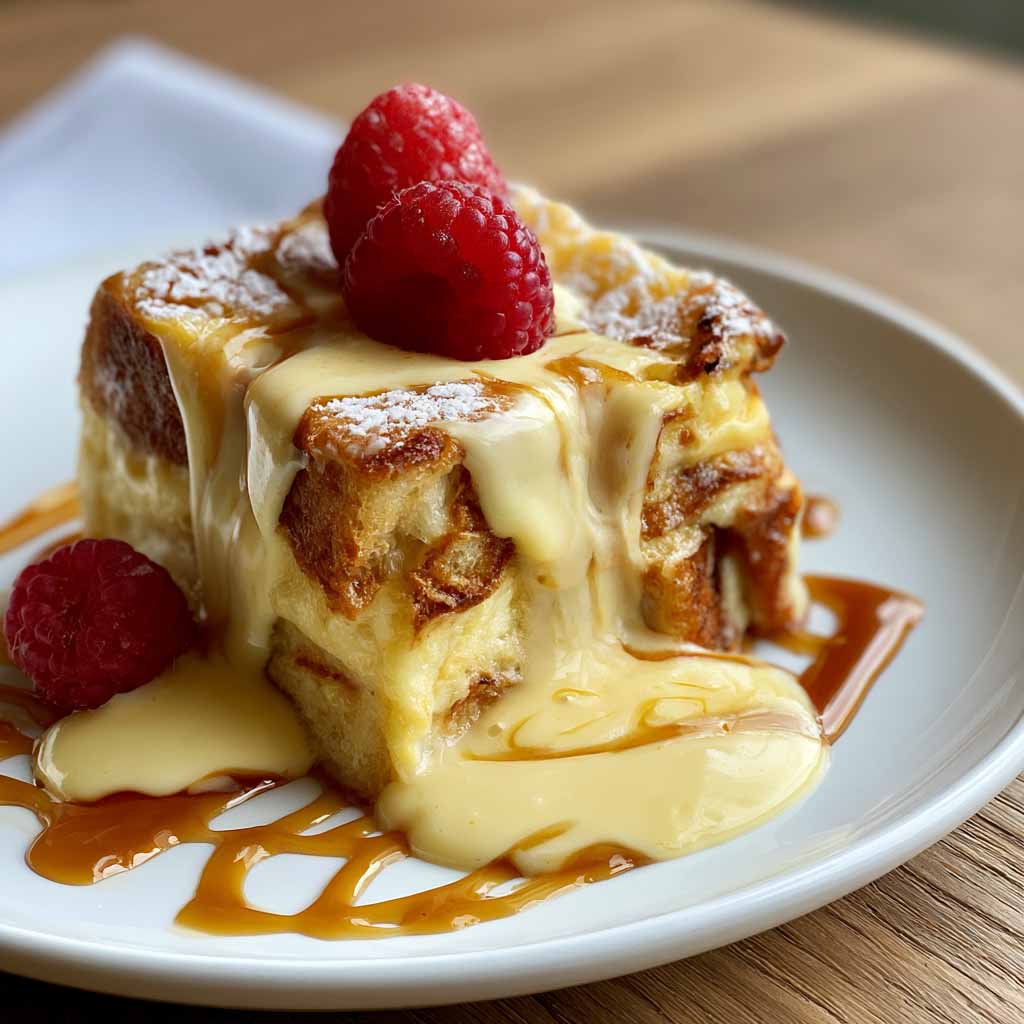
Introduction to Custard Bread Pudding
Custard Bread Pudding is one of those timeless desserts that feels like a warm hug in food form. Made with simple ingredients—bread, eggs, milk, sugar, and vanilla—it transforms everyday staples into something rich, creamy, and comforting. It’s a dish that bridges generations, often reminding people of childhood kitchens or holiday gatherings. Whether served warm with a drizzle of caramel or enjoyed cold straight from the fridge, custard bread pudding is versatile, affordable, and endlessly customizable. In this article, we’ll explore its appeal, history, nutritional notes, and a step-by-step guide to making it perfectly at home.
The Appeal of Custard Bread Pudding
What makes custard bread pudding so beloved is its balance of textures and flavors. The bread absorbs the custard, becoming soft and creamy inside, while the top bakes into a golden crust. It’s indulgent yet humble, a dessert that doesn’t require fancy ingredients or equipment.
It’s also a great way to reduce food waste—day-old bread finds new life in this dish. And because the recipe is so flexible, you can adjust sweetness, add spices, or incorporate fruits and nuts to suit your taste.
Tip: Always let the bread soak in the custard mixture for at least 30 minutes before baking. This ensures every bite is moist and flavorful.
Origins & Inspiration
Bread pudding has centuries-old roots, dating back to medieval Europe when cooks sought ways to use stale bread. Custard, with its French and English culinary heritage, eventually merged with bread pudding to create the creamy version we know today.
Over time, custard bread pudding spread across cultures, appearing in American diners, British pubs, and holiday tables worldwide. Each region adds its own twist—spices in India, rum-soaked raisins in the Caribbean, or caramel sauce in Latin America.
This global journey makes custard bread pudding more than just dessert—it’s a story of resourcefulness, tradition, and comfort.
Nutritional Notes
Custard bread pudding is indulgent, but it also offers nutritional value:
- Bread: Provides carbohydrates for energy.
- Eggs: Rich in protein, vitamins, and minerals.
- Milk: Adds calcium and vitamin D.
- Sugar & Cream: Contribute sweetness and richness.
For a lighter version, you can use whole-grain bread, reduce sugar, or swap cream for low-fat milk. Adding fruit like apples or berries boosts fiber and antioxidants.
Tip: Balance indulgence with portion control—custard bread pudding is best enjoyed as a treat, not an everyday staple.
Why This Recipe Works
The beauty of custard bread pudding lies in its simplicity. The custard mixture keeps the bread moist, while baking creates a contrast between creamy interior and crisp top. Vanilla and spices add depth, and the dish can be served warm or cold.
It’s forgiving, too—slightly stale bread actually works better, absorbing custard more effectively. This makes it a practical dessert that feels luxurious without being complicated.
Tip: Use sturdy bread like brioche or challah for the best texture.
Step-by-Step Preparation Guide
Step 1: Prepare Bread Cube or slice day-old bread. Place in a buttered baking dish.
Step 2: Make Custard Whisk eggs, milk, sugar, and vanilla until smooth. Add spices if desired.
Step 3: Combine Pour custard over bread. Press gently to ensure bread absorbs liquid. Let soak for 30 minutes.
Step 4: Bake Bake at 350°F (175°C) until golden and custard is set, about 45–50 minutes.
Step 5: Serve Enjoy warm with cream, caramel sauce, or fresh fruit.
Expert Tip: Bake in a water bath for extra creamy texture and even cooking.
Custard Bread Pudding Recipe (Easy Classic Dessert)

This Custard Bread Pudding is a classic comfort dessert made with soft bread soaked in a rich, creamy custard and baked until perfectly golden. Warm, cozy, and full of homemade flavor, it’s the perfect way to turn simple ingredients into an irresistible treat. Serve it with caramel sauce, whipped cream, or a dusting of powdered sugar for the ultimate dessert experience.
- Mixing bowls
- Whisk
- Baking dish (9×13 or similar)
- Oven
- Measuring Cups and Spoons
- Knife and cutting board
- Day-old bread (brioche, challah, or French bread)
- Eggs
- Milk or cream
- Sugar
- Vanilla extract
- Optional spices (cinnamon, nutmeg)
- Butter (for greasing dish)
Prepare Bread: Cube or slice day-old bread. Place in a buttered baking dish.
Make Custard: Whisk eggs, milk, sugar, vanilla, and spices until smooth.
Combine: Pour custard over bread. Press gently so bread absorbs liquid. Let soak for 30 minutes.
Bake: Bake at 350°F (175°C) for 45–50 minutes until custard is set and top is golden.
Serve: Enjoy warm with cream, caramel sauce, or fresh fruit.
Use sturdy bread like brioche or challah for best texture.
Day-old bread absorbs custard better than fresh.
Add raisins, chocolate chips, or fruit for variety.
Store leftovers in the fridge for 3–4 days; reheat gently in the oven.
Freeze portions for up to 2 months; thaw overnight in the fridge.
Serve warm for comfort or chilled for a refreshing twist.











Be First to Comment