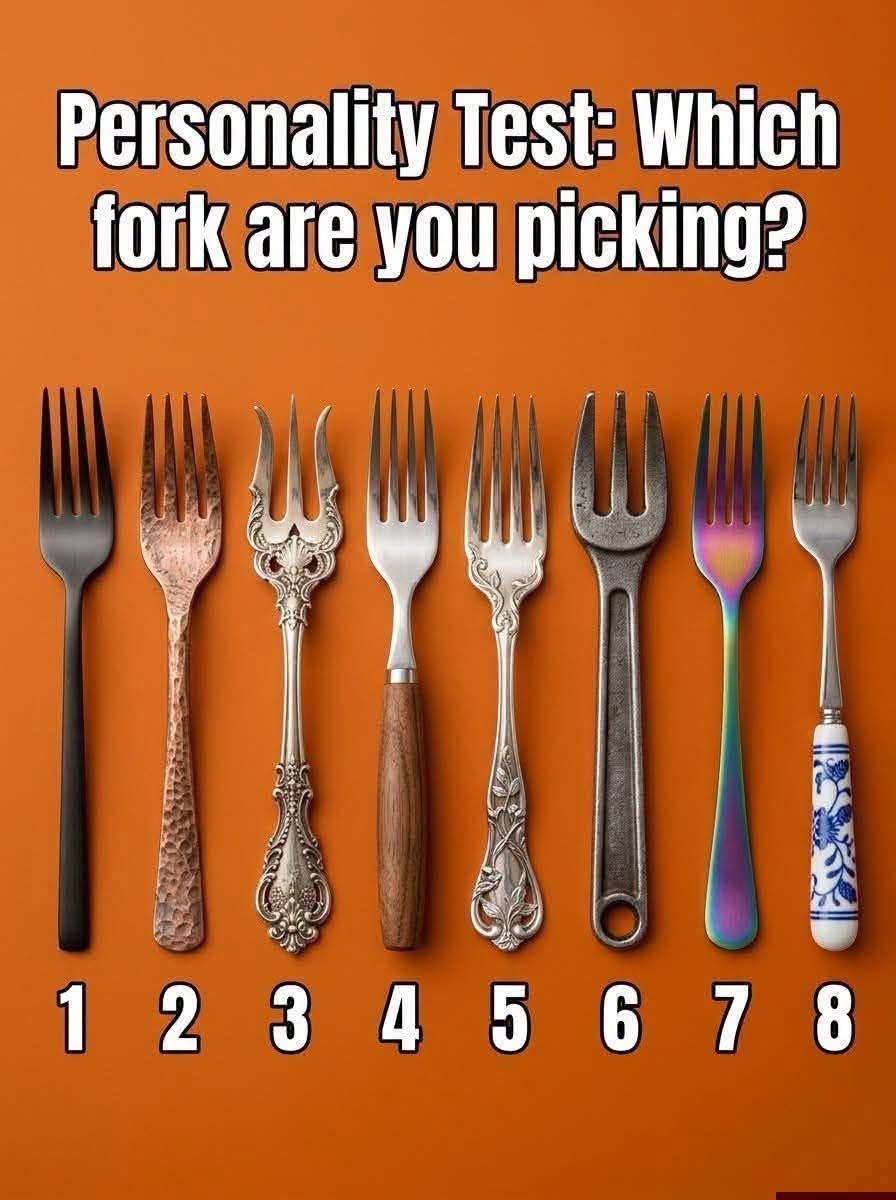
Personality Test: Which Fork Are You Picking?
Introduction
Personality tests have fascinated people for decades because they offer a fun way to explore who we are. In recent years, visual choice quizzes have become especially popular on social media platforms like Facebook, TikTok, Instagram, and Pinterest. These quizzes often ask participants to make a quick decision, such as choosing an object, image, or symbol, and then reveal what that choice supposedly says about their personality.
One of the latest viral trends is the “Which Fork Are You Picking?” personality test. At first glance, it may seem like a simple choice between different forks, but many people enjoy discovering the personality traits associated with their selection.
While these tests are designed primarily for entertainment rather than scientific analysis, they can still be an enjoyable way to reflect on personal preferences and behaviors. In this article, you’ll learn how the fork personality test works, what each fork choice may reveal, and why these visual quizzes continue to capture people’s attention worldwide.
Why Personality Tests Are So Popular
The Psychology Behind Self-Discovery
Humans are naturally curious about themselves. Most people enjoy learning about their strengths, weaknesses, habits, and motivations. Personality tests provide a simple and engaging way to gain insights into these aspects of life.
Whether the results are scientifically validated or purely for entertainment, many individuals find comfort and enjoyment in seeing traits and characteristics described in a relatable way.
Social Media and Viral Personality Tests
Social media has played a major role in the popularity of personality quizzes. Platforms such as Facebook, TikTok, Instagram, and Pinterest make it easy to share results with friends and followers.
Visual personality tests spread quickly because they require very little effort. Users simply look at an image, make a choice, and receive instant feedback. This combination of simplicity and curiosity encourages engagement and sharing.
Why Simple Choices Feel Meaningful
People often feel that small decisions reveal something deeper about who they are. Choosing a fork, a door, a tree, or a color can seem surprisingly personal.
Visual decision-making happens quickly and often relies on instinct rather than careful analysis. Because the choice feels spontaneous, participants may believe it reflects their true personality.
Entertainment vs Scientific Personality Assessments
It’s important to distinguish between fun personality quizzes and professional personality assessments.
Entertainment quizzes are designed to be enjoyable and engaging. Scientific personality tests, on the other hand, are developed through research and psychological validation. While the fork personality test may not provide an accurate psychological profile, it can still be a fun self-discovery activity.
What Is the “Which Fork Are You Picking?” Personality Test?
How the Test Works
The fork personality test presents several different forks and asks participants to choose the one they would naturally pick. The key idea is to make your selection quickly without overthinking.
Many versions of the test encourage users to trust their first impression. The belief is that instinctive choices may reveal hidden aspects of personality.
Why Objects Can Trigger Personal Preferences
Even everyday objects can spark strong preferences. People often gravitate toward designs that reflect their tastes, values, or habits.
Factors influencing fork selection may include:
- Shape and symmetry
- Simplicity versus complexity
- Decorative details
- Modern or traditional design
- Overall visual appeal
These preferences may align with certain personality tendencies.
What Your Choice Might Reveal
According to the quiz, your chosen fork may offer clues about:
- Decision-making style
- Confidence level
- Creativity
- Social behavior
- Organization habits
- Personal values
Although these interpretations are not scientifically proven, many participants enjoy comparing their results with their own experiences.
The Different Fork Choices Explained
Fork #1 – The Natural Leader
If you selected Fork #1, you may possess strong leadership qualities. You tend to be confident when making decisions and rarely hesitate when pursuing goals.
People with this personality type often enjoy taking initiative and guiding others toward success. They are ambitious, determined, and focused on achieving results.
You likely prefer structure and direction rather than uncertainty. Friends and coworkers may see you as dependable, capable, and influential.
Strengths often include:
- Confidence
- Motivation
- Strong communication
- Goal-oriented thinking
However, your determination can occasionally come across as stubbornness when you feel strongly about an issue.
Fork #2 – The Creative Thinker
Choosing Fork #2 may indicate a highly imaginative personality. You enjoy exploring new ideas and seeing possibilities where others see limitations.
Creative thinkers often appreciate art, innovation, and unconventional approaches to challenges. Rather than following traditional paths, they prefer experimenting with fresh solutions.
You may enjoy:
- Artistic activities
- Creative problem-solving
- New experiences
- Independent thinking
People often admire your originality and ability to inspire others. Your open-minded nature allows you to adapt quickly and embrace change.
Fork #3 – The Reliable Planner
If Fork #3 caught your attention, you may value stability and organization. You prefer thinking ahead and preparing for potential challenges before they arise.
Reliable planners are often trusted by friends, family members, and coworkers because they consistently follow through on commitments.
Common characteristics include:
- Dependability
- Practical thinking
- Strong organizational skills
- Attention to detail
You appreciate routines and enjoy creating systems that make life more efficient. While others may act impulsively, you prefer making well-informed decisions.
Fork #4 – The Social Butterfly
Those who choose Fork #4 are often outgoing and energetic. You enjoy interacting with people and feel energized by social situations.
Communication comes naturally to you, and you may have a talent for bringing groups together. Others often appreciate your warmth, positivity, and enthusiasm.
Traits commonly associated with this personality type include:
- Friendliness
- Teamwork
- Optimism
- Strong social skills
You enjoy building relationships and creating memorable experiences. Whether at work or in your personal life, you thrive in environments that encourage collaboration.
Fork #5 – The Independent Spirit
If you selected Fork #5, independence may be one of your defining qualities. You value freedom and enjoy charting your own course through life.
Independent spirits often resist unnecessary restrictions and prefer making decisions based on personal values rather than external pressure.
You may be:
- Adventurous
- Self-reliant
- Curious
- Determined
You enjoy exploring new opportunities and may be willing to take risks in pursuit of meaningful experiences. Others often admire your confidence and individuality.
Fork #6 – The Deep Thinker
Choosing Fork #6 may suggest an analytical and thoughtful personality. You enjoy understanding how things work and often spend time reflecting on ideas and situations.
Deep thinkers tend to observe details that others overlook. They are naturally curious and enjoy solving complex problems.
Common traits include:
- Intelligence
- Observation
- Curiosity
- Strategic thinking
You may prefer meaningful conversations over small talk and often enjoy learning about psychology, science, philosophy, or other thought-provoking subjects.
What Psychology Says About Choice-Based Personality Tests
The Role of Personal Preference
Psychologists recognize that personal preferences can reflect aspects of personality. People often choose objects, styles, and experiences that align with their interests and values.
However, a single choice is rarely enough to accurately define someone’s personality.
Pattern Recognition and Human Behavior
Humans naturally seek patterns and meaning. When presented with a visual choice, we often assume that our selection reveals something important about ourselves.
This tendency helps explain why visual personality tests feel engaging and believable.
Why We Connect With Personality Descriptions
Many personality descriptions focus on traits that are broadly relatable. People enjoy reading positive qualities and identifying similarities between the description and their own experiences.
This connection creates a sense of validation and self-understanding.
The Barnum Effect Explained
The Barnum Effect is a psychological phenomenon in which people believe vague, general descriptions are highly personal and accurate.
Statements such as “You enjoy being appreciated by others” or “You sometimes doubt yourself” apply to many people. Yet readers often interpret them as uniquely meaningful.
This effect helps explain why personality quiz results frequently feel surprisingly accurate.
Are Personality Choice Tests Accurate?
Entertainment Value
The primary purpose of visual personality tests is entertainment. They provide a fun opportunity to reflect on personal traits and compare results with friends.
Scientific Limitations
Most viral personality quizzes lack scientific validation. Professional personality assessments typically involve extensive research, testing, and statistical analysis.
A simple fork choice cannot reliably predict behavior, intelligence, or emotional tendencies.
Why People Still Love Them
Despite their limitations, people continue to enjoy these quizzes because they are:
- Easy to take
- Fun to share
- Engaging to discuss
- Interesting to compare
The combination of curiosity and instant feedback keeps participants coming back.
What You Can Learn From Your Results
While the results shouldn’t be treated as definitive personality assessments, they can encourage self-reflection.
Sometimes the descriptions prompt people to think about their habits, strengths, and goals in new ways.
Fun Ways to Share the Fork Personality Test
Share With Friends
Invite friends to take the test and compare results. You may discover surprising similarities and differences.
Compare Results
Discuss whether the personality descriptions match real-life behaviors. These conversations often lead to entertaining insights and laughter.
Social Media Challenges
Post the image online and ask followers to comment with their chosen fork. Engagement often increases because people enjoy sharing their personalities.
Family and Group Activities
The fork personality test can also be a fun group activity during gatherings, parties, or family events. Comparing results creates opportunities for conversation and friendly debate.
Other Popular Visual Personality Tests
Which Door Would You Open?
This classic personality quiz asks participants to choose a mysterious door. Each door represents different personality traits and life priorities.
Pick a Tree Personality Test
Tree personality tests use different tree shapes and styles to explore characteristics such as growth, resilience, and emotional expression.
Choose a Path Test
Participants select a path through a forest, mountain, or landscape. The chosen route is then linked to decision-making styles and life goals.
Which Animal Do You See First?
Optical illusion tests often ask viewers which animal they notice first. The answer supposedly reveals dominant personality traits or thinking patterns.
Color Choice Personality Quizzes
Color-based quizzes remain among the most popular visual personality tests. Different colors are associated with emotions, values, and behavioral tendencies.
Frequently Asked Questions
What does the fork personality test mean?
The fork personality test is a visual personality quiz that associates different fork choices with specific personality traits. It is designed primarily for entertainment and self-reflection.
Are visual personality tests accurate?
Visual personality tests are generally not considered scientifically accurate. They may be fun and engaging, but they should not replace professional psychological assessments.
Why do people enjoy personality quizzes?
People enjoy personality quizzes because they satisfy curiosity, encourage self-discovery, and provide entertaining results that can be shared with others.
Can simple choices reveal personality traits?
Certain preferences may reflect aspects of personality, but a single choice alone is unlikely to provide a complete or accurate personality profile.
What is the psychology behind personality tests?
Personality tests appeal to human curiosity, self-reflection, and the desire to better understand behavior, motivations, and relationships.
Are personality tests scientifically proven?
Some professional personality assessments are supported by research. However, most social media personality quizzes are intended for entertainment rather than scientific evaluation.
Why do personality quiz results seem accurate?
Many personality descriptions rely on broad statements that apply to a large number of people. This is often explained by the Barnum Effect.
Final Thoughts
The “Which Fork Are You Picking?” personality test is a fun example of how simple visual choices can spark curiosity about personality and behavior. While these quizzes are not scientifically designed to reveal your true character, they provide an entertaining way to explore personal preferences and compare results with others.
People enjoy personality tests because they encourage self-discovery, conversation, and social interaction. Whether you see yourself as a natural leader, creative thinker, reliable planner, social butterfly, independent spirit, or deep thinker, remember that personality is far more complex than any single quiz result.
So, which fork did you choose? Share your answer with friends and see whether your results match their impressions of you.




Be First to Comment