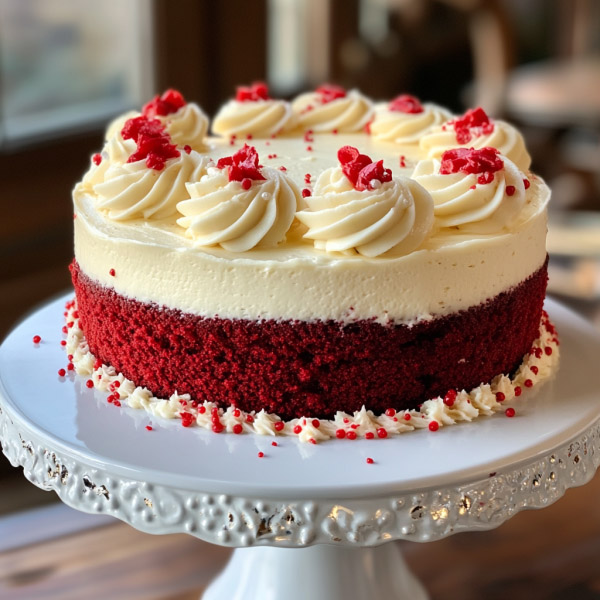
Introduction to Red Velvet Cake
Few desserts are as iconic as Red Velvet Cake with Cream Cheese Frosting. With its striking crimson hue, tender crumb, and tangy frosting, it’s a showstopper that feels both nostalgic and timeless. This cake has become a staple at birthdays, weddings, and holidays, thanks to its balance of flavors and elegant presentation. In this article, we’ll explore why red velvet cake is so beloved, its fascinating history, nutritional notes, and a step-by-step guide to preparing it with confidence.
The Appeal of Red Velvet Cake
Red velvet cake is more than just a pretty dessert—it’s a flavor experience. The cake itself is subtly chocolatey, enriched with vanilla and buttermilk for a velvety texture. The cream cheese frosting adds tang and creaminess, cutting through the sweetness for perfect balance.
Its appeal lies in the contrast: vibrant red layers against snowy white frosting. It’s indulgent yet refined, making it suitable for both casual gatherings and formal celebrations.
Tip: Use gel food coloring instead of liquid—it provides a bold red without altering the batter’s consistency.
Origins & Inspiration
Red velvet cake has roots in American baking traditions, gaining popularity in the early 20th century. It became especially associated with Southern cuisine, where buttermilk and vinegar were common baking ingredients. The cake’s signature red color was originally enhanced by natural reactions between cocoa and acidic ingredients, though modern recipes rely on food coloring.
Its resurgence in recent decades owes much to bakeries and social media, where its striking appearance makes it a favorite for photos and celebrations. Today, it’s a symbol of indulgence and festivity, often enjoyed during holidays like Valentine’s Day and Christmas.
Nutritional Notes
Red velvet cake is undeniably indulgent, but it offers some nutritional elements:
- Cocoa: Provides antioxidants and subtle chocolate flavor.
- Buttermilk: Adds calcium and protein while tenderizing the crumb.
- Cream Cheese: Rich in calcium and protein, though high in fat.
For lighter versions, bakers often reduce sugar, use whole wheat flour, or substitute Greek yogurt in frosting.
Tip: Portion control is key—enjoying a slice mindfully makes this treat fit into a balanced lifestyle.
Why This Recipe Works
This recipe succeeds because it balances flavors and textures. The cake is moist and tender thanks to buttermilk and vinegar, while cocoa adds depth. The cream cheese frosting provides tangy contrast, preventing the cake from being overly sweet.
Tip: Chill the cake layers before frosting—this prevents crumbs from mixing into the frosting and ensures a smooth finish.
Step-by-Step Preparation Guide
Step 1: Make the Batter Cream butter and sugar until fluffy. Add eggs one at a time. Mix in cocoa, food coloring, and vanilla. Alternate adding flour and buttermilk, finishing with vinegar and baking soda.
Step 2: Bake the Layers Divide batter into greased pans. Bake until a toothpick comes out clean. Cool completely.
Step 3: Prepare Frosting Beat cream cheese and butter until smooth. Add powdered sugar gradually, then vanilla. Whip until fluffy.
Step 4: Assemble the Cake Place one cake layer on a stand. Spread frosting evenly. Repeat with remaining layers. Frost the sides and top.
Step 5: Decorate Smooth frosting with a spatula. Garnish with cake crumbs, berries, or chocolate shavings.
Expert Tip: For bakery-style presentation, apply a crumb coat (thin layer of frosting), chill, then finish with a final smooth layer.
Flavor Variations
Red Velvet Cake with Cream Cheese Frosting Recipe (Moist Classic Cake)

Make this red velvet cake with cream cheese frosting for a moist, classic dessert. Perfect for birthdays, holidays, and special occasions with rich flavor and smooth frosting.
- Mixing bowls
- Electric mixer or stand mixer
- Measuring Cups and Spoons
- Cake pans (two 9-inch round)
- Cooling rack
- Offset spatula (for frosting)
- All-purpose flour
- Cocoa powder (unsweetened)
- Baking soda and vinegar
- Buttermilk
- Sugar
- Eggs
- Butter
- Red food coloring (gel preferred)
- Vanilla extract
- Cream cheese
- Powdered sugar
Prepare Batter: Cream butter and sugar until fluffy. Add eggs, cocoa, food coloring, and vanilla. Alternate flour and buttermilk, finishing with vinegar and baking soda.
Bake: Divide batter into greased pans. Bake at 350°F (175°C) for 25–30 minutes. Cool completely.
Make Frosting: Beat cream cheese and butter until smooth. Add powdered sugar gradually, then vanilla. Whip until fluffy.
Assemble Cake: Place one layer on a stand, spread frosting, repeat with second layer. Frost sides and top.
Decorate: Smooth frosting, garnish with cake crumbs or berries.
Use gel food coloring for vibrant red without bitterness.
Don’t overmix batter—this keeps the crumb tender.
Frosting should be chilled slightly if too soft.
Store cake at room temperature for 1–2 days or refrigerate up to 5 days.
Freeze unfrosted layers for up to 2 months.
For a lighter version, reduce sugar or use Greek yogurt frosting.



Be First to Comment