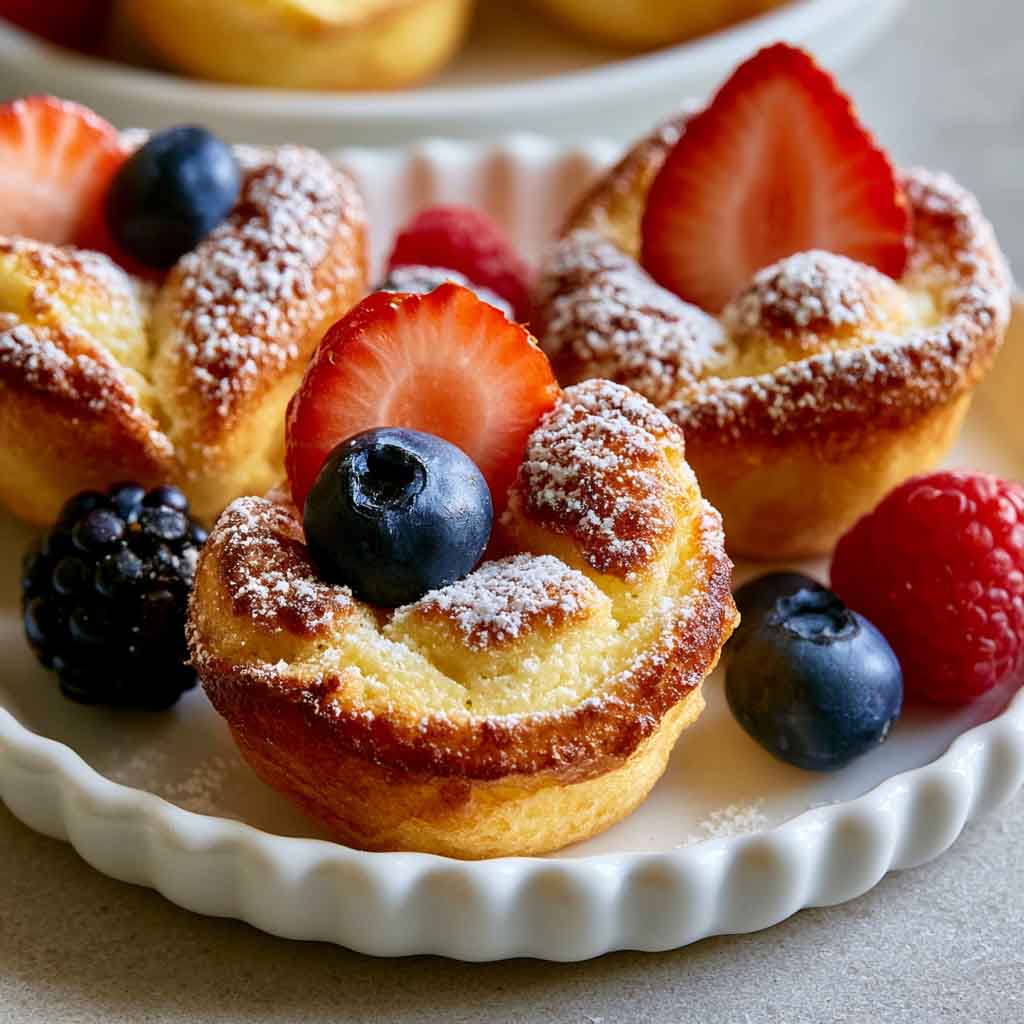
Mini German Pancakes
Mini German Pancakes are the kind of breakfast that feels both whimsical and elegant. These little puffed wonders—often called “Dutch Baby muffins”—are baked in muffin tins, creating individual servings with crisp golden edges and soft, custardy centers. They’re simple to make, yet they look impressive enough for brunch gatherings or holiday mornings. Unlike traditional pancakes cooked on a griddle, German pancakes rely on the oven’s heat to puff dramatically, giving them their signature airy texture. In this article, we’ll explore why these mini versions are so popular, dive into their history, highlight nutritional notes, and walk through a step-by-step guide to creating your own batch of irresistible mini German pancakes.
The Appeal of Mini German Pancakes
What makes mini German pancakes so appealing is their balance of flavor, texture, and convenience. The batter is light and eggy, producing a custard-like center that pairs beautifully with sweet or savory toppings. The edges crisp up in the oven, offering a delightful contrast in every bite.
For busy mornings, these pancakes are a dream: the batter comes together in minutes, and the oven does the rest. Serving them in muffin tins means portion control is built in, and cleanup is minimal. Guests love them because they’re customizable—one person might top theirs with berries and powdered sugar, while another prefers bacon and cheese.
Tip: Always preheat the muffin tin with butter before adding the batter. This ensures the pancakes puff properly and develop those irresistible golden edges.
The History & Popularity of German Pancakes
German pancakes, also known as Dutch Babies, trace their roots to German immigrants in the United States. The dish gained popularity in the early 1900s, especially in Seattle, where a restaurant called Manca’s Café famously served “Dutch Babies.” The name is thought to be a playful misinterpretation of “Deutsch,” the German word for “German.”
Traditionally, German pancakes are baked in large skillets and served family-style. The mini version is a modern adaptation, perfect for individual servings and entertaining. Food bloggers and social media have helped spread their popularity, showcasing creative toppings and variations. Today, mini German pancakes are a staple at brunch tables, admired for their dramatic puff and versatility.
Nutritional Notes
Mini German pancakes are made from simple pantry staples: eggs, milk, flour, and butter. Eggs provide protein and healthy fats, while milk adds calcium and creaminess. Flour contributes carbohydrates for energy, and butter lends richness.
For lighter versions, you can substitute whole wheat flour, almond milk, or reduce the butter. Adding fresh fruit toppings boosts vitamins and fiber, while savory versions with spinach or cheese add extra nutrients.
Tip: Balance indulgent toppings like whipped cream or syrup with fresh fruit for a more wholesome breakfast spread.
Why This Recipe Works
This recipe works because it relies on the oven’s high heat to create steam, which makes the pancakes puff dramatically. The simple batter ensures consistency, while the mini size makes them fun and versatile. They’re easy to customize, quick to bake, and always impressive when they emerge from the oven.
Tip: Don’t open the oven door while baking—the steam is essential for puffing, and sudden temperature changes can deflate the pancakes.
Step-by-Step Preparation Guide
Step 1: Preheat Muffin Tin Place a small pat of butter in each muffin cup and preheat in the oven until melted and sizzling.
Step 2: Mix Batter Blend eggs, milk, flour, vanilla, and a pinch of salt until smooth. A blender works best for achieving a lump-free batter.
Step 3: Pour Batter Carefully pour batter into the hot, buttered muffin cups, filling each about halfway.
Step 4: Bake Bake at 425°F (220°C) for 12–15 minutes. The pancakes will puff dramatically and turn golden brown.
Step 5: Cool Slightly Remove from oven and let cool for a minute. The centers will settle into little cups, perfect for holding toppings.
Step 6: Add Toppings & Serve Dust with powdered sugar, drizzle with syrup, or fill with fruit, yogurt, or savory ingredients.
Expert Tip: Use room-temperature eggs and milk for better puffing. Cold ingredients can hinder the rise.
Mini German Pancakes Recipe (Easy Puffy Breakfast Pancakes)

These mini German pancakes are light, fluffy, and beautifully puffed with crisp golden edges. Perfect for breakfast, brunch, or special occasions, they’re easy to make and delicious topped with powdered sugar, fresh fruit, or syrup. Fun-sized and irresistibly airy, they’re sure to become a family favorite!
- Muffin tin (12-cup)
- Blender or mixing bowl & whisk
- Measuring Cups and Spoons
- Oven mitts
- Spatula
- 2 tbsp butter (for muffin tin)
- 3 large eggs (room temperature)
- ½ cup milk (room temperature)
- ½ cup all-purpose flour
- 1 tsp vanilla extract
- Pinch of salt
- Optional toppings: powdered sugar, syrup, fruit, whipped cream, savory cheese
Preheat Oven & Muffin Tin: Place a small pat of butter in each muffin cup. Preheat oven to 425°F (220°C) until butter melts and sizzles.
Blend Batter: Mix eggs, milk, flour, vanilla, and salt until smooth. A blender works best for lump-free batter.
Pour Batter: Carefully pour batter into hot, buttered muffin cups, filling each halfway.
Bake: Bake for 12–15 minutes until puffed and golden brown.
Cool Slightly: Remove from oven and let sit for 1–2 minutes. Centers will settle into little cups.
Serve: Add toppings of choice and enjoy immediately.
Use room-temperature eggs and milk for better puffing.
Preheating the muffin tin with butter is crucial for crisp edges.
Best served fresh—reheat in oven at 350°F (175°C) for 5 minutes if needed.
Avoid microwaving; pancakes lose texture.
Gluten-free flour blends can be substituted for all-purpose flour.


Be First to Comment