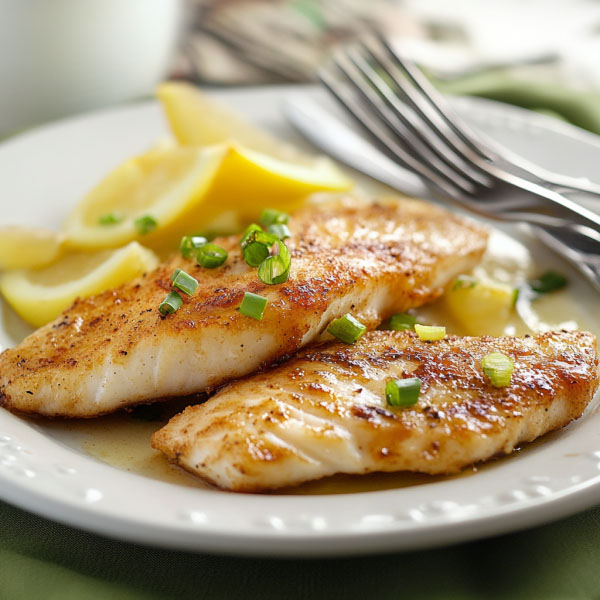
Crispy Pan-Fried Fish Fillets – Juicy, Golden, and Effortlessly Elegant
Pan-fried fish fillets are a kitchen essential, offering a perfect balance of comfort and elegance in one simple dish. The exterior achieves a golden, crispy crust while the interior remains tender, flaky, and juicy—a combination that makes every bite irresistible. Unlike deep-fried options, pan-frying allows you to enjoy a lighter, healthier meal without sacrificing flavor or indulgence.
Whether you’re cooking a weeknight dinner for the family or impressing guests at a dinner party, pan-fried fish is quick, approachable, and satisfying. With just a few simple techniques, the right type of fish, and proper pan handling, anyone can achieve that coveted restaurant-quality crust at home. Pair it with fresh lemon, a simple pan sauce, or roasted vegetables, and you have a versatile, elegant dish that feels special without the fuss.
What Are Pan-Fried Fish Fillets?
Pan-fried fish fillets are pieces of fish cooked in a shallow layer of oil or fat over medium to medium-high heat. This method produces a crispy, golden-brown exterior while keeping the flesh tender and moist. Unlike deep-frying, which fully immerses the fish in hot oil, pan-frying requires only a small amount of fat, making it healthier, less messy, and easier to control.
This technique is beloved by home cooks because it’s fast, versatile, and requires minimal ingredients. Pan-frying works for a variety of fish types and can accommodate both skin-on and skinless fillets. The quick sear locks in flavor, prevents the delicate flesh from falling apart, and produces a satisfying contrast between crunchy crust and soft interior.
Pan-fried fish fillets can be served simply with lemon and herbs or dressed up with a pan sauce, compound butter, or fresh vegetables. The method is perfect for weeknight dinners, meal prep, or casual entertaining, offering restaurant-quality results without complicated techniques or long cooking times.
Why You’ll Love This Recipe
This pan-fried fish fillets recipe is quick, versatile, and impressive. It works for casual weeknight meals or a polished dinner for guests. The crispy, golden exterior and juicy, flaky interior deliver a restaurant-style texture with minimal effort.
Unlike deep-fried fish, this method uses less oil, making it lighter while still indulgent. The fillets cook in minutes, requiring just a handful of pantry staples, yet the result is visually elegant and flavorful.
You’ll also love the flexibility: season simply with salt, pepper, and lemon, or add herbs, spices, or a light flour dredge for extra crunch. The fish pairs beautifully with pan sauces, fresh salsas, or simple roasted vegetables, allowing you to customize every meal.
Pan-fried fish is not just delicious—it’s satisfying to make. With a few careful steps, you can create a golden-crusted, moist, and tender fillet every time, making this technique a go-to for home cooks seeking a balance of flavor, texture, and elegance.
What Fish Works Best for Pan-Frying
Firm white fish fillets are ideal for pan-frying because they hold together during cooking and develop a crisp crust. Options include cod, haddock, tilapia, basa, halibut, and pollock. These fish have mild flavors, flaky flesh, and firm textures that lend themselves well to quick, high-heat cooking.
Skin-On vs. Skinless: Fillets with skin add extra flavor and help hold the fish together. The skin crisps beautifully in the pan, providing texture and richness. Skinless fillets cook faster and are easier for serving guests or for meal prep.
Fresh vs. Frozen Fish: Fresh fish often has the best texture and flavor, but high-quality frozen fillets work well if thawed properly. Pat thawed fish dry with paper towels to remove excess moisture, which is critical for achieving a crispy exterior.
Thickness Matters: Thicker fillets (about 1–1.5 inches) allow for a crispy crust while maintaining a juicy interior. Very thin fillets cook too quickly and can become dry if overcooked.
Tips for Success:
-
Let fish rest at room temperature for 10–15 minutes before cooking for even heat distribution.
-
Season both sides generously with salt and pepper.
-
Avoid overcrowding the pan to maintain high heat and crispiness.
Choosing the right fish and handling it carefully are the foundations of perfect pan-fried fillets—simple tweaks can elevate an everyday meal to something special.
Tools & Equipment You’ll Need
You don’t need fancy kitchen gear to achieve crispy, golden pan-fried fish fillets, but having the right tools makes the process easier:
-
Pan: A cast-iron skillet or heavy-bottomed stainless steel pan is perfect for even heat and a crisp crust. Non-stick pans work too, especially for delicate fish.
-
Fish Spatula: Flexible, slotted spatulas make flipping fillets easy without breaking the fish.
-
Paper Towels: Essential for patting fish dry and removing excess moisture.
-
Thermometer: Optional, but a digital thermometer ensures fillets reach 145°F (63°C) for safe cooking.
-
Splatter Screen: Helps keep your stovetop clean and prevents oil from popping.
Keeping it simple is key—just a sturdy pan, a spatula, and proper prep are enough to achieve professional-quality results at home.
Pro Tip: Preheat the pan fully before adding oil and fish. This prevents sticking and ensures a beautiful golden crust.
Step-by-Step Pan-Fried Fish Fillets Recipe
Step 1 – Prep the Fish
Pat fillets dry with paper towels to remove surface moisture. Season both sides with salt and pepper. For a light crust, optionally dredge in flour or a mix of flour and paprika.
Step 2 – Heat the Pan & Oil
Place a skillet over medium-high heat and add 1–2 tablespoons of oil with a high smoke point (vegetable, canola, or grapeseed). Allow the pan and oil to heat fully before adding the fish—this is key for a golden, crispy exterior.
Step 3 – Cook the Fillets
Place fillets in the pan, skin side down if applicable. Don’t overcrowd the pan. Cook for 3–5 minutes depending on thickness. The edges will start to turn opaque. Flip carefully with a fish spatula and cook the other side 2–4 minutes until the fish is opaque and flakes easily.
Step 4 – Finishing Touches
Optional: Add a knob of butter, fresh herbs, or a squeeze of lemon to the pan during the last minute and baste the fillets. Let fish rest briefly off heat for a few minutes to set the juices.
Step 5 – Serving Suggestions
Serve immediately with lemon wedges, a fresh herb garnish, or simple pan sauces like garlic butter or tartar. Pan-fried fish pairs beautifully with roasted vegetables, mashed potatoes, rice, or a crisp salad for a complete meal.
Chef’s Tips:
-
Avoid flipping multiple times—one flip ensures a crisp crust.
-
Use medium-high heat; too low and the fish will steam instead of sear.
-
Keep a close eye; fillets cook quickly and overcooking dries them out.
Pro Tips for Perfect Pan-Fried Fish Every Time
-
Pat Dry: Remove as much moisture as possible from fillets. Wet surfaces prevent crisping.
-
Don’t Overcrowd the Pan: Cook in batches if necessary to maintain high heat. Overcrowding lowers temperature, causing the fish to steam rather than fry.
-
High Smoke Point Oil: Vegetable, canola, or grapeseed oil works best. Avoid butter alone for initial sear—it burns too quickly.
-
Flip Only Once: Let the first side develop a golden crust before turning. Multiple flips can break fillets.
-
Check Doneness: Flesh should be opaque and flake easily with a fork. Thicker fillets may need a minute or two longer.
-
Optional Enhancements: Butter basting with garlic and herbs adds flavor and richness after the initial sear.
-
Rest Briefly: Let the fillets rest for 1–2 minutes to allow juices to redistribute, keeping them tender and moist.
Following these simple techniques ensures perfectly cooked, golden, and flavorful pan-fried fish fillets every time, whether for a quick weeknight dinner or an elegant dinner presentation.


 Laura Mariano