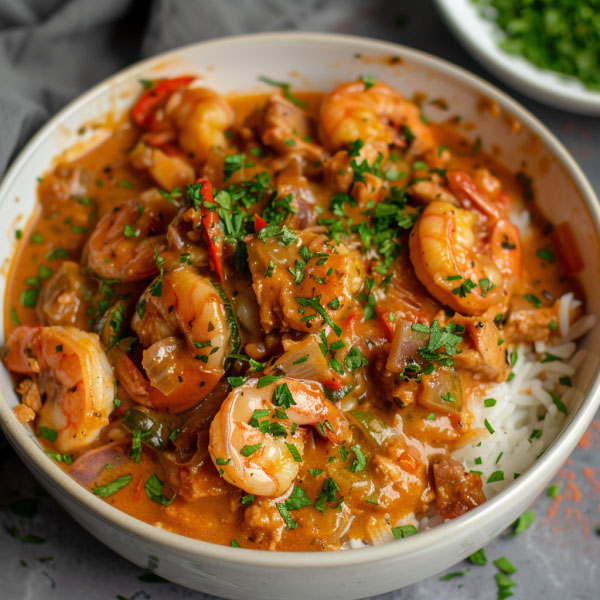
Cajun Crawfish and Shrimp Étouffée
Few dishes capture the heart of Louisiana cooking quite like étouffée. Rich, velvety, and brimming with flavor, this classic Cajun recipe features crawfish and shrimp simmered in a roux-based sauce that’s deeply seasoned with spices and aromatics. Served over a bed of fluffy rice, it’s the kind of dish that feels like a warm embrace—comforting, soulful, and unforgettable. Étouffée is more than just food; it’s a cultural icon in Louisiana, a dish that brings families together and celebrates the bounty of the bayou. Whether you’re new to Cajun cooking or a seasoned fan, crawfish and shrimp étouffée is a recipe worth mastering.
The Appeal of Étouffée
Étouffée is the epitome of comfort food. Its name means “smothered” in French, and that’s exactly what it is—seafood smothered in a rich, flavorful sauce. The dish balances the natural sweetness of crawfish and shrimp with the savory depth of a dark roux and Cajun spices. Every bite is bold yet balanced, spicy yet smooth.
It’s also versatile. Étouffée can be served at a casual family dinner or as the centerpiece of a festive gathering. It’s hearty enough to satisfy, yet refined enough to impress. The sauce clings to rice, making each spoonful a perfect blend of textures and flavors.
What makes étouffée truly special is its ability to transport you straight to Louisiana. The aroma of the Cajun trinity—onion, bell pepper, and celery—mingling with garlic and spices is unmistakable. It’s a dish that speaks of tradition, hospitality, and the joy of sharing good food.
The History of Cajun & Creole Étouffée
Étouffée has its roots in Louisiana’s rich culinary traditions, blending Cajun and Creole influences. Cajun cuisine, developed by French-speaking Acadians, is known for its rustic, hearty flavors, while Creole cooking reflects a mix of French, Spanish, African, and Caribbean influences.
The earliest versions of étouffée appeared in the mid-20th century, often featuring crawfish—a staple of Louisiana’s waterways. Crawfish étouffée quickly became a beloved dish, celebrated at festivals and family gatherings. Shrimp versions followed, offering a slightly different but equally delicious take.
The main difference between Cajun and Creole étouffée lies in the use of tomatoes. Creole versions often include them, lending a lighter, sweeter flavor, while Cajun versions rely on a darker roux and bolder spices. Both are authentic, and both showcase the ingenuity of Louisiana cooks who turned humble ingredients into culinary masterpieces.
Nutritional Notes
Crawfish and shrimp aren’t just delicious—they’re also nutritious. Crawfish is a lean source of protein, low in fat, and rich in minerals like zinc and iron. Shrimp adds omega-3 fatty acids, iodine, and antioxidants like astaxanthin, which support heart and brain health.
The roux, made from butter and flour, contributes richness but also adds calories. Rice provides the carbohydrate base, making étouffée filling and satisfying. While traditional recipes lean indulgent, there are ways to lighten the dish. Using brown rice instead of white adds fiber, and reducing the butter in the roux lowers fat content.
Herbs and spices not only enhance flavor but also bring health benefits. Garlic, cayenne, and paprika have anti-inflammatory properties, while parsley adds vitamins A and C. Étouffée proves that comfort food can be both nourishing and indulgent when enjoyed in moderation.
Why This Recipe Works
The magic of étouffée lies in its layers of flavor. A well-made roux provides a deep, nutty base. The Cajun trinity—onion, bell pepper, and celery—builds aromatic complexity. Garlic, tomatoes, and stock enrich the sauce, while Cajun seasoning ties everything together with spice and warmth.
Adding crawfish and shrimp elevates the dish, bringing sweetness and briny richness that balance the bold sauce. Served over rice, it becomes a complete meal that’s hearty yet elegant.
Tip: Always use fresh seafood when possible. It makes a noticeable difference in flavor and texture.
Step-by-Step Preparation Guide
Step 1: Make the Roux In a heavy skillet, melt butter and whisk in flour. Cook slowly over medium heat, stirring constantly, until the roux turns a deep caramel color. This step is crucial—patience ensures depth of flavor.
Step 2: Add the Cajun Trinity Stir in finely chopped onion, bell pepper, and celery. Cook until softened and fragrant.
Step 3: Build the Sauce Add garlic, diced tomatoes (optional for Creole style), and seafood stock. Stir well to combine.
Step 4: Season Generously Sprinkle in Cajun spices—paprika, cayenne, thyme, and bay leaf. Taste and adjust salt carefully, as seasoning blends can be salty.
Step 5: Add Seafood Stir in crawfish tails and shrimp. Simmer gently until the seafood is just cooked through, about 5–7 minutes.
Step 6: Serve Over Rice Spoon the étouffée over fluffy white rice. Garnish with parsley or green onions for freshness.
Expert Tip: Stir the roux constantly to avoid burning. A burnt roux will ruin the dish, so take your time and keep the heat moderate.
Cajun Crawfish and Shrimp Étouffée Recipe | Authentic Southern Dish

Cajun Crawfish and Shrimp Étouffée is a classic Southern dish featuring tender crawfish and shrimp simmered in a rich, flavorful roux-based sauce with onions, bell peppers, and spices. Served over fluffy rice, this comforting dish delivers bold, savory flavors with just the right amount of heat. Perfect for special occasions or a hearty family meal, it’s a true taste of Cajun cuisine made easy at home.
- Heavy skillet or Dutch oven
- Wooden spoon or whisk
- Cutting board and knife
- Measuring Cups and Spoons
- Sauce ladle
- Rice cooker or saucepan
- Crawfish tails (peeled)
- Shrimp (peeled and deveined)
- Butter
- All-purpose flour
- Onion, bell pepper, celery (Cajun trinity)
- Garlic
- Seafood or chicken stock
- Diced tomatoes (optional for Creole style)
- Cajun seasoning blend
- Salt and pepper
- Cooked white rice
- Fresh parsley or green onions for garnish
Make the roux: Melt butter in a skillet. Whisk in flour and cook slowly, stirring constantly, until the roux turns a deep caramel brown.
Add aromatics: Stir in onion, bell pepper, and celery. Cook until softened.
Build the sauce: Add garlic, stock, and tomatoes (if using). Stir well.
Season: Sprinkle in Cajun spices, adjusting to taste.
Add seafood: Stir in crawfish tails and shrimp. Simmer gently until seafood is just cooked, about 5–7 minutes.
Serve: Spoon étouffée over hot rice. Garnish with parsley or green onions.
Use fresh seafood whenever possible for the best flavor.
For a lighter version, reduce butter in the roux and serve with brown rice.
Creole-style includes tomatoes; Cajun-style skips them for a darker, spicier sauce.
Étouffée tastes even better the next day—make ahead and reheat gently.
Avoid overcooking shrimp and crawfish; they should be tender, not rubbery.


Be First to Comment