

 Laura Mariano
Introduction & Hook
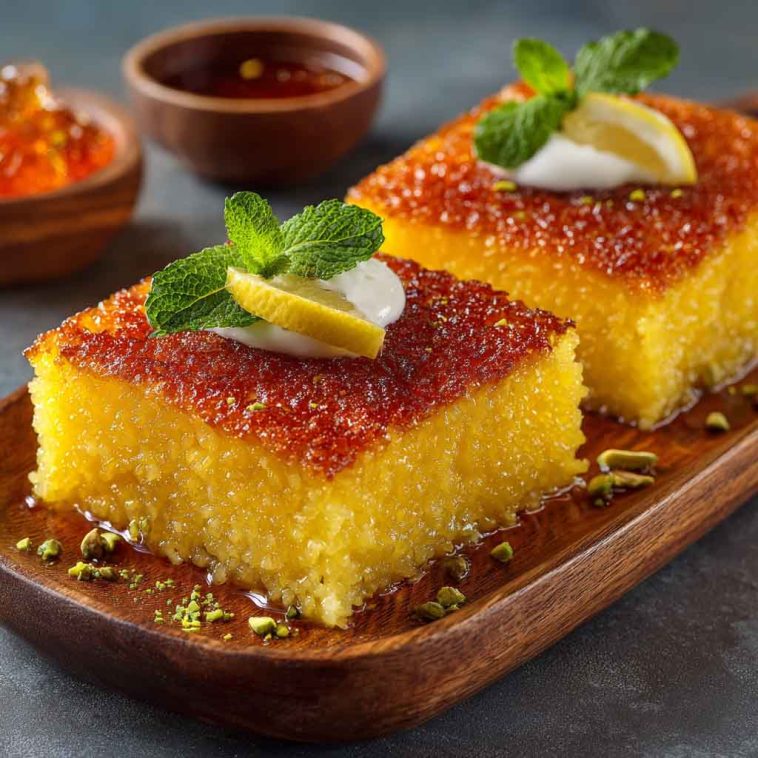
The moment a slice of Revani is placed before you, the senses awaken. Its golden sponge glistens under a delicate sheen of syrup, promising sweetness with every bite. The aroma is captivating—semolina baked to perfection, infused with citrus zest that releases notes of lemon and orange, mingling with the gentle fragrance of sugar syrup. As the fork sinks into the cake, it yields softly, yet with a subtle grainy texture that distinguishes it from ordinary sponges. The first taste is a revelation: moist, tender, and balanced, with sweetness that lingers but never overwhelms. Revani is more than dessert—it’s a cultural emblem, a dish that has traveled centuries and borders, carrying with it stories of hospitality, celebration, and tradition. In Turkish cuisine, few desserts embody comfort and elegance so seamlessly. Revani is beloved because it feels both familiar and festive, a timeless treat that connects generations.
What is Revani?
Revani is a traditional Turkish semolina cake soaked in syrup, cherished for its simplicity and depth of flavor. Made with semolina flour, eggs, sugar, and yogurt, it is baked into a golden sponge and then drenched in a fragrant syrup, often flavored with lemon or orange. The result is a moist, tender cake that balances sweetness with refreshing citrus notes.
Its origins trace back to the Ottoman Empire, where Revani was a popular dessert served in palaces and homes alike. The name itself is thought to be linked to the conquest of Revan (modern-day Yerevan) in the 16th century, symbolizing victory and celebration. Over time, Revani spread across Turkey and neighboring regions, becoming a staple in Middle Eastern and Mediterranean cuisines.
Regional variations abound: in Greece, a similar dessert is known as “Ravani,” often flavored with coconut; in Egypt, “Basbousa” shares the same semolina base but incorporates rosewater or orange blossom. Each version reflects local tastes, yet the essence remains the same—a semolina cake enriched with syrup, embodying comfort and tradition.
The Cultural Significance of Revani
In Turkish culture, Revani is more than a dessert—it is a symbol of hospitality and generosity. Offering Revani to guests is a gesture of warmth, a way of saying “welcome” with sweetness. It frequently appears at family gatherings, weddings, and religious holidays, where sharing food is central to the celebration. Its presence on the table signifies abundance and joy, reminding everyone that life’s moments are best savored together.
Revani’s role in hospitality is deeply rooted in Turkish tradition, where desserts often carry symbolic meaning. Sweetness represents good fortune, kindness, and the hope for a prosperous future. Serving Revani at weddings, for example, is a way of blessing the couple with a sweet life ahead. During holidays such as Ramadan, it becomes part of the festive spread, offering comfort after long days of fasting.
Beyond formal occasions, Revani is also a family favorite, often prepared at home to mark small celebrations or simply to enjoy with tea. Its accessibility—made from everyday ingredients—ensures it remains a dessert for all, not just the elite. In this way, Revani bridges the gap between tradition and modern life, continuing to embody the values of generosity and togetherness in Turkish culture.
Flavor Profile & Texture
Revani’s charm lies in its unique flavor and texture. Semolina, coarser than wheat flour, gives the cake a subtle graininess that sets it apart from typical sponges. This texture creates a delightful contrast: soft and moist, yet with a gentle bite that makes each mouthful satisfying.
The syrup infusion is the heart of Revani. Once baked, the cake is soaked in warm syrup, allowing it to absorb sweetness and moisture. The syrup is often infused with citrus zest or juice, creating a balance between richness and freshness. Lemon adds brightness, while orange lends a fragrant, floral note. The result is a cake that is sweet but never cloying, with layers of flavor that unfold gradually.
Every bite offers harmony: the buttery warmth of semolina, the tender crumb softened by syrup, and the refreshing lift of citrus. It’s a dessert that feels indulgent yet light, making it suitable for both festive occasions and everyday enjoyment.
Why Revani Stands Out
Revani distinguishes itself through its simplicity and elegance. Made from humble ingredients—semolina, sugar, yogurt, eggs—it transforms into a dessert that feels luxurious. The syrup elevates the cake, turning it into something moist, fragrant, and deeply satisfying. Unlike elaborate pastries, Revani requires minimal effort yet delivers maximum flavor.
Its versatility also makes it timeless. It can be served plain, garnished with nuts, or paired with cream, adapting to different tastes and occasions. Revani bridges tradition and modernity, appealing to those who cherish heritage while satisfying contemporary palates. It is a dessert that embodies Turkish culinary philosophy: simple ingredients, prepared with care, yielding flavors that resonate across generations.
Revani stands out because it is more than a cake—it is a cultural experience, a sweet reminder of hospitality, celebration, and the enduring power of food to connect people.

Turkish Revani – Traditional Semolina Cake Recipe
Equipment
- Mixing bowls
- Whisk or hand mixer
- Baking dish (9x13 inch recommended)
- Saucepan (for syrup)
- Measuring Cups and Spoons
Ingredients
For the Cake:
- 1 cup semolina (coarse preferred)
- ½ cup all-purpose flour
- 1 cup sugar
- 3 large eggs
- 1 cup plain yogurt
- ½ cup vegetable oil
- 1 tsp baking powder
- Zest of 1 lemon or orange
For the Syrup:
- 2 cups sugar
- 2 cups water
- Juice of ½ lemon
Optional Garnish:
- Crushed pistachios, coconut flakes, or whipped cream
Instructions
- Preheat oven to 350°F (175°C). Grease a baking dish.
- In a bowl, whisk eggs and sugar until pale and fluffy.
- Add yogurt, oil, and citrus zest. Mix gently.
- Fold in semolina, flour, and baking powder until combined. Do not overmix.
- Pour batter into the baking dish and bake for 30–35 minutes, until golden and a toothpick comes out clean.
- While cake bakes, prepare syrup: simmer sugar, water, and lemon juice for 10 minutes until slightly thickened.
- Remove cake from oven, cool for 5 minutes, then pour warm syrup evenly over the warm cake.
- Allow cake to absorb syrup for at least 30 minutes before slicing.
- Garnish with pistachios or coconut flakes before serving.
Notes
- Semolina Choice: Coarse semolina gives traditional texture; fine semolina yields smoother crumb.
- Syrup Timing: Always pour syrup while cake is warm for best absorption.
- Flavor Variations: Add rose water, orange blossom, or coconut for regional twists.
- Storage: Keeps 3–4 days refrigerated. Can be frozen without syrup; add syrup after thawing.
- Serving Style: Traditionally cut into squares or diamonds, served at room temperature with tea or coffee.