

 Laura Mariano
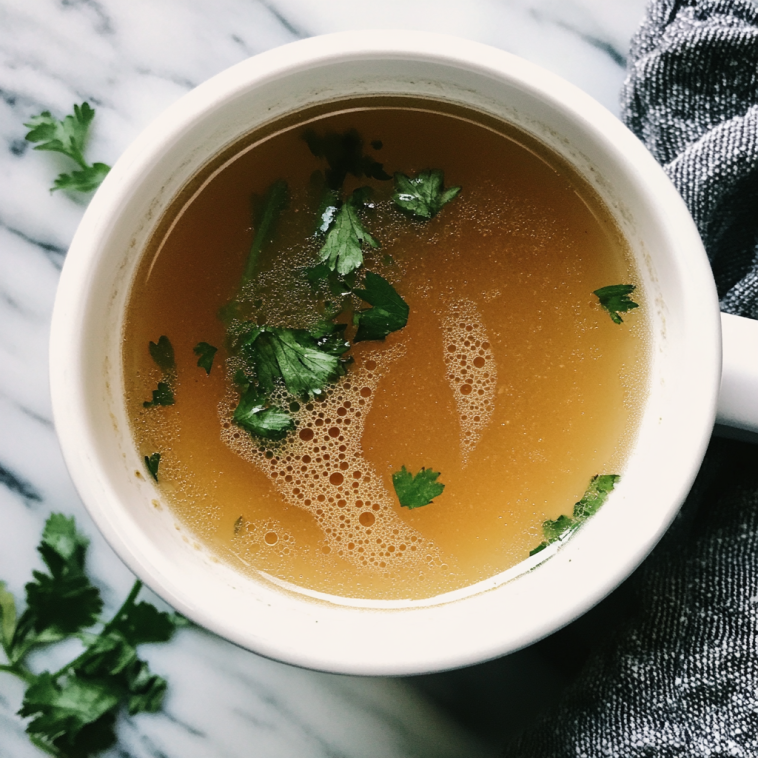
Liquid Gold for Your Body and Soul
There’s a certain comfort in a pot of chicken bone broth gently simmering away — the aroma filling the kitchen, the steam curling into the air. I first started making it during a particularly cold winter, and it quickly became a ritual: a mug in my hands, warmth in my belly, and a sense of being nourished from the inside out. Chicken bone broth is more than just a recipe; it’s a timeless kitchen staple that has been cherished across cultures for centuries. Known for its rich flavor and restorative qualities, it’s as at home in a fine dining kitchen as it is in a humble family pot. Whether sipped on its own, used as a base for soups, or added to sauces and grains, it’s a versatile, nutrient-packed elixir. In every ladle, you’ll find not just flavor, but a tradition of care and healing.
What Is Chicken Bone Broth? A Quick Primer
Chicken bone broth is a nutrient-rich liquid made by simmering chicken bones — often with vegetables, herbs, and a splash of vinegar — for an extended period. This slow cooking extracts collagen, minerals, and amino acids from the bones and connective tissues, resulting in a deeply flavorful and nourishing broth. It differs from stock, which is typically simmered for a shorter time (2–3 hours) and focuses on flavor rather than nutrient extraction, and from regular broth, which is often made from meat and vegetables without long-simmered bones. Bone broth has deep roots in traditional cooking, from Asian soups to European stews, and has seen a modern resurgence thanks to its health benefits and culinary versatility. The bones are the key — they’re what give the broth its body, its rich mouthfeel, and its treasure trove of nutrients like collagen, calcium, and magnesium.
Health Benefits of Bone Broth
Chicken bone broth is often called “liquid gold” for good reason — it’s packed with nutrients that support multiple aspects of health.
- Gut Healing & Digestive Support: The gelatin in bone broth helps soothe and protect the digestive tract lining, making it a gentle option for those with sensitive stomachs or digestive issues.
- Joint Health: Collagen, gelatin, and compounds like chondroitin sulfate and glucosamine support cartilage health, reduce inflammation, and may ease joint discomfort.
- Immune Boost: The amino acids and minerals in bone broth help strengthen the immune system, making it a go-to during cold and flu season.
- Skin Nourishment: Collagen supports skin elasticity and hydration, contributing to a healthy, youthful glow.
Bold Tip: Look for a gelatinous texture once your broth cools — it’s a sign that you’ve extracted plenty of collagen and nutrients.
Whether you sip it warm from a mug, use it as a base for soups, or incorporate it into sauces and grains, bone broth is a delicious way to nourish your body from the inside out.
Choosing the Best Bones and Ingredients
- Chicken Bones: You can use raw or roasted bones. Roasted bones add a deeper, richer flavor, while raw bones yield a lighter broth. A whole carcass works well, but wings, necks, and especially feet are collagen powerhouses.
- Onion: The essential aromatic — it adds sweetness and depth.
- Optional Add-ins: Garlic for immune support, celery for earthiness, carrots for sweetness, and herbs like thyme, parsley, or bay leaves for fragrance.
- Apple Cider Vinegar: A splash helps draw minerals from the bones into the broth.
Bold Tip: Roast your bones at 200°C (400°F) for 20–30 minutes before simmering to enhance flavor and color.
Choosing high-quality, preferably organic, bones ensures a cleaner, more nutrient-dense broth. The vegetables and herbs you add will subtly influence the flavor, so keep them fresh and balanced.
Cooking Methods: Stovetop, Instant Pot, or Slow Cooker
- Stovetop: Place bones, vegetables, vinegar, and water in a large pot. Bring to a gentle simmer and cook uncovered for 6–12 hours, skimming foam as needed. Produces a classic, rich broth but requires occasional attention.
- Instant Pot: Add all ingredients, cover with water (not exceeding max line), and cook on high pressure for 2–3 hours. Quick, hands-off, and still yields a flavorful, nutrient-rich broth.
- Slow Cooker: Combine ingredients, cover with water, and cook on low for 12–18 hours. Perfect for overnight cooking with minimal effort.
Pros & Cons: Stovetop offers traditional control, Instant Pot is fastest, and slow cooker is most convenient for long simmers.
Bold Tip: Avoid boiling — keep it at a gentle simmer to preserve clarity and nutrients.
Straining and Storing Your Broth
Once cooking is complete, strain the broth through a fine mesh strainer into a heatproof container for a smooth texture. Discard solids. Let it cool to room temperature before refrigerating or freezing. For storage, use mason jars for fridge storage (up to 5 days), silicone molds for portioned freezing, or freezer bags laid flat for space-saving storage (up to 3 months). Skim off the solidified fat after chilling if you prefer a lighter broth, or keep it for added flavor in cooking.

The Best Chicken Bone Broth Recipe – Rich, Nourishing & Slow-Simmered to Perfection
Equipment
- Large stockpot, Instant Pot, or slow cooker
- Fine mesh strainer
- Heatproof containers (mason jars, freezer-safe bags, or silicone molds)
- Tongs or slotted spoon
Ingredients
- 1.5–2 kg (3–4 lbs) chicken bones (carcass, wings, necks, feet; raw or roasted)
- 1 large onion, quartered
- 2 carrots, chopped (optional)
- 2 celery stalks, chopped (optional)
- 3–4 garlic cloves, smashed (optional)
- 2–3 bay leaves
- 1–2 sprigs fresh thyme or parsley
- 1 tbsp apple cider vinegar (or lemon juice)
- 1 tsp whole black peppercorns
- Water to cover (about 4–5 liters)
- Optional boosters: dried mushrooms, kombu, turmeric, ginger
Instructions
- Prepare Bones: If desired, roast bones at 200°C (400°F) for 20–30 minutes for deeper flavor.
- Load Pot: Place bones, vegetables, herbs, vinegar, and spices in your pot. Cover with cold water.
Simmer:
- Stovetop: Bring to a gentle simmer, skim foam, and cook uncovered for 6–12 hours.
- Instant Pot: Cook on high pressure for 2–3 hours, natural release.
- Slow Cooker: Cook on low for 12–18 hours.
- Add Fresh Herbs: In the last hour, add delicate herbs like parsley to avoid bitterness.
- Strain: Pour through a fine mesh strainer into containers.
- Cool & Store: Cool completely before refrigerating (up to 5 days) or freezing (up to 3 months).
Notes
- Gelatin Test: A wobbly, jelly-like texture when chilled means you’ve extracted plenty of collagen.
- Flavor Adjustments: Season lightly during cooking; adjust salt when using in recipes.
- Fat Use: Skim fat for a lighter broth, or save it for roasting vegetables or frying eggs.
- Portioning Tip: Freeze in silicone molds for easy single-serving use.