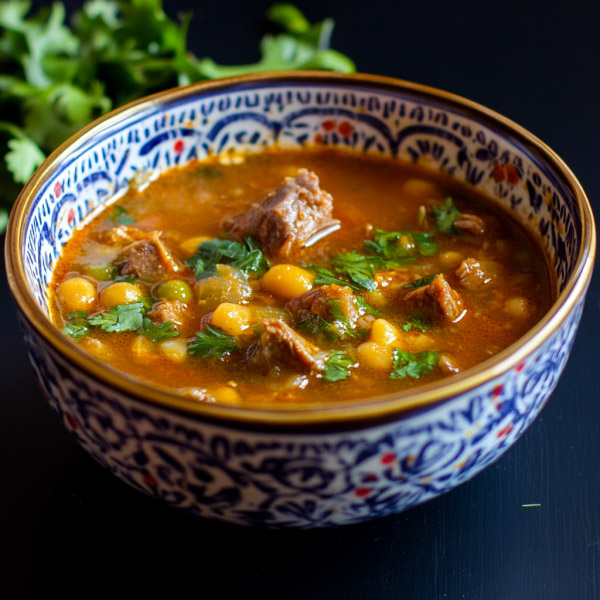
Moroccan Harira Soup with Lamb (Authentic, Hearty & Comforting)
Few dishes capture the warmth and hospitality of Morocco quite like Harira. This beloved Moroccan soup is deeply rooted in tradition and cherished in homes across the country. Rich, nourishing, and fragrant with spices, Harira is often the centerpiece of the evening meal during Ramadan, when families gather to break the fast together.
At its heart, Harira is a comforting tomato-based soup filled with tender lamb, chickpeas, lentils, and generous handfuls of fresh herbs. The flavors are beautifully balanced—warm spices like turmeric and ginger provide depth, while fresh parsley, cilantro, and a squeeze of lemon brighten the dish. The result is a soup that feels both hearty and refreshing at the same time.
Beyond its cultural significance, Harira is also incredibly satisfying and versatile. It can be served as a nourishing starter, a hearty main course, or a comforting meal on a cool evening.
This comforting Moroccan Harira with lamb is deeply flavorful, nourishing, and surprisingly simple to prepare at home.
What Is Moroccan Harira Soup?
Harira is one of the most iconic soups in Morocco, celebrated for its rich flavor, hearty texture, and cultural importance. Traditionally made with tomatoes, lamb, chickpeas, lentils, and fragrant herbs, Harira is both a comforting everyday dish and a special meal served during important occasions.
The soup is particularly associated with Ramadan, when it is commonly served at sunset to break the fast. After a long day without food, Harira provides warmth, hydration, and nourishment, thanks to its balanced combination of protein, legumes, and vegetables.
At its core, Harira is a tomato-based soup layered with warming spices such as turmeric, ginger, cinnamon, and black pepper. The addition of fresh parsley and cilantro gives the broth a bright, herbal flavor that balances the richness of the lamb and legumes.
While the core ingredients remain similar across the country, many regions in Morocco have their own variations. Some versions include vermicelli noodles, while others use a flour slurry to thicken the soup. Regardless of the variation, Harira remains a powerful symbol of Moroccan culinary heritage and hospitality.
Why This Harira Recipe Works
This Harira recipe captures the essence of traditional Moroccan cooking while remaining approachable for home cooks. With a combination of tender lamb, hearty legumes, and fragrant spices, the soup delivers deep flavor without requiring complicated techniques.
One of the reasons Harira is so beloved is its perfect balance of ingredients. The lamb provides rich, savory depth, while chickpeas and lentils add texture and plant-based protein. Tomatoes form the flavorful base, and fresh herbs bring brightness that keeps the soup from feeling too heavy.
Another advantage of Harira is that it’s a true one-pot meal. Everything cooks together in a single pot, allowing the flavors to gradually develop and blend. This makes the recipe both convenient and ideal for feeding a crowd.
Harira is also excellent for meal prep. The soup stores well in the refrigerator and freezes beautifully, making it a great option for preparing meals in advance.
Tip: Harira often tastes even better the next day, once the spices have had time to fully meld together.
Traditional Ingredients in Harira Soup
The magic of Harira comes from its combination of simple ingredients that work together to create a deeply satisfying soup. Each component contributes something essential to the dish’s flavor and texture.
Lamb
Lamb is traditionally used to give Harira its rich, slow-simmered flavor. As it cooks, the meat releases savory juices that deepen the taste of the broth.
Chickpeas
Chickpeas are a key ingredient that provides substance and heartiness. Their mild, nutty flavor complements the tomato base while adding satisfying texture.
Lentils
Lentils cook quickly and add extra protein and thickness to the soup. They help create the signature hearty consistency that Harira is known for.
Tomatoes
Tomatoes form the base of the soup, providing acidity, sweetness, and vibrant color. Fresh tomatoes or blended tomato mixtures are commonly used.
Fresh Herbs
Parsley and cilantro are essential in authentic Harira. They add brightness, freshness, and a distinctive herbal aroma that balances the richness of the soup.
Warm Spices
Turmeric, ginger, cinnamon, and black pepper give Harira its warm and comforting flavor profile. These spices are used gently so they enhance the soup without overpowering it.
Thickening Element
Traditional Harira is thickened either with a flour slurry or with broken vermicelli noodles, giving the soup its characteristic hearty texture.
Tip: Use fresh herbs generously—they are essential for authentic Harira flavor.
Essential Equipment for Making Harira
One of the great things about Harira is that it requires only basic kitchen equipment. You don’t need any special tools to create this traditional Moroccan soup at home.
A large soup pot or Dutch oven is the most important piece of equipment. It provides enough space for the lamb, legumes, and broth to simmer comfortably while the flavors develop.
A wooden spoon is useful for stirring the soup as it cooks, especially when incorporating spices or adding the thickening mixture.
A blender can be helpful if you want to puree fresh tomatoes before adding them to the pot, although it is optional.
Finally, a ladle makes it easy to serve the soup into bowls.
With these simple tools, anyone can prepare authentic Harira at home.
Step-by-Step Moroccan Harira with Lamb
Making Harira is a rewarding process that builds layers of flavor as the soup slowly simmers.
Step 1 – Prepare the Base
Begin by heating a little oil in a large soup pot. Add diced lamb and chopped onion, sautéing them together until the meat begins to brown and the onion softens. Stir in the spices—typically turmeric, ginger, cinnamon, and black pepper—to coat the meat and release their aromas.
Step 2 – Add Tomatoes and Broth
Next, add fresh or blended tomatoes to the pot along with water or stock. The tomatoes form the rich base of the soup and give Harira its signature color and depth of flavor. Allow the mixture to come to a gentle simmer so the ingredients begin to meld together.
Step 3 – Add Chickpeas and Lentils
Stir in chickpeas and lentils. These legumes add heartiness and help transform the soup into a filling meal. Simmer the soup until the lentils soften and the lamb becomes tender.
Step 4 – Add Fresh Herbs
Once the soup is nearly cooked, stir in generous amounts of chopped parsley and cilantro. These herbs add brightness and balance the richness of the lamb and tomatoes.
Step 5 – Thicken the Soup
Traditional Harira often includes a flour slurry or small broken pieces of vermicelli noodles to thicken the soup. Slowly stir the slurry into the pot while mixing continuously to avoid lumps.
Step 6 – Finish with Lemon
Just before serving, add a squeeze of fresh lemon juice. This simple step brightens the flavors and adds a subtle citrus note that lifts the entire dish.
Important Tip: Stir constantly when adding the flour slurry to prevent lumps and ensure the soup thickens smoothly.
Expert Tips for Authentic Harira Flavor
Creating truly authentic Harira is all about patience, balance, and attention to detail. A few simple techniques can elevate the soup and bring out its traditional Moroccan flavor.
One of the best ways to deepen the flavor is to use bone-in lamb instead of boneless cuts. The bones add richness to the broth as the soup simmers, resulting in a fuller, more complex taste.
Another important tip is to allow the soup to simmer slowly. Harira benefits from gentle cooking, which helps the lamb become tender and allows the spices to blend harmoniously with the tomatoes and legumes.
Fresh herbs also play a major role in the soup’s character. Authentic Harira almost always includes both parsley and cilantro, which add freshness and balance the richness of the broth.
Finally, pay attention to the soup’s thickness. Harira should have a hearty texture but still be pourable. If it becomes too thick, simply add a little warm water or broth and stir until the desired consistency is reached.
Tip: The soup should be hearty but still pourable—never overly thick or pasty.


 Laura Mariano