Title & Introduction
There’s something truly uplifting about a bowl of fresh, vibrant salad—crisp vegetables, lively colors, and flavors that feel both light and satisfying. Among the myriad salad options, the Mediterranean Bean Salad stands out as a perfect blend of health and flavor. It’s not just a dish; it’s a celebration of simple, wholesome ingredients that come together effortlessly.
This salad is packed with protein-rich beans, crisp vegetables, fresh herbs, and a bright, tangy dressing that highlights the magic of olive oil and lemon. Its versatility makes it ideal for a quick lunch, a hearty side for dinner, or a make-ahead option for meal prep. Whether you’re plant-based, following a Mediterranean diet, or simply love nutritious, colorful meals, this bean salad is designed to please both the eyes and the palate.
In the sections ahead, we’ll explore what makes it special, why it’s so popular today, and how to craft the perfect bowl step by step.
What Is Mediterranean Bean Salad?
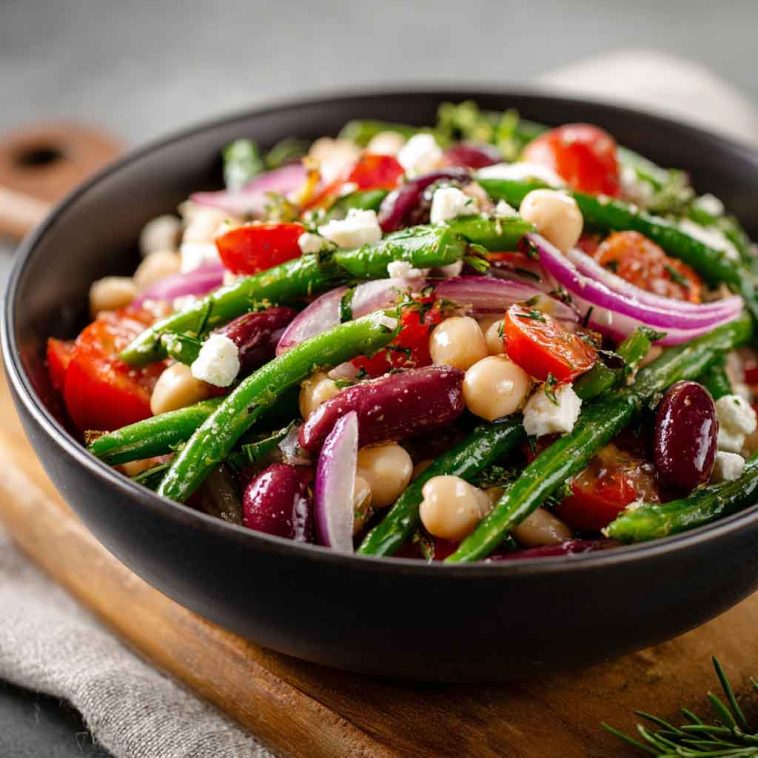
At its core, Mediterranean Bean Salad is a cold, plant-forward salad that highlights beans as the star ingredient. Unlike creamy bean dishes or warm, cooked bean salads, this version emphasizes bright, fresh flavors and contrasting textures. Think tender yet firm beans paired with crisp vegetables, aromatic herbs, and a zesty olive oil-based dressing.
Rooted in Mediterranean culinary traditions—particularly Greek and Italian kitchens—this salad reflects the region’s philosophy of simple, seasonal ingredients treated with care. Classic Mediterranean elements, like fresh parsley, lemon juice, and olive oil, not only enhance taste but also support a nutrient-rich diet.
What sets this salad apart from other bean preparations is its balance: the beans provide hearty protein and fiber, while the vegetables add crunch and hydration. The dressing delivers acidity and richness without overwhelming the natural flavors. By relying primarily on canned beans, this salad can be ready in minutes, making it practical for modern kitchens while staying true to Mediterranean principles of flavor, color, and nutrition.
Why It’s So Popular Today
The Mediterranean Bean Salad has surged in popularity, and for good reason. Its convenience and versatility make it ideal for busy lifestyles. With minimal prep and no cooking required, it’s perfect for meal prepping—a bowl made today can last 3–5 days in the fridge, providing healthy, grab-and-go options.
Its adaptability across dietary patterns also contributes to its trendiness. This salad fits seamlessly into plant-based, vegan, gluten-free, and Mediterranean diets, making it a favorite among diverse eaters. It’s light enough for a quick lunch, satisfying enough as a side for dinner, and hearty enough for a standalone meal when paired with grains or greens.
Budget-conscious cooks love it too. Pantry staples like canned beans, olive oil, and vinegar combine with seasonal produce to create a colorful, nourishing dish without breaking the bank. Beyond practicality, its vibrant colors, fresh herbs, and tangy dressing make it visually appealing—perfect for gatherings, potlucks, or simply brightening up a weekday meal.
Nutrition and Health Benefits
The Mediterranean Bean Salad is as nourishing as it is delicious. With beans at its heart, this salad provides a significant boost of plant-based protein and fiber, supporting satiety, stable blood sugar, and digestive health. The fiber content, combined with the protein from beans like cannellini, chickpeas, and kidney beans, makes this salad a satisfying option for weight management and sustained energy.
The inclusion of fresh vegetables—cucumbers, cherry tomatoes, and bell peppers—adds essential vitamins, minerals, and antioxidants, helping combat inflammation and oxidative stress. Paired with the heart-healthy monounsaturated fats from olive oil, this salad supports cardiovascular health and cholesterol management.
Herbs like parsley and basil contribute not only aromatic flavor but also polyphenols, which may aid immunity and reduce chronic disease risk. A touch of garlic in the dressing further amplifies these health benefits, offering anti-inflammatory and antimicrobial properties.
Pro tip: A typical serving (≈1 cup) provides:
-
Calories: 180–220
-
Protein: 7–9g
-
Fiber: 6–8g
-
Vitamin C: 40% DV
-
Iron: 10% DV
-
Healthy fats: 8–10g
With these nutrients combined, this salad is more than just a side—it’s a balanced, nutrient-dense dish that supports overall well-being while delighting your taste buds.
Core Ingredients Explained
A great Mediterranean Bean Salad begins with understanding its ingredients and the role each plays.
A. Beans (Protein + Fiber)
Cannellini, garbanzo (chickpeas), and kidney beans provide the base. Their creamy texture and mild flavor make them versatile while delivering protein, fiber, and essential minerals like iron and magnesium. Using a mix creates a pleasant contrast in texture and taste.
B. Fresh Vegetables
Cucumbers, cherry tomatoes, bell peppers, and red onions provide crunch, color, and hydration. They contribute antioxidants, vitamin C, and carotenoids, elevating the salad’s nutrition and sensory appeal. Uniform chopping ensures a consistent bite every time.
C. Olives & Optional Add-Ins
Kalamata olives, artichoke hearts, or capers introduce briny notes that balance the beans’ earthiness. Optional ingredients like roasted red peppers or sun-dried tomatoes can elevate flavor complexity.
D. Fresh Herbs
Parsley, mint, or basil bring brightness and a fresh aroma. Herbs are key for enhancing flavor without added salt or calories.
E. Simple Dressing
A classic combination of olive oil, lemon juice or vinegar, garlic, and oregano ties all components together. This dressing delivers a balance of acidity and richness, highlighting the natural flavors of the beans and vegetables. For variation, add crumbled feta or plant-based cheese.
Understanding these ingredients ensures your salad is not only delicious but also nutrient-packed and visually inviting.
How to Make Mediterranean Bean Salad — Step by Step
A. Prep Beans (Canned vs Fresh)
Rinse canned beans thoroughly to remove excess sodium and improve texture. If using cooked-from-scratch beans, ensure they’re tender but not mushy.
B. Chop & Build Veggies
Dice cucumbers, bell peppers, and cherry tomatoes uniformly for consistent texture. Slice onions thinly to avoid overpowering bites.
C. Mix Dressing Separately
Whisk olive oil, lemon juice, garlic, and oregano until emulsified. This ensures even coating and balanced flavor.
D. Combine & Marinate
Gently fold beans, vegetables, and dressing together. Let the salad rest for 10–15 minutes to allow flavors to meld. For deeper flavor, refrigerate for up to 1 hour.
E. Taste & Adjust
Check for seasoning balance: a pinch of salt, more acidity, or an extra drizzle of olive oil may be needed. Sprinkle fresh herbs just before serving for maximum freshness.
FAQs
Q1: Can I make this ahead of time?
Yes. Flavors deepen with time, but don’t dress too early if vegetables risk becoming soggy.
Q2: How long does it keep in the fridge?
Typically 3–5 days in an airtight container.
Q3: Can I freeze bean salad?
Not recommended after dressing; vegetables tend to get mushy.
Q4: What beans work best?
A mix of cannellini, chickpeas, and kidney beans offers the best texture and flavor. Freshly cooked and rinsed beans are ideal.
Q5: Can I make it vegan?
Absolutely—skip feta or use a plant-based alternative.
Variations to Try (Creative Twists)


 Laura Mariano