

 Laura Mariano
How to Make Ciabatta Bread at Home (Crispy Crust & Airy Crumb Guide)
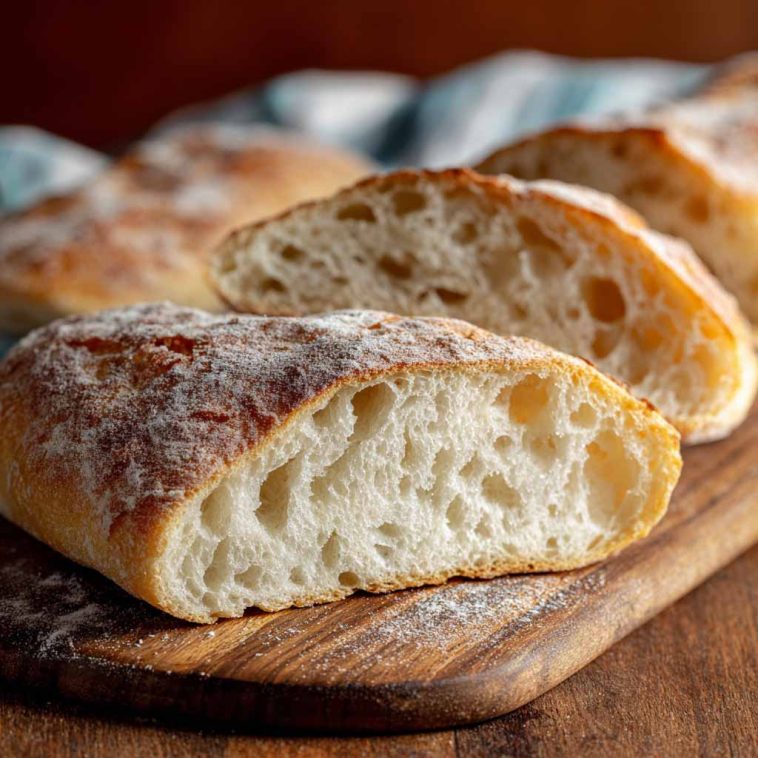
Ciabatta is known for its signature crispy crust and airy crumb, with large holes that make every slice light yet chewy. Homemade ciabatta beats store-bought because you control the freshness, flavor, and texture. Even beginners can succeed—this bread looks rustic but is surprisingly simple once you understand its high-hydration dough. Follow this step-by-step guide and you’ll achieve bakery-quality results right in your kitchen.
What Is Ciabatta Bread?
Ciabatta is a rustic Italian bread whose name means “slipper,” referring to its elongated, flat shape. It’s characterized by an open crumb with large, irregular holes, a thin crispy crust, and a chewy interior. The secret lies in its high-hydration dough (70–80% water), which creates steam pockets during baking. Unlike baguettes, which are more uniform and crusty, ciabatta has a softer chew. Compared to sourdough, ciabatta uses commercial yeast instead of a starter, making it faster to prepare. Focaccia, another Italian bread, is flatter and often topped with herbs or oil, while ciabatta is left plain to highlight its airy texture.
Why You’ll Love This Recipe
This recipe requires no special equipment, making it beginner-friendly. With just a mixing bowl and a baking tray, you can achieve bakery-quality ciabatta at home. The method focuses on stretch-and-fold rather than kneading, so even sticky dough becomes manageable. The result is a versatile bread perfect for sandwiches, dipping in olive oil, or toasting.
Ingredients You’ll Need
- Bread flour: Provides structure and gluten development.
- Water: High hydration creates the airy crumb.
- Yeast: Instant or active dry yeast for rise.
- Salt: Enhances flavor and strengthens gluten.
- Olive oil (optional): Adds subtle flavor.
Pro Tip: Use high-protein flour for the best chewy texture.
Equipment Needed
- Mixing bowl
- Dough scraper (essential for sticky dough)
- Baking tray or pizza stone
- Parchment paper
- Kitchen scale (recommended for accuracy)
Tip: A kitchen scale ensures precise hydration ratios.
Understanding Ciabatta Dough
Ciabatta dough is famously sticky and wet because of its high hydration (70–80%). This moisture creates steam during baking, forming the bread’s signature holes. Unlike traditional kneading, ciabatta relies on gluten development through resting and stretch-and-fold techniques. Each fold strengthens the dough without deflating it. Resist the urge to add extra flour—stickiness is essential for achieving an airy crumb.
Step-by-Step Instructions
Step 1: Mix the Dough (80 words) Combine bread flour, yeast, and water in a mixing bowl. Stir until just combined—no kneading yet.
Step 2: First Rest (Autolyse) (50 words) Let dough rest for 20–30 minutes. This allows gluten to begin forming naturally.
Step 3: Add Salt & Stretch and Fold (80 words) Incorporate salt. Perform stretch-and-fold: grab one edge, stretch upward, fold over. Repeat around the dough.
Step 4: Bulk Fermentation (90 words) Let dough rise 1–2 hours. Perform folds every 30 minutes to strengthen gluten.
Step 5: Shaping the Dough (50 words) Handle gently, divide into rectangles. Avoid pressing out air bubbles.
Step 6: Final Proof (50 words) Rest shaped dough 30–45 minutes before baking.
Homemade Ciabatta Bread – Rustic, Airy, and Delicious
Equipment
- Mixing bowl
- Dough scraper
- Baking tray or pizza stone
- Parchment paper
- Kitchen scale
- Cast-iron skillet or oven-safe tray (for steam)
Ingredients
- 500 g bread flour (high-protein for chew)
- 375–400 ml water (high hydration for airy crumb)
- 7 g instant yeast (or active dry)
- 10 g salt (flavor + gluten strength)
- 1 tbsp olive oil (optional, adds subtle flavor)
- Pro Tip: Use high-protein flour for the best chewy texture.
Instructions
- Mix the Dough: Combine flour, yeast, and water. Mix roughly—no kneading yet.
- Autolyse Rest: Let dough sit 20–30 minutes to begin gluten development.
- Add Salt & Stretch/Fold: Incorporate salt, then perform stretch-and-fold around the dough.
- Bulk Fermentation: Let rise 1–2 hours, folding every 30 minutes.
- Shape: Gently divide into rectangles, preserving air bubbles.
- Final Proof: Rest 30–45 minutes.
- Bake: Preheat oven to 220–240°C (425–465°F). Bake 20–25 minutes with steam until golden.
- Cool: Let bread cool at least 30 minutes before slicing.
Notes
- Steam during baking creates the signature crust.
- Sticky dough is normal—don’t add extra flour.
- Use wet hands or a scraper to handle dough.
- Be patient with fermentation for flavor and structure.
- Always cool before slicing to avoid a gummy crumb.