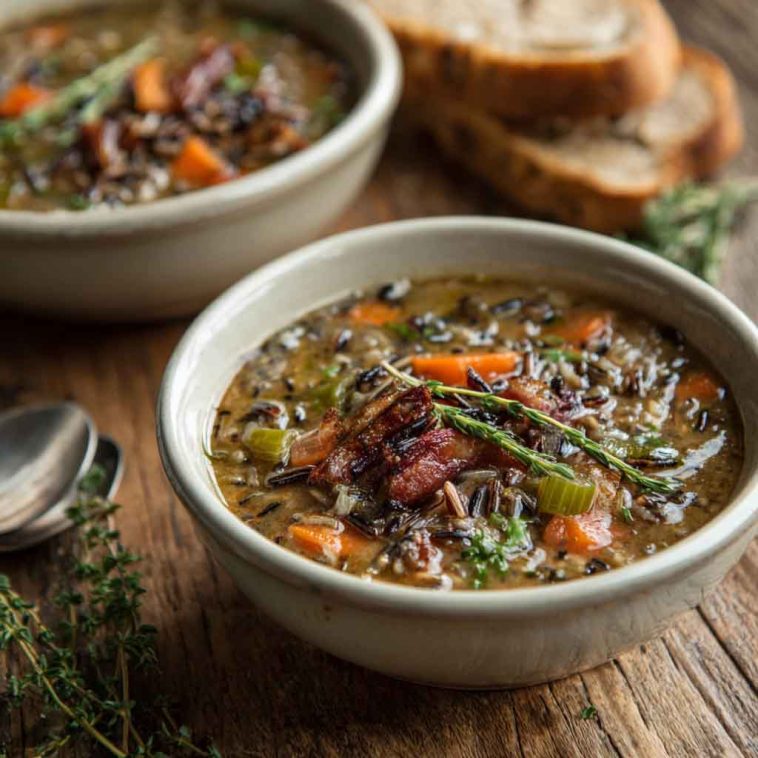

Hearty Wild Rice Soup – Cozy, Comforting & Full of Flavor

Why Wild Rice Soup is the Ultimate Comfort Food

There’s something undeniably comforting about a steaming bowl of soup on a chilly day, and few soups capture that cozy, soul-soothing feeling like wild rice soup. Creamy, nutty wild rice mingles with tender vegetables and a savory, aromatic broth, creating a dish that’s both hearty and satisfying. Each spoonful offers a delightful balance of textures: chewy grains, soft vegetables, and optional tender proteins, all tied together with a luxurious, flavorful base.

Wild rice soup is the perfect choice for family dinners, weeknight meals, or meal prep for cold-weather weeks. It’s versatile enough to be rich and indulgent with cream or lighter and broth-based for a healthier option, yet always comforting. The beauty of wild rice soup lies in its simplicity and adaptability—you can tailor it with different proteins, seasonal vegetables, and aromatic herbs to match your taste or dietary needs.

This guide will walk you through every step, from ingredient selection to cooking techniques, ensuring a flavorful, satisfying soup every time. Whether you’re cooking for one, feeding a family, or prepping for the week ahead, this wild rice soup promises warmth, comfort, and unforgettable flavor.

Origins & Inspiration

Wild rice has a storied history in North American cuisine, particularly among Indigenous peoples of the Great Lakes region. Traditionally, it was foraged from lakes and rivers and prized for its nutty flavor, chewy texture, and high nutrient content. Wild rice is not technically rice but a grass seed, rich in protein, fiber, and essential minerals, making it a wholesome ingredient for soups and stews.

Classic wild rice soups often focused on simple broths and seasonal vegetables, highlighting the rice’s natural texture and flavor. Modern adaptations, however, have evolved into hearty, creamy versions that incorporate proteins like chicken or mushrooms, enriched broths, and thickening agents for a comforting, restaurant-style experience.

Using wild rice in soups is not only flavorful but also health-conscious, providing complex carbohydrates and a satisfying chew that transforms an ordinary soup into a warming, nourishing meal—perfect for fall and winter dining.

Flavor & Texture Profile

The magic of wild rice soup lies in its balance of flavor and texture. Wild rice itself is nutty, slightly chewy, and earthy, providing a satisfying bite that contrasts beautifully with tender vegetables like carrots, celery, onions, and mushrooms. The broth can range from light and clear to rich and creamy, depending on your preference, offering either a delicate or indulgent mouthfeel.

Proteins such as shredded chicken, turkey, or plant-based alternatives add substance and depth, absorbing the savory flavors of the broth. Herbs like thyme, bay leaf, and parsley bring brightness and complexity, while garlic, pepper, and salt enhance the umami richness.

The aroma of the simmering soup—earthy rice, sweet caramelized onions, and fragrant herbs—fills the kitchen and signals warmth and comfort. Each spoonful delivers layered textures and flavors, from chewy grains to soft vegetables and optional creamy swirls, making it a true comfort-food experience.

Key Ingredients & Expert Tips

Wild Rice: Wild rice can be purchased as long-grain or pre-cooked packages. For best results, rinse the grains thoroughly and optionally soak for 30–60 minutes to reduce cooking time. Toasting the rice lightly in a dry skillet before cooking enhances its nutty aroma. Cook rice separately in water or stock to ensure it maintains a chewy texture without becoming mushy.

Vegetables: Classic vegetables include carrots, celery, onions, and mushrooms. Seasonal alternatives like parsnips, leeks, or bell peppers can also be incorporated for variety. Dice vegetables uniformly to ensure even cooking and a pleasing texture.

Protein Options: Shredded chicken or turkey are traditional, but tofu, tempeh, or plant-based chicken alternatives work well for vegetarian versions. Cooking proteins separately allows for controlled texture and flavor infusion.

Broth: Chicken, turkey, or vegetable broth serves as the base. Homemade stock provides the richest flavor, but high-quality store-bought options work well. Simmering vegetables and rice in the broth deepens flavor.

Cream & Thickening: For a creamy soup, heavy cream, half-and-half, or coconut milk can be added. Alternatively, a roux or cornstarch slurry thickens the soup without dairy. Gradually stir in cream to avoid curdling and to maintain a smooth texture.

Seasonings & Herbs: Garlic, thyme, bay leaf, parsley, salt, and pepper are staples. Fresh herbs added at the end brighten the dish, while dried herbs simmered in the broth create a robust, layered flavor.

Pro Tips:

  • Toast wild rice for extra nutty flavor.

  • Cook rice separately to maintain texture.

  • Sauté vegetables first to deepen flavors before adding broth.

  • Add cream or thickening agents gradually to achieve the desired consistency.

  • Taste and adjust seasoning at the end for balance.

Tools & Equipment You’ll Need

  • Large soup pot or Dutch oven: Provides even heat and ample room for simmering.

  • Cutting board & sharp knife: Essential for uniform vegetable and protein preparation.

  • Mixing spoons & ladle: For stirring and serving.

  • Measuring cups & spoons: Ensure precise ingredient ratios.

  • Optional: Immersion blender for a partially blended creamy texture, or a fine-mesh strainer if cooking rice separately.

Having the right tools ensures smooth preparation, consistent results, and a pleasurable cooking experience, especially when handling hearty ingredients like wild rice.

Step-by-Step Cooking Instructions

Step 1: Prepare ingredients
Dice vegetables uniformly and shred or cube your chosen protein. Rinse wild rice thoroughly and soak if desired.

Step 2: Cook the wild rice
In a separate pot, cook the rice in water or stock until just tender but still chewy. Drain and set aside. This prevents overcooking once added to the soup.

Step 3: Sauté vegetables
Heat oil or butter in a large soup pot over medium heat. Add onions, carrots, celery, and mushrooms. Sauté for 5–7 minutes until softened and aromatic. Add garlic in the last minute to avoid burning.

Step 4: Build the soup base
Pour in broth and bring to a gentle simmer. Add cooked wild rice and proteins. Simmer for 15–20 minutes to allow flavors to meld.

Step 5: Add cream or thickener
If using cream, reduce heat to low and stir in gradually. For a roux or slurry, mix with a small amount of cold broth and whisk into the soup until thickened. Adjust consistency as desired.

Step 6: Season and finish
Add thyme, bay leaf, salt, and pepper. Taste and adjust seasoning. Stir in fresh herbs like parsley at the end for brightness.

Step 7: Serve
Ladle hot soup into bowls, optionally garnishing with a sprinkle of fresh parsley or a dash of black pepper. Serve with crusty bread for a cozy, complete meal.

Hearty Wild Rice Soup – Cozy, Comforting & Full of Flavor

Warm up with this Hearty Wild Rice Soup! Packed with tender vegetables, nutty wild rice, and savory herbs, this cozy soup is perfect for chilly evenings, family dinners, or meal prep for the week. Creamy, comforting, and easy to make, it’s a wholesome bowl of goodness everyone will love.
Prep Time 20 minutes
Cook Time 50 minutes
Total Time 1 hour 10 minutes
Course Lunch, Main Course, or dinner
Cuisine American, Comfort Food
Servings 6 bowls
Calories 350 kcal

Equipment

  • Large soup pot or Dutch oven
  • Cutting board and sharp knife
  • Measuring Cups and Spoons
  • Wooden spoon or spatula
  • Ladle
  • Optional: immersion blender for creamy texture

Ingredients
  

Base & Vegetables:

  • 1 cup wild rice, rinsed and optionally soaked
  • 2 tbsp olive oil or butter
  • 1 large onion, diced
  • 2 carrots, diced
  • 2 celery stalks, diced
  • 1 cup mushrooms, sliced (optional)
  • 2 cloves garlic, minced

Protein (optional):

  • 1–2 cups cooked shredded chicken, turkey, ham, sausage, or tofu

Broth & Cream:

  • 6 cups chicken, turkey, or vegetable broth
  • 1 cup heavy cream, half-and-half, or coconut milk (optional for creamy version)

Seasonings & Herbs:

  • 1 tsp salt, or to taste
  • ½ tsp black pepper
  • 1 tsp thyme
  • 1 bay leaf
  • Optional: parsley, rosemary, sage, smoked paprika, or lemon juice for finishing

Instructions
 

  • Prepare rice: Rinse wild rice thoroughly. Soak 30–60 minutes if desired. Cook in water or broth until tender but slightly chewy. Drain if necessary.
  • Sauté vegetables: Heat olive oil or butter in a large soup pot. Add onion, carrots, celery, and mushrooms. Cook 5–7 minutes until softened. Add garlic during the last minute.
  • Add broth & protein: Pour in broth, add cooked protein (if using), and bring to a simmer.
  • Combine with rice: Stir in cooked wild rice. Simmer 15–20 minutes to allow flavors to meld.
  • Add cream or thicken: Lower heat and stir in cream, coconut milk, or a roux/cornstarch slurry. Adjust thickness as desired.
  • Season & finish: Add thyme, bay leaf, salt, and pepper. Taste and adjust seasoning. Finish with fresh herbs or a splash of lemon juice if desired.
  • Serve: Ladle hot soup into bowls. Optional garnishes: parsley, black pepper, or additional herbs. Serve with crusty bread, crackers, or grilled cheese.

Notes

  • Protein swaps: Chicken, turkey, ham, chicken sausage, tofu, or tempeh.
  • Vegetable variations: Seasonal squash, spinach, kale, peas, or root vegetables.
  • Cream alternatives: Coconut milk for dairy-free options; skip for broth-based soup.
  • Gluten-free thickening: Use cornstarch, rice flour, or blend vegetables instead of wheat flour.
  • Make-ahead tips: Cook rice and vegetables separately. Store in the fridge up to 4 days or freeze in portions for up to 3 months. Add cream when reheating to maintain smooth texture.
  • Flavor enhancers: Smoked paprika, rosemary, sage, or a splash of lemon juice brightens the soup.
Keyword creamy wild rice soup, gluten-free soup, healthy soup, meal prep soup, vegetarian soup, wild rice soup, winter comfort food