
 Laura Mariano
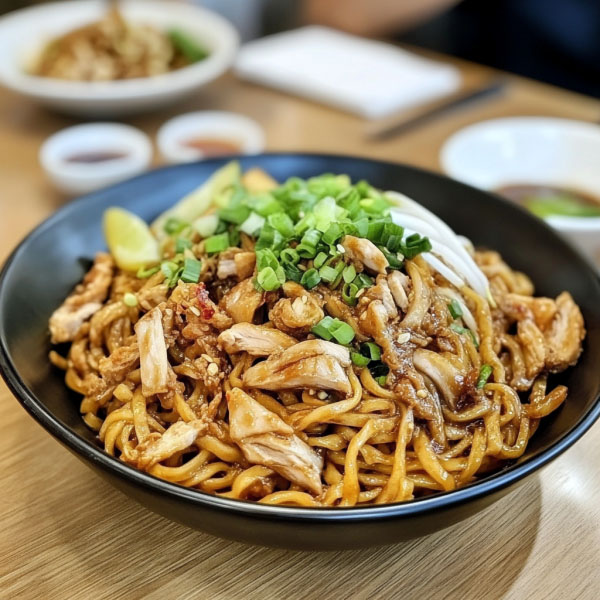
Everyday Hokkien Noodles Recipe – Quick and Flavorful Stir-Fry
This Everyday Hokkien Noodles Recipe is a quick, flavorful stir-fry with tender noodles, fresh vegetables, and your choice of protein. An easy weeknight dinner recipe packed with savory goodness.
Equipment
- Wok or large skillet
- Wooden spoon or spatula
- Knife and chopping board
- Small mixing bowl for sauce
- Tongs for tossing noodles
Ingredients
Noodles & Base
- 12 oz fresh or dried Hokkien noodles (or substitute with udon/egg noodles)
Proteins (Choose 1–2)
- ½ lb shrimp, chicken, pork, or tofu
- Optional: mixed seafood
Vegetables
- 1 cup napa cabbage, chopped
- 1 cup bok choy, chopped
- 1 carrot, julienned
- 1 cup bean sprouts
- 3 green onions, chopped
Sauce & Flavoring
- 2 tbsp light soy sauce
- 1 tbsp dark soy sauce
- 2 tbsp oyster sauce
- 1 tsp sesame oil
- 2 cloves garlic, minced
- 2 shallots, minced
Optional Enhancers
- 1 tsp chili paste (for spice)
- 1 tsp fish sauce (for extra umami)
- Pinch white pepper
Instructions
Step 1: Prep Ingredients
- -Chop vegetables and proteins into uniform sizes.-Mince garlic and shallots.-Soak dried noodles in warm water until pliable; drain.
Step 2: Make the Sauce
- In a small bowl, combine light soy, dark soy, oyster sauce, sesame oil, and optional chili paste. Adjust salt or sweetness to taste.
Step 3: Stir-Fry Proteins
- -Heat wok over high heat.-Sear proteins until partially cooked, then remove and set aside.
Step 4: Stir-Fry Vegetables
- Quickly sauté firmer vegetables (carrots, cabbage, bok choy).Add softer vegetables (bean sprouts, green onions) last to retain crunch.
Step 5: Combine Noodles & Sauce
- Add noodles to wok and toss with vegetables.Return proteins to wok.Pour in sauce and stir-fry 2–3 minutes until evenly coated and heated through.
Step 6: Finish & Serve
- Optional: drizzle with additional sesame oil.Garnish with fried shallots or fresh herbs.Serve immediately.
Notes
- Use day-old noodles for best texture; fresh noodles should be lightly oiled to prevent sticking.
- High heat and constant stirring create the signature wok aroma (“wok hei”).
- Add delicate vegetables like bean sprouts last to maintain crunch.
- Store leftovers in an airtight container in the fridge for up to 3 days; reheat with a splash of water or stock.
- Customize proteins and vegetables based on availability and preference.
- Optional chili paste or fish sauce enhances flavor but can be omitted for milder taste.