
 Laura Mariano
Why Classic French Macarons Are Worth Mastering
There’s something utterly enchanting about biting into a perfect French macaron. The crisp outer shell gives way to a soft, chewy center, all sandwiched around a luxurious filling—whether that’s rich ganache, bright fruit jam, or silky buttercream. These bite-sized treats are as elegant as they are addictive.
But macarons also have a reputation. They’re temperamental, finicky, and notoriously easy to mess up. That said, with the right technique and a touch of patience, you can absolutely master them in your own kitchen—even if you’re a beginner.
Ideal for weddings, baby showers, afternoon tea, or gourmet gifting, classic French macarons are the kind of show-stopping cookie that makes any moment feel special. And once you’ve nailed the basic method, you’ll unlock a world of flavors and colors.
In this guide, I’ll walk you through everything—from essential ingredients and tools to expert tips for troubleshooting hollow shells or cracked tops. Let’s bake with confidence and charm your guests with these Parisian gems.
A Bite of History – Origins of the French Macaron
Though widely celebrated as a quintessential French treat, the macaron’s journey begins in Italy. It was introduced to France in the 16th century by Catherine de Medici’s pastry chefs when she married King Henry II. At the time, they were simple almond meringue cookies—no filling, no flair.
It wasn’t until the 20th century that macarons became what we know today: two crisp, ruffled-edged shells joined by a creamy center. This transformation is credited to Pierre Desfontaines of the famed Parisian pâtisserie Ladurée.
Today, macarons are a cultural icon in France and a worldwide symbol of refined indulgence—often found in pastel palettes, stacked in towers, or individually boxed like precious jewels.
What Makes a Macaron “Classic”?
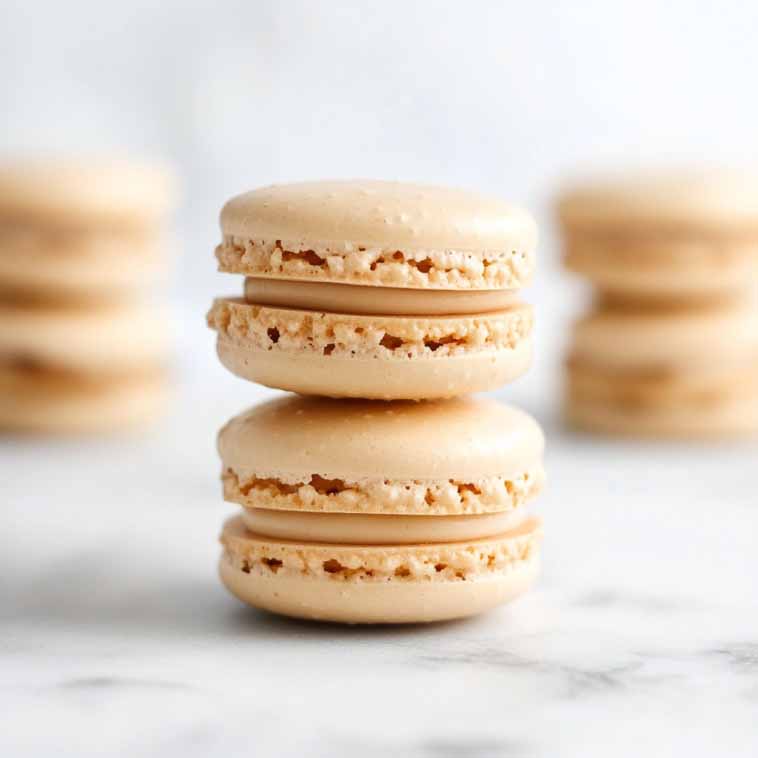
A classic French macaron is instantly recognizable by its smooth, shiny dome, the ruffled “foot” at its base, and its irresistible texture: crisp on the outside, chewy and tender on the inside. It’s not just a cookie—it’s a technical achievement.
What sets a classic macaron apart?
-
Base: Finely ground almond flour
-
Meringue: Whipped egg whites with sugar, folded just right
-
Feet: The iconic frilly base formed during baking
-
Flavors: Traditional varieties include vanilla, chocolate, raspberry, pistachio, lemon, and coffee
-
Color: Usually soft pastels, achieved with gel food coloring
Perfection lies in balance—between texture, flavor, and appearance. No wonder pastry chefs spend years perfecting them!
Key Ingredients Breakdown
Let’s dive into the essential ingredients for authentic French macarons:
Almond Flour
Use blanched, superfine almond flour for the smoothest shells. Avoid coarse or unblanched almond meal—it can lead to gritty texture and lumpy tops. Sifting is non-negotiable.
Powdered Sugar
Also called confectioners’ sugar, this blends with almond flour to create the dry base known as tant pour tant in French pastry terms. It adds sweetness and texture.
Egg Whites
Fresh or aged egg whites both work, but aging (letting them sit 24–48 hours in the fridge) reduces moisture and makes the meringue more stable. Bring to room temperature before whipping.
Granulated Sugar
Added during whipping to stabilize the meringue. It helps the egg whites whip into firm, glossy peaks.
Cream of Tartar (Optional)
A pinch of this acid can help stabilize the meringue, especially if you’re new to whipping egg whites.
Gel Food Coloring
Use gel or powdered color, not liquid, to avoid altering the macaron’s moisture content. A tiny amount goes a long way!
Filling Options
While this part comes later, classics include ganache, Swiss buttercream, or jam. Each brings a different texture and sweetness level.
Pro Tip: Macarons are all about precision. Use a digital kitchen scale for accurate measurements—eyeballing just doesn’t cut it here.
Tools You’ll Need
French macarons aren’t hard once you have the right tools. Here’s what you need for success:
-
Stand mixer or hand mixer – for whipping egg whites to stiff peaks.
-
Sifter or fine mesh sieve – for sifting almond flour and powdered sugar together.
-
Kitchen scale – accuracy is crucial. Always weigh your ingredients.
-
Silicone baking mat or parchment paper – silicone gives better results for even heat and non-stick surfaces.
-
Piping bags with a round tip (Ateco 804 or Wilton 12) – to pipe even, round shells.
-
Mixing bowls – preferably metal or glass to keep everything grease-free.
-
Oven thermometer – home ovens vary! Ensures precise temperature control.
Optional but helpful:
-
Macaron template under your parchment to pipe consistent sizes
-
Scribe or toothpick – to pop air bubbles and smooth tops
Step-by-Step: How to Make Classic French Macarons
Step 1: Prep Your Ingredients
-
Weigh all ingredients using a kitchen scale for accuracy.
-
Sift together almond flour and powdered sugar 2–3 times for a smooth shell.
-
Age your egg whites (leave in the fridge overnight or at room temp for 24 hours).
Step 2: Make the Meringue
-
In a clean bowl, beat egg whites until foamy.
-
Add cream of tartar (if using), then gradually add granulated sugar.
-
Beat until glossy stiff peaks form.
Step 3: Macaronage (Folding Stage)
-
Gently fold the dry mix into the meringue with a spatula.
-
The batter should flow like lava—ribbons that slowly disappear.
-
Avoid overmixing or undermixing.
Step 4: Pipe & Rest
-
Transfer batter to a piping bag fitted with a round tip.
-
Pipe small circles (about 1.5 inches) on parchment/silicone mats.
-
Tap the trays to remove air bubbles.
-
Let rest 30–60 minutes until a skin forms.
Step 5: Bake
-
Bake at 300°F (150°C) for 14–16 minutes.
-
Check that the macarons have formed feet and don’t wobble when touched.
-
Cool completely before filling.
Filling Options for Classic Macarons
-
Ganache – Rich and creamy; perfect for chocolate lovers.
-
Made with chocolate + heavy cream.
-
-
Buttercream – Fluffy and customizable with extracts.
-
Try vanilla, lemon, coffee, or strawberry versions.
-
-
Jam or Curd – Tart and fruity for balance.
-
Use raspberry jam, lemon curd, or passionfruit spread.
-
-
Tip: Pipe filling onto one shell, then sandwich with another. Chill 24 hours for best texture.
Flavor & Color Variations
Flavors to Try:
-
Pistachio (add pistachio paste to buttercream)
-
Coffee (espresso powder in shells and filling)
-
Rose or Lavender (floral extracts)
Colors:
-
Use gel food coloring—just a drop or two.
-
Match filling to color for visual appeal (e.g., pink shells + raspberry filling).
Expert Tips for Macaron Success
-
Always weigh ingredients—volume isn’t accurate for macarons.
-
Use an oven thermometer—even slight temp differences can ruin them.
-
Don’t skip resting the shells—they need a skin to rise properly.
-
If your macarons crack or don’t have feet, troubleshoot:
-
Too much moisture?
-
Over/undermixed batter?
-
Incorrect oven temp?
-
FAQs
Q: Why did my macarons crack?
A: Usually from not resting the shells, overmixed batter, or high oven heat.
Q: Can I make macarons without almond flour?
A: You can substitute sunflower seed flour for a nut-free version, but the texture will change.
Q: How long do macarons last?
A: Store in the fridge for 5–7 days or freeze up to 1 month (unfilled or filled).
Q: Do I need to age the egg whites?
A: Aged whites help stabilize the meringue but aren’t mandatory. Just ensure they’re room temp.
Classic French Macarons
Equipment
- Kitchen scale
- Stand mixer or hand mixer
- Mixing bowls (glass or metal)
- Fine mesh sieve or sifter
- Piping bags
- Round piping tip (Wilton 12 or Ateco 804)
- Silicone baking mats or parchment paper
- Baking sheets
- Oven thermometer
- Cooling rack
- Spatula
- Food processor (optional, for extra-fine almond flour)
Ingredients
For the Macaron Shells:
- 100g egg whites (aged, room temperature)
- 100g granulated sugar
- 100g almond flour (blanched and finely ground)
- 100g powdered sugar
- ⅛ tsp cream of tartar (optional)
- Gel food coloring (optional)
For a Classic Filling (Vanilla Buttercream):
- ½ cup (115g) unsalted butter, softened
- 1½ cups (180g) powdered sugar
- 1–2 tbsp heavy cream or milk
- 1 tsp pure vanilla extract
- Pinch of salt
Instructions
Prep the Ingredients
- Sift almond flour and powdered sugar together. Discard large bits.
- Line baking sheets with parchment or silicone mats.
- Prepare piping bag with round tip.
Make the Meringue
- In a clean bowl, beat egg whites on medium speed until foamy.
- Add cream of tartar (if using), then gradually add granulated sugar.
- Beat until stiff, glossy peaks form.
- Add gel food coloring if desired.
Macaronage (Folding)
- Add sifted dry ingredients to the meringue.
- Use a spatula to fold gently. Deflate the meringue just enough so it flows like lava and forms ribbons that disappear in ~10 seconds.
Pipe the Macarons
- Transfer batter to piping bag.
- Pipe 1.5-inch rounds on baking sheets, spaced 1 inch apart.
- Tap trays firmly against the counter to remove air bubbles.
- Let sit at room temperature until tops are dry to the touch (30–60 min).
Bake
- Preheat oven to 300°F (150°C) with oven thermometer.
- Bake one tray at a time for 14–16 minutes.
- Shells should not jiggle and have developed "feet."
Cool and Fill
- Cool shells completely on tray before removing.
- Pipe filling onto half the shells, then sandwich with remaining halves.
Mature (Optional but Recommended)
- Refrigerate filled macarons in an airtight container for 24 hours for best texture.
- Bring to room temperature before serving.
Notes
- Aging egg whites: Crack and store in the fridge 1–3 days before using.
- Humidity matters: Avoid making macarons on humid or rainy days.
- Oven variations: Every oven bakes differently—use an oven thermometer for accuracy.
- Flavor fillings: Try raspberry jam, chocolate ganache, lemon curd, or pistachio buttercream.
- Storage: Unfilled shells last up to 5 days in an airtight container. Filled macarons stay fresh in the fridge for up to 5 days or freeze up to 1 month.