
 Laura Mariano
A Sweet, Sticky, Savory Classic—Now with Chicken
Char Siu, the iconic Cantonese BBQ dish, gets a delicious twist with chicken. Imagine bold, sweet-savory flavors clinging to juicy meat, a glossy glaze catching the light, and an aroma that stops you in your tracks. This version is perfect for weeknight dinners, meal prep, or backyard grilling—easy to make, hard to resist. Swapping pork for chicken isn’t just a shortcut; it’s a smart move. Chicken cooks faster, feels lighter, and still delivers that deep, satisfying flavor. Whether you’re roasting in the oven or firing up the grill, this chicken char siu brings all the sticky, caramelized goodness you crave—with a leaner protein and quicker turnaround. It’s a modern take on a timeless classic, ready to become your new go-to.
What Is Char Siu? A Quick Cultural Snapshot
Char Siu is a beloved Cantonese-style Chinese BBQ dish traditionally made with pork. Its name means “fork roast,” referencing the classic method of skewering and roasting the meat. The signature marinade is a bold blend of hoisin sauce, soy sauce, honey, garlic, and Chinese five-spice powder—creating a sweet, salty, and aromatic profile that’s unmistakable. Often tinted red with food coloring, char siu is known for its glossy, lacquered finish and deep flavor. While pork is the traditional base, chicken offers a leaner, faster-cooking alternative that still absorbs the marinade beautifully. With the same depth of flavor and a shorter cook time, chicken char siu is a brilliant adaptation that honors the original while fitting modern kitchens and busy schedules.
Why Chicken Works So Well in Char Siu
Chicken is a natural fit for char siu’s bold marinade. Its tender texture and mild flavor allow the hoisin, soy, honey, and spices to shine through, soaking into every bite. Unlike pork shoulder, which requires longer cooking to break down, chicken cooks quickly and evenly—making it ideal for weeknight meals or last-minute cravings. For the juiciest results, opt for dark meat like thighs or drumsticks. These cuts retain moisture better and offer a richer flavor that complements the sweet-savory glaze. Chicken also caramelizes beautifully under high heat, giving you those irresistible charred edges and sticky bits that make char siu so crave-worthy. It’s a leaner, faster, and equally delicious way to enjoy this classic dish.
Choosing the Right Cut of Chicken
When it comes to chicken char siu, cut matters. Boneless, skinless thighs are the top choice—they’re juicy, flavorful, and cook evenly. Their slightly higher fat content helps them stay moist and tender, even under high heat. Drumsticks, wings, or leg quarters offer variety and are great for grilling or roasting, especially if you’re feeding a crowd. Want extra crispness and flavor? Go for skin-on cuts. The skin renders beautifully, adding a golden, crackly layer that pairs perfectly with the sticky glaze. Whether you’re cooking indoors or out, choosing the right cut ensures your char siu chicken is succulent, satisfying, and full of character.
The Signature Marinade: Building Bold Flavor
The magic of char siu lies in its marinade—a rich, aromatic blend that transforms simple chicken into something extraordinary. Start with hoisin sauce for depth, soy sauce for saltiness, honey for sweetness, garlic for punch, and five-spice powder for warmth. Shaoxing wine adds complexity and a hint of traditional flair. For that iconic red hue, a touch of red food coloring is optional but visually striking. The key to bold flavor? Time. Marinate your chicken overnight to let the ingredients fully penetrate the meat. This slow infusion ensures every bite is packed with sweet-savory goodness and sets the stage for that glossy, caramelized finish you crave.
Cooking Methods: Oven, Grill, or Stovetop
Char siu chicken is versatile and forgiving—choose the cooking method that suits your setup. Oven roasting is the easiest: consistent heat, minimal fuss, and a beautifully even glaze. Grilling adds smoky depth and those irresistible charred edges, perfect for summer cookouts. If you’re cooking small batches or working indoors, a stovetop grill pan delivers great results with a quick sear and caramelization. No matter the method, basting is key. Brush on extra marinade during cooking to build layers of flavor and achieve that signature glossy finish. With the right heat and a little attention, your chicken char siu will be sticky, savory, and utterly unforgettable.
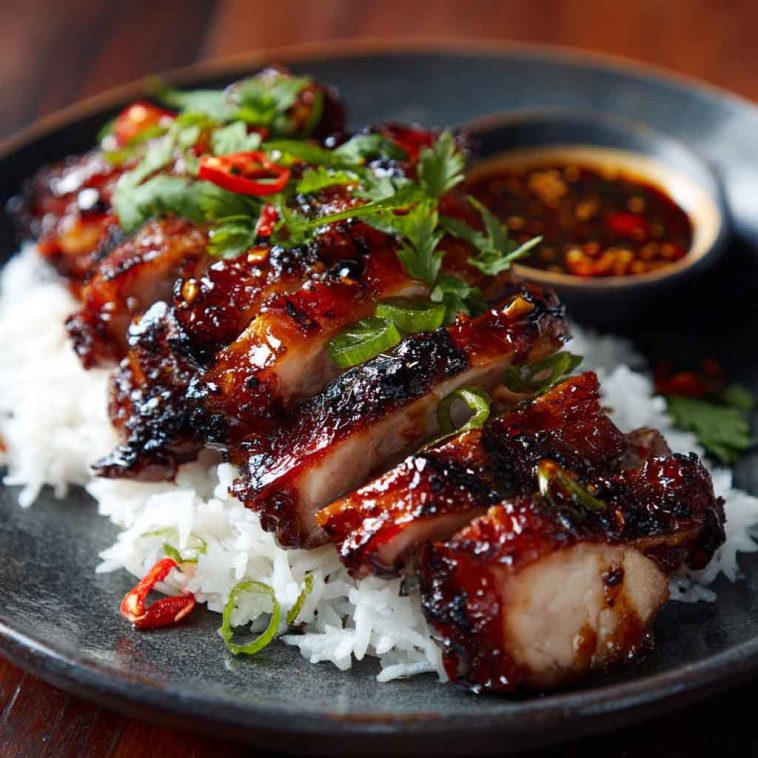
Char Siu Chicken – Sticky, Savory & Packed with Flavor!
Equipment
- Mixing bowl
- Whisk
- Zip-top bag or container for marinating
- Oven, grill, or stovetop grill pan
- Basting brush
- Meat thermometer (optional)
Ingredients
- 1.5 lbs boneless skinless chicken thighs
- 3 tbsp hoisin sauce
- 2 tbsp soy sauce (or tamari for gluten-free)
- 2 tbsp honey (or brown sugar/maple syrup)
- 1 tbsp Shaoxing wine (or dry sherry)
- 2 cloves garlic, minced
- 1 tsp Chinese five-spice powder
- 1 tsp grated ginger (optional)
- 1–2 drops red food coloring (optional)
- 1 tbsp oil (for grilling or pan-searing)
Instructions
- Make the Marinade: In a bowl, whisk together hoisin, soy sauce, honey, Shaoxing wine, garlic, five-spice, ginger, and food coloring if using.
- Marinate: Place chicken in a zip-top bag or container. Pour marinade over, seal, and refrigerate for 8–24 hours.
- Preheat Cooking Method:Oven: 400°F (200°C)Grill: Medium-high heatStovetop grill pan: Medium heat
- Cook Chicken:Oven: Roast on a lined baking sheet for 25–30 minutes, flipping halfway.Grill: Cook 5–7 minutes per side until charred and cooked through.Pan: Sear 5–6 minutes per side.
- Baste: Brush with reserved marinade during cooking for a glossy finish.
- Check Doneness: Internal temp should reach 165°F (74°C).
- Rest & Slice: Let rest 5 minutes, then slice thinly for serving.
Notes
- For crispier skin, use skin-on thighs or drumsticks and grill or roast uncovered.
- Slice chicken before freezing for easy reheating.
- Serve with jasmine rice, stir-fried veggies, or in banh mi, noodle bowls, or lettuce wraps.
- Reheat gently with a splash of broth and cover to retain moisture.
- Avoid overcooking—use a meat thermometer for best results.