A Rustic Italian Salad That Celebrates Summer
Imagine a bowl filled with juicy ripe tomatoes, crusty bread soaked in golden olive oil, fragrant basil leaves, and the bright tang of red wine vinegar. Every bite is fresh, vibrant, and full of sunshine. This is the magic of Panzanella, one of Italy’s most beloved summer salads.
Originating in the Tuscan countryside, Panzanella is a rustic dish that was traditionally created as a way to use up day-old bread and seasonal vegetables. Instead of letting stale bread go to waste, cooks transformed it into something delicious by pairing it with ripe tomatoes, good olive oil, and simple seasonings.
Today, Panzanella has become popular around the world because it captures everything people love about summer cooking. It features bright, fresh flavors, requires simple ingredients, and involves very little cooking.
This salad is perfect for picnics, barbecues, potlucks, or light lunches on warm days. In this guide, you’ll learn how to make authentic Panzanella, along with tips for achieving the perfect texture, creative variations, and traditional techniques used in Italian kitchens.
What Is Panzanella? Origins and Tradition
Panzanella is a traditional Tuscan bread salad that highlights the beauty of simple ingredients. At its core, the dish combines stale bread, ripe tomatoes, olive oil, vinegar, and fresh herbs to create a refreshing yet satisfying salad.
The origins of Panzanella date back centuries in rural Tuscany, where resourceful cooks made the most of leftover ingredients. Instead of discarding day-old bread, they softened it with water or dressing and mixed it with fresh vegetables and herbs.
Interestingly, early versions of Panzanella did not always include tomatoes. Before tomatoes became common in Italian cuisine, the dish was often made with bread, onions, olive oil, and vinegar. As tomatoes became widely available, they gradually became the centerpiece of the modern recipe.
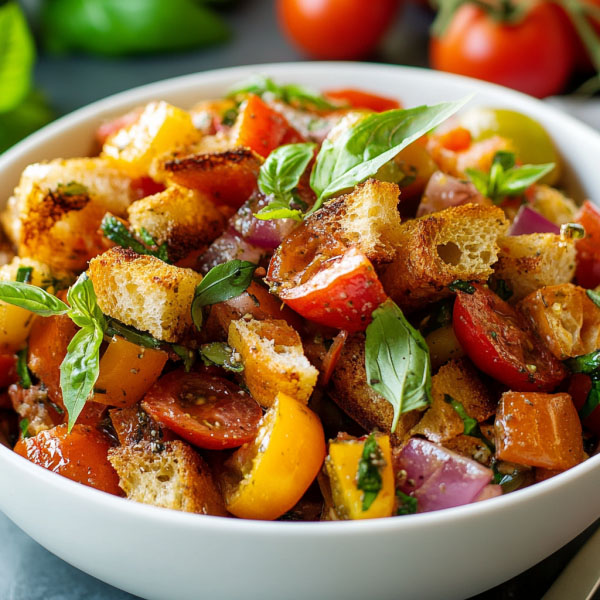
Today’s Panzanella is known for its colorful mix of juicy tomatoes, chewy bread cubes, basil, and tangy vinaigrette. The salad perfectly represents the Italian cooking philosophy of letting fresh, high-quality ingredients shine.
Bold Tip:
Authentic Panzanella relies on excellent ingredients rather than heavy dressings or complicated additions.
Why This Salad Works So Well
Panzanella is loved not only for its flavor but also for its balance of textures and ingredients.
Fresh vs. Rustic
The salad brings together juicy, tender tomatoes and chewy pieces of bread. The bread absorbs the tomato juices and dressing while still keeping a bit of structure.
Bright Acidity
A simple dressing of vinegar and olive oil adds brightness that balances the natural sweetness of ripe tomatoes.
Herbal Aroma
Fresh basil provides fragrance and freshness, adding an unmistakable Mediterranean character to the salad.
Make-Ahead Friendly
Unlike many salads that wilt quickly, Panzanella actually improves after resting. As the salad sits, the bread soaks up the tomato juices and dressing, creating deeper flavor.
Because of this balance, the dish feels light yet satisfying. It’s refreshing enough for hot summer days but hearty enough to serve as a meal or side dish.
The result is a salad that feels rustic, vibrant, and deeply comforting all at once.
Ingredient Highlights and Flavor Roles
Each ingredient in Panzanella plays an essential role in building its signature flavor and texture.
Tomatoes
Ripe tomatoes are the heart of the salad. Their sweetness and natural acidity create the juicy base that soaks into the bread and forms part of the dressing.
Bread
Traditionally, day-old rustic bread is used. Slightly stale bread is ideal because it absorbs the dressing without falling apart. When combined with tomato juices and olive oil, it becomes tender while maintaining a satisfying chew.
Olive Oil
Good-quality extra-virgin olive oil adds richness and depth. It coats the bread and vegetables, bringing all the flavors together.
Vinegar
A splash of vinegar—often red wine vinegar—adds brightness and balances the sweetness of the tomatoes. It keeps the salad tasting fresh rather than heavy.
Fresh Basil
Basil contributes a fresh, aromatic note that complements the tomatoes beautifully. It also adds vibrant green color.
Optional Additions
Modern versions of Panzanella sometimes include ingredients like:
-
cucumber
-
red onion
-
capers
-
fresh mozzarella
These additions bring extra texture and flavor without overshadowing the classic ingredients.
Expert Tip:
Use slightly stale bread so it absorbs the dressing without turning mushy.
Step-by-Step Guide: How to Make Panzanella
Making Panzanella is simple and requires only a few basic steps.
Step 1 – Prepare the Bread
Cut rustic bread into bite-size cubes. If the bread is very fresh, lightly toast it in the oven for a few minutes until slightly crisp on the outside.
This helps the bread hold its shape while absorbing the dressing.
Step 2 – Chop the Vegetables
Cut ripe tomatoes into large chunks so they release plenty of juice. If using additional vegetables such as cucumber or onion, chop them into similar bite-size pieces.
Place all the vegetables in a large mixing bowl.
Step 3 – Make the Dressing
In a small bowl, whisk together extra-virgin olive oil, vinegar, salt, and freshly ground black pepper.
The dressing should taste balanced—bright but not overly acidic.
Step 4 – Combine the Salad
Add the bread cubes to the bowl with the vegetables. Pour the dressing over the mixture and toss gently so everything is evenly coated.
As you mix, the bread will begin to absorb the tomato juices and dressing.
Step 5 – Let It Rest
Allow the salad to sit for 15–30 minutes before serving. This resting time is essential because it allows the bread to soften slightly and soak up the flavors.
Step 6 – Add Fresh Herbs Before Serving
Just before serving, tear fresh basil leaves and toss them into the salad. This preserves their aroma and keeps them vibrant.
Taste the salad and adjust seasoning with additional olive oil, vinegar, salt, or pepper if needed.
Bold Tip:
Letting the salad rest allows the bread to absorb tomato juices and dressing, creating the perfect Panzanella texture.
Expert Tips for Authentic Flavor
While Panzanella is simple to make, a few key techniques can elevate the dish and bring out authentic flavor.
Choose Peak-Season Tomatoes
Because tomatoes are the star of the salad, their quality matters. Look for ripe, fragrant tomatoes that feel slightly soft and juicy.
Balance the Dressing
The dressing should complement the tomatoes rather than overpower them. Start with a small amount of vinegar and add more gradually if needed.
Cut Bread Into Larger Pieces
Larger bread chunks absorb dressing while maintaining structure. Small crumbs tend to become soggy quickly.
Salt the Tomatoes Early
Lightly salting the tomatoes before assembling the salad helps draw out their natural juices. These juices mix with the olive oil and vinegar to form a flavorful dressing.
Add Basil at the End
Fresh herbs lose aroma quickly once mixed into acidic dressing. Adding basil just before serving keeps the flavor bright and fragrant.
Bold Tip:
Use high-quality extra-virgin olive oil. Because the dressing is so simple, the flavor of the oil becomes one of the most important elements in the dish.
FAQs — Based on “People Also Ask” Questions
Can I make Panzanella ahead of time?
Yes. Panzanella can be prepared slightly ahead of time, which actually helps the flavors develop. However, it’s best to add fresh basil just before serving to keep the herbs bright and aromatic.
What bread works best for Panzanella?
Rustic breads such as ciabatta, sourdough, or country-style bread work best. These breads have sturdy texture that holds up well when soaked in dressing.
Do you have to toast the bread?
Not necessarily. If the bread is already a day or two old, it can be used without toasting. Toasting is helpful only when the bread is very fresh and soft.
Can Panzanella be made without onions?
Yes. While some recipes include red onion for sharpness, many variations omit it entirely. Cucumber or capers can be used instead for additional flavor and texture.
How long does Panzanella last?
Panzanella is best eaten the same day it’s made, when the bread is soft but not overly soggy. It can be stored in the refrigerator for up to 24 hours, though the texture will become softer over time.


 Laura Mariano