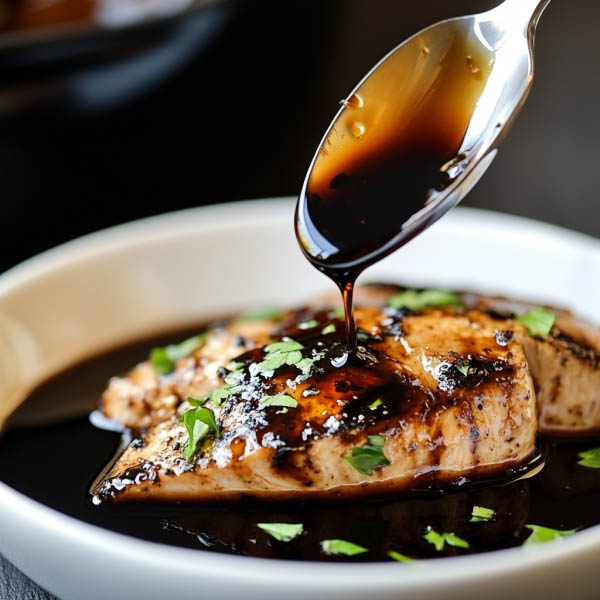
Introduction to Balsamic Glaze
Welcome to the world of balsamic glaze—a luscious, glossy reduction that’s rich, tangy, sweet, and endlessly versatile. With its deep mahogany hue and syrupy texture, balsamic glaze adds a gourmet touch to even the simplest dishes.
This kitchen essential is made from just two ingredients: balsamic vinegar and a touch of sweetener. Yet its uses are limitless. Drizzle it over grilled meats, roasted vegetables, fresh strawberries, or even vanilla ice cream. It’s the secret weapon that transforms everyday meals into restaurant-worthy creations.
Whether you’re cooking for guests or just elevating your weeknight dinner, balsamic glaze brings complexity and elegance with minimal effort. It’s easy to make, easy to store, and impossible not to love. Once you’ve tasted its sweet-savory magic, you’ll wonder how you ever cooked without it.
What Is Balsamic Glaze?
Balsamic glaze is a thick, syrupy reduction made by simmering balsamic vinegar, often with a sweetener like honey or brown sugar. The process concentrates the flavors, creating a glaze that’s tangy, sweet, and rich with depth.
Unlike balsamic vinegar, which is thin and acidic, balsamic glaze has a velvety texture and balanced flavor. It clings beautifully to food, making it ideal for drizzling and finishing dishes.
More than just a condiment, balsamic glaze is a flavor enhancer. It adds brightness to savory dishes, complexity to sweet ones, and a gourmet touch to everything in between. Whether brushed on grilled meats, swirled over caprese salad, or spooned onto roasted Brussels sprouts, it brings a burst of flavor that elevates the entire dish.
It’s a simple upgrade with big impact—and once you’ve made it, you’ll find endless ways to use it.
Origins & Culinary Use
Balsamic glaze traces its roots to Italy, specifically the regions of Modena and Reggio Emilia, where traditional balsamic vinegar has been crafted for centuries. Made from Trebbiano grapes, aged vinegar from these regions is prized for its complexity and balance.
While traditional balsamic vinegar is aged for years and used sparingly, modern adaptations have made balsamic glaze more accessible. By reducing vinegar with sweeteners, home cooks can replicate the luxurious texture and flavor of aged balsamic in minutes.
Today, balsamic glaze is embraced across cuisines. Chefs use it to finish grilled meats, enhance salads, and add depth to sauces. Home cooks drizzle it over roasted vegetables, fresh fruit, cheeses, and even desserts.
Its versatility and bold flavor make it a staple in both gourmet kitchens and everyday cooking. Whether Italian-inspired or globally fused, balsamic glaze adds elegance and flavor wherever it goes.
Choosing the Right Balsamic Vinegar
The quality of your balsamic vinegar directly affects the flavor of your glaze. Aged balsamic vinegar from Modena or Reggio Emilia offers the richest, most complex taste—deeply sweet, mildly acidic, and full-bodied. These vinegars are often labeled “Aceto Balsamico Tradizionale” and can be pricey, but they yield exceptional results.
For everyday use, commercial balsamic vinegar works well. Look for labels that mention “balsamic vinegar of Modena”, and avoid those with added caramel color or artificial flavors. A good vinegar should list grape must as a primary ingredient and have a balanced acidity (around 6%).
Flavor-wise, choose a vinegar that’s smooth, slightly sweet, and not overly sharp. Taste it before reducing—if it’s harsh or bitter, the glaze will be too. If needed, balance acidity with a touch of honey, brown sugar, or maple syrup during cooking.
Ultimately, the best balsamic vinegar for glaze is one that suits your taste and budget. A mid-range bottle with natural ingredients and good depth will produce a glaze that’s rich, glossy, and delicious—perfect for drizzling over everything from grilled peaches to roasted chicken.
Step-by-Step Cooking Instructions
1. Choose Your Ingredients Start with 1 cup of good-quality balsamic vinegar. Optional: add 1–2 tablespoons of sweetener such as honey, brown sugar, or maple syrup to balance acidity and enhance richness.
2. Simmer Low and Slow Pour vinegar (and sweetener, if using) into a small saucepan. Set heat to medium-low and bring to a gentle simmer. Stir occasionally to prevent sticking and ensure even reduction.
3. Reduce Until Syrupy Let the mixture simmer for 15–25 minutes, depending on quantity and desired thickness. The glaze should reduce by about half. Stir frequently toward the end to prevent burning.
4. Spoon Test To check doneness, dip a spoon into the glaze—it should coat the back and slowly drip off. Remember, it will thicken more as it cools, so don’t over-reduce.
5. Cool and Store Remove from heat and let cool completely. Transfer to a clean jar or bottle. Store in the refrigerator for up to 2 weeks. Shake gently before each use.
Tips:
- Use a non-reactive pan (like stainless steel) to preserve flavor
- Add herbs or spices (like rosemary or black pepper) for a twist
- Double the batch and store for future meals
With this method, you’ll have a rich, glossy balsamic glaze ready to elevate any dish.
Common Mistakes to Avoid
Over-reducing the glaze can lead to bitterness and a sticky, unusable texture. Stop cooking when it coats the back of a spoon—it will thicken more as it cools.
Avoid high heat, which can scorch the vinegar and create harsh flavors. Always simmer gently over medium-low heat.
Not stirring enough can cause uneven reduction or burning, especially toward the end. Stir regularly and keep an eye on consistency.
Also, don’t skip tasting your vinegar before starting—if it’s too acidic or low-quality, the glaze won’t shine. With patience and care, your balsamic glaze will be smooth, balanced, and delicious.
Balsamic Glaze Recipe – Easy Homemade Glaze for Salads, Meats & More

This Balsamic Glaze Recipe is a simple yet elegant way to elevate everything from salads to grilled meats. Made by simmering balsamic vinegar with a touch of sweetener until thick and syrupy, this glaze adds a rich, tangy-sweet finish to caprese salads, roasted vegetables, chicken, and even strawberries. It’s easy to make at home with just two ingredients and stores beautifully for future use. Whether you're hosting a dinner party or meal prepping for the week, this versatile glaze brings gourmet flavor to any dish.
- Small saucepan
- Spoon or silicone spatula
- Measuring Cups and Spoons
- Airtight jar or bottle for storage
- 1 cup balsamic vinegar (preferably aged or Modena-style)
- Optional: 1–2 tbsp honey, maple syrup, or brown sugar
- Optional add-ins: 1 garlic clove, rosemary sprig, black pepper, orange zest, fig purée
Combine Ingredients Pour balsamic vinegar into a small saucepan. Add sweetener and optional flavorings if desired.
Simmer Gently Heat over medium-low until it begins to simmer. Stir occasionally to prevent sticking.
Reduce to Desired Thickness Simmer for 15–25 minutes, until the liquid reduces by half and coats the back of a spoon. It will thicken more as it cools.
Cool and Store Remove from heat. Let cool completely before transferring to an airtight container. Store in the refrigerator for up to 3 months.
Use high-quality balsamic vinegar for best flavor
Avoid high heat to prevent bitterness
Stir regularly, especially near the end
Add herbs or fruit purée for custom flavors
Glaze thickens as it cools—don’t over-reduce
Reheat gently if needed; do not microwave





Be First to Comment