
 Laura Mariano
Sourdough Focaccia Bread – Crispy, Airy, and Naturally Leavened Italian Classic
Few breads capture the rustic beauty of traditional baking quite like sourdough focaccia. With its golden olive-oil crust, airy interior, and irresistible aroma, this classic Italian bread has become a favorite among home bakers around the world.
Focaccia is known for its soft yet chewy crumb, signature dimples, and generous drizzle of olive oil. But when made with a sourdough starter instead of commercial yeast, this humble bread transforms into something even more special. Natural fermentation enhances the flavor, improves the texture, and gives the bread a subtle tang that makes every bite more complex and satisfying.
One of the things people love most about sourdough focaccia is that it delivers bakery-quality results without requiring advanced bread-making skills. Unlike some sourdough loaves that demand careful shaping and scoring, focaccia is forgiving, flexible, and perfect for beginners exploring sourdough baking.
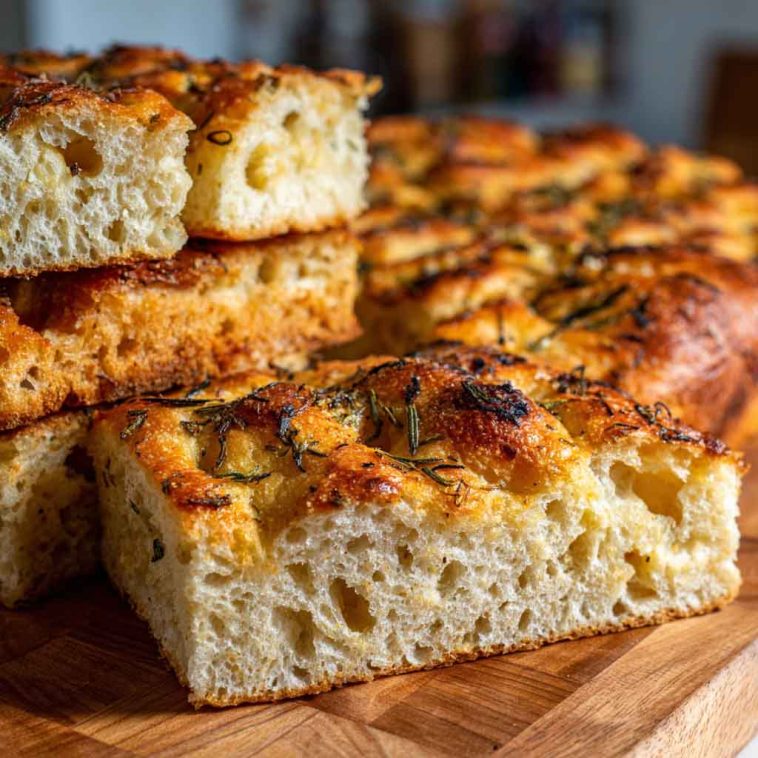
Another reason it stands out is its incredible crust. The olive oil creates crispy, golden edges while the inside stays light and fluffy. Topped with ingredients like rosemary, flaky sea salt, olives, or cherry tomatoes, sourdough focaccia becomes both a bread and a centerpiece.
Even better, it uses simple pantry ingredients: flour, water, salt, olive oil, and an active sourdough starter.
In this guide, you’ll learn everything you need to know to bake bakery-quality sourdough focaccia at home, from understanding the dough to mastering the fermentation process and achieving that perfectly crisp crust.
What Is Sourdough Focaccia?
Focaccia is a traditional Italian flatbread known for its airy texture, olive-oil richness, and distinctive dimpled surface. Originating in the coastal regions of Italy, particularly Liguria, focaccia has been a staple of Italian baking for centuries.
Classic focaccia dough is simple and typically made with flour, water, yeast, salt, and olive oil. The dough is spread into a pan, dimpled with fingertips, and baked until golden and crisp. The result is a soft interior with slightly crunchy edges and a savory olive oil flavor.
Sourdough focaccia takes this traditional bread a step further by replacing commercial yeast with a natural sourdough starter. Instead of relying on packaged yeast for fermentation, the dough rises through the natural wild yeast and beneficial bacteria present in the starter.
This natural fermentation process does more than just make the dough rise. It creates a deeper flavor profile, develops a more open crumb structure, and adds a subtle tanginess that pairs beautifully with olive oil and herbs.
The texture of sourdough focaccia is one of its defining features. The inside is light, airy, and full of irregular holes, while the outside develops a golden crust infused with olive oil. The bread remains soft and chewy but still has enough structure to hold toppings or be used for sandwiches.
Traditional focaccia toppings are simple yet flavorful. Classic combinations include fresh rosemary, flaky sea salt, olives, and cherry tomatoes. Other variations might include garlic, caramelized onions, or even roasted vegetables.
Because sourdough fermentation improves both flavor and digestibility, many bakers find sourdough focaccia easier on the stomach and more satisfying than yeast-based versions.
Why Bake Focaccia with Sourdough Starter?
Using a sourdough starter instead of commercial yeast transforms focaccia into a more flavorful and naturally fermented bread.
The biggest advantage is flavor. Natural fermentation allows the dough to develop complex aromas and subtle tangy notes that simply cannot be replicated with quick yeast fermentation. The result is a deeper, more balanced flavor that complements olive oil and herbs beautifully.
Texture is another major benefit. Sourdough fermentation strengthens the dough structure and creates a lighter, airier crumb. When baked properly, sourdough focaccia develops large, irregular air pockets that give the bread its signature softness.
Health benefits are also a reason many people prefer sourdough baking. The natural fermentation process helps break down gluten and phytic acid, making the bread easier to digest for many people. It may also lead to a lower glycemic impact compared to quickly fermented breads.
Another advantage is shelf life. Sourdough breads tend to stay fresh longer than yeast-based breads because the natural acids produced during fermentation slow down staling. This means your focaccia can remain soft and flavorful for several days.
For home bakers who already maintain a sourdough starter, focaccia is also one of the easiest and most forgiving ways to use it.
Ingredients You Need
One of the best things about sourdough focaccia is that it requires only a handful of simple ingredients.
Active sourdough starter is the heart of the recipe. It provides natural yeast and bacteria that ferment the dough, allowing it to rise while developing flavor.
Flour forms the structure of the bread. Bread flour is often preferred because its higher protein content creates stronger gluten, leading to a chewier and more open crumb. However, all-purpose flour can also work well.
Water hydrates the flour and helps create a high-hydration dough. Focaccia dough is usually quite wet, which helps produce its airy texture.
Olive oil is essential. It adds flavor, prevents sticking, and helps create the crispy golden crust that makes focaccia so irresistible. Good-quality olive oil makes a noticeable difference in taste.
Salt enhances flavor and strengthens the dough structure.
Beyond these basic ingredients, focaccia is incredibly versatile when it comes to toppings.
Popular toppings include:
fresh rosemary
flaky sea salt
sliced garlic
olives
cherry tomatoes
caramelized onions
These toppings are typically pressed gently into the dough before baking, allowing them to roast slightly in the oven while infusing the bread with flavor.
Equipment for Baking Sourdough Focaccia
You don’t need specialized bakery equipment to make excellent sourdough focaccia. Most home kitchens already have everything required.
A large mixing bowl is useful for combining and fermenting the dough. Because focaccia dough is high in hydration, it’s usually mixed by hand rather than kneaded traditionally.
A bench scraper or dough scraper helps handle the sticky dough and makes transferring it easier.
A baking pan or sheet pan is essential because focaccia is baked as a flatbread rather than shaped like a loaf. Metal pans work especially well for achieving crispy edges.
Parchment paper can help prevent sticking and make cleanup easier.
A digital kitchen scale is highly recommended for accurate measurements, especially when working with sourdough recipes.
Other helpful items include plastic wrap or a lid for covering the dough during fermentation.
Optional tools like a stand mixer or proofing box can make the process easier, but they are not necessary for excellent results.
Step-by-Step: How to Make Sourdough Focaccia Bread
Making sourdough focaccia is a simple process that relies more on time and fermentation than on complicated techniques.
Step 1: Feed Your Starter
Begin by feeding your sourdough starter several hours before baking. The starter should be active, bubbly, and at its peak when you mix the dough. A strong starter ensures proper fermentation and good rise.
Step 2: Mix the Dough
In a large bowl, combine flour, water, active sourdough starter, salt, and olive oil. Mix everything together until a shaggy dough forms. The dough will feel sticky and loose, which is normal for focaccia.
Allow the mixture to rest for about 20–30 minutes so the flour can fully hydrate.
Step 3: Bulk Fermentation
During the bulk fermentation stage, the dough begins to rise and develop structure. Every 30 minutes, perform a series of gentle stretch-and-folds. This technique strengthens the gluten without traditional kneading.
Repeat this process several times during the first couple of hours.
Step 4: First Rise
After the stretch-and-fold stage, let the dough continue fermenting until it becomes slightly puffy and increased in volume. Depending on temperature and starter strength, this process can take several hours.
The goal is not necessarily to double the dough but to develop good structure and fermentation.
Step 5: Transfer to the Baking Pan
Generously coat your baking pan with olive oil. This is key for achieving the classic crispy focaccia edges.
Carefully transfer the dough into the pan and gently stretch it toward the corners. If the dough resists stretching, allow it to rest for 10–15 minutes and try again.
Step 6: Second Proof
Let the dough rest in the pan for its final proof. During this time, it will relax, spread naturally, and become airy and soft.
Depending on the room temperature, this stage may take anywhere from 2 to 4 hours.
Step 7: Dimple the Dough
Once the dough has puffed up, drizzle a little olive oil over the surface. Use your fingertips to press into the dough, creating the classic focaccia dimples.
This step helps distribute olive oil across the surface and gives the bread its iconic appearance.
Add your desired toppings at this stage.
Step 8: Bake
Bake the focaccia in a preheated oven until the top is golden brown and the edges are crispy. The interior temperature should reach around 200°F (93°C) when fully baked.
The olive oil in the pan will help fry the bottom slightly, creating a delicious crisp crust.
Step 9: Cool and Serve
Allow the focaccia to cool slightly before slicing. This helps the crumb set and makes cutting easier.
For extra flavor, drizzle the finished bread with a little more olive oil or sprinkle with flaky sea salt before serving.
Sourdough focaccia is delicious served warm, used for sandwiches, or simply enjoyed on its own.
Pro Tips for Perfect Sourdough Focaccia

Easy sourdough focaccia Recipe – Rustic Italian Baking
Equipment
- Large mixing bowl
- Digital kitchen scale
- Bench scraper or dough scraper
- 9×13 inch metal baking pan or sheet pan
- Parchment paper (optional)
- Plastic wrap or lid for covering dough
- Measuring spoons
- Cooling rack
Ingredients
For the Dough
- 500 g bread flour (or all-purpose flour)
- 375 g water (room temperature)
- 100 g active sourdough starter (bubbly and recently fed)
- 10 g salt
- 30 g olive oil
For the Pan and Topping
- 3–4 tablespoons olive oil (for the pan and top)
Optional toppings:
- 1 tablespoon fresh rosemary
- 1 teaspoon flaky sea salt
- ½ cup cherry tomatoes
- ¼ cup sliced olives
Instructions
Step 1: Feed the Starter
- Feed your sourdough starter about 4–6 hours before mixing the dough. The starter should be bubbly and at peak activity.
Step 2: Mix the Dough
- In a large mixing bowl, combine the flour, water, sourdough starter, salt, and olive oil. Mix until a shaggy dough forms and no dry flour remains.Cover the bowl and let the dough rest for 20–30 minutes.
Step 3: Stretch and Fold
- Perform a series of stretch-and-folds every 30 minutes for the first 2 hours. Lift one side of the dough and fold it over itself. Rotate the bowl and repeat 3–4 times.This strengthens the dough without kneading.
Step 4: Bulk Fermentation
- Allow the dough to continue fermenting until it becomes slightly puffy and airy. This typically takes 4–6 hours depending on room temperature.
Step 5: Prepare the Pan
- Generously coat a 9×13 inch metal pan with olive oil.Transfer the dough into the pan and gently stretch it toward the corners. If it resists stretching, allow it to rest for 10–15 minutes and try again.
Step 6: Second Proof
- Cover the pan and allow the dough to proof for 2–4 hours until it becomes fluffy and spread across the pan.
Step 7: Dimple the Dough
- Drizzle olive oil over the surface. Use your fingertips to press deep dimples across the dough.Add toppings like rosemary, olives, or tomatoes if desired.
Step 8: Bake
- Preheat oven to 425°F (220°C).Bake the focaccia for 22–28 minutes until golden brown with crisp edges.
Step 9: Cool and Serve
- Allow the bread to cool for about 10 minutes before slicing.Serve warm with olive oil, balsamic vinegar, or alongside your favorite meal.