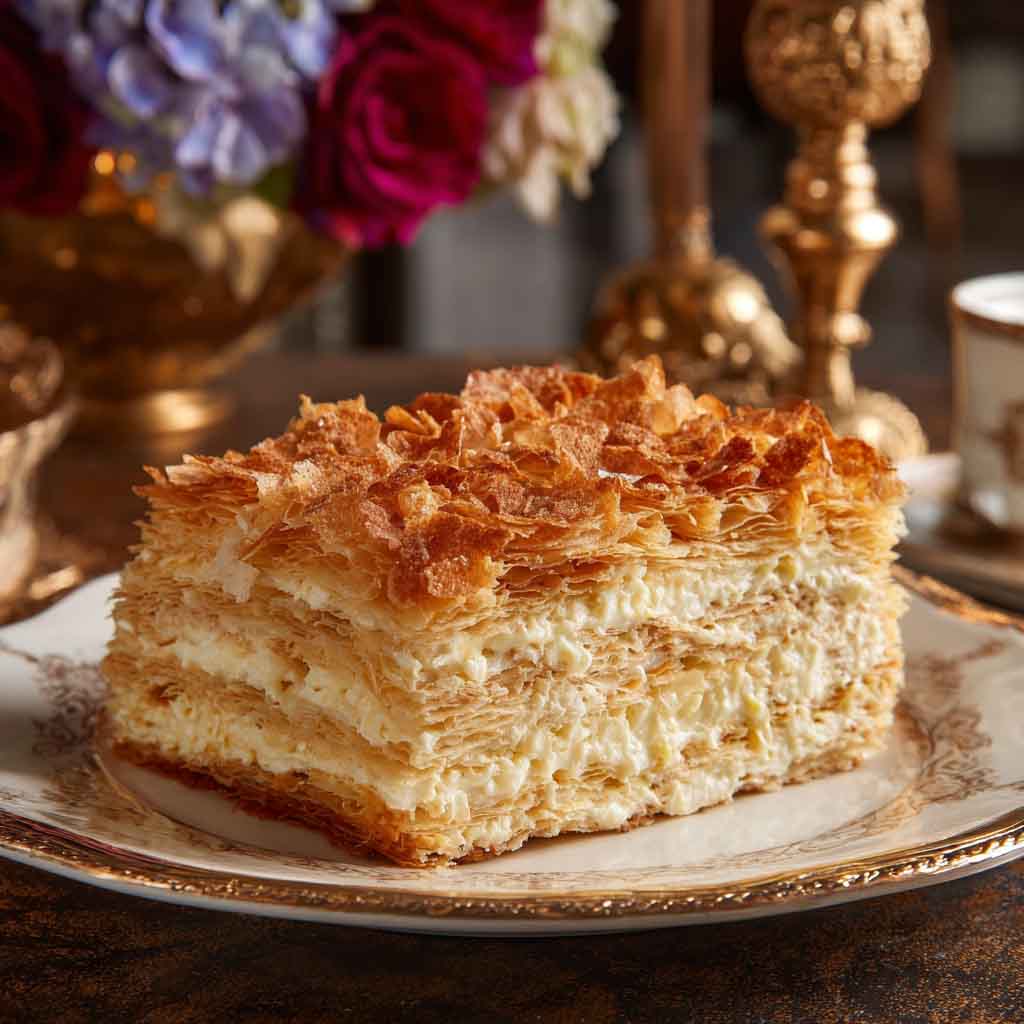
Introduction to Russian Napoleon Cake
Russian Napoleon Cake is more than just dessert—it’s a layered masterpiece steeped in history and indulgence. With its buttery puff pastry and velvety custard cream, this cake has become a centerpiece of celebrations, holidays, and family gatherings across Russia and beyond. Its appeal lies in the contrast of textures: crisp, flaky pastry softened by rich cream, creating a harmony that feels both luxurious and comforting. Often prepared for festive occasions like New Year’s or birthdays, Napoleon Cake is a symbol of tradition and togetherness. Home bakers and pastry chefs alike treasure it for its elegance and versatility, while its impressive presentation makes it a showstopper at any table. Whether enjoyed as a nostalgic family recipe or a modern adaptation, Russian Napoleon Cake remains iconic, offering a taste of history wrapped in layers of sweetness.
What is Napoleon Cake?
Napoleon Cake is a multi-layered dessert made from puff pastry sheets alternated with luscious custard cream. Typically, the cake features 8–12 thin layers, each carefully stacked to create a towering treat that softens beautifully as the cream seeps into the pastry.
It bears resemblance to the French mille-feuille, which also uses puff pastry and cream, but the Russian adaptation is richer and more indulgent. While mille-feuille often emphasizes lightness and delicate presentation, Napoleon Cake leans into hearty layers and generous cream, making it more substantial and celebratory.
The custard cream is usually made from milk, eggs, sugar, and butter, resulting in a velvety filling that balances sweetness with richness. Over time, variations have emerged, with some recipes incorporating condensed milk or whipped cream for added flavor.
This combination of flaky pastry and creamy filling defines Napoleon Cake, making it a beloved dessert across generations.
Historical Origins & Cultural Significance
Napoleon Cake’s origins trace back to early 19th century Russia, coinciding with the country’s victory over Napoleon in 1812. The dessert was reportedly created to commemorate the triumph, with its many layers symbolizing resilience and strength.
Over time, the cake became a staple of Russian cuisine, celebrated during national holidays and family gatherings. Its preparation often involved multiple generations, with recipes passed down and adapted to suit local tastes.
The Cheesecake Factory may have popularized Crusted Chicken Romano, but in Russia, Napoleon Cake holds similar cultural weight. It’s not just a dessert—it’s a symbol of pride and tradition. The cake’s enduring popularity reflects its ability to connect history with indulgence, offering both nostalgia and celebration.
Today, Napoleon Cake is enjoyed worldwide, often appearing at weddings, birthdays, and festive tables. Its cultural significance remains strong, making it a dessert that embodies both heritage and joy.
Flavor Profile Breakdown
Napoleon Cake delivers a flavor profile that’s indulgent yet balanced. The puff pastry layers are buttery and flaky, offering a crisp texture that contrasts with the smooth custard cream. The cream itself is rich and velvety, with notes of vanilla and subtle sweetness that permeate the pastry as the cake rests.
This interplay of textures—crunchy pastry and creamy filling—creates a dessert that feels both decadent and comforting. The sweetness is never overwhelming, thanks to the buttery pastry and occasional hints of tang from lemon zest or fruit garnishes.
A key tip for enhancing flavor is to let the cake rest overnight. This allows the cream to fully soak into the pastry, softening the layers and melding flavors into a cohesive whole. The result is a cake that’s tender, flavorful, and deeply satisfying, with each bite offering a perfect balance of richness and texture.
Step-by-Step Preparation Process
- Prepare Puff Pastry: Use homemade puff pastry for authenticity or store-bought sheets for convenience. Roll out thin layers and bake until golden and crisp. Allow to cool completely.
- Make Custard Cream: In a saucepan, whisk together milk, sugar, egg yolks, and cornstarch. Cook over medium heat until thickened, then stir in butter and vanilla. Chill until set and creamy.
- Layer the Cake: Place one pastry sheet on a serving platter, spread a generous layer of custard cream, then repeat with remaining pastry and cream. Aim for 8–12 layers for traditional height.
- Chill Overnight: Cover the cake and refrigerate for at least 8 hours, preferably overnight. This resting period allows the cream to soak into the pastry, softening the layers and enhancing flavor.
- Decorate: Crumble leftover pastry into fine crumbs and sprinkle over the cake for a rustic finish. Garnish with powdered sugar, fruit, or chocolate shavings if desired.
Expert Tip: Always use freshly baked pastry and allow the cake to rest overnight. This ensures the perfect balance of crisp and soft textures, making the cake melt-in-your-mouth delicious.
This process yields a cake that’s rich, elegant, and deeply satisfying—a true centerpiece for any celebration.
Russian Napoleon Cake Recipe – Easy Classic Layered Dessert Idea
This Russian Napoleon cake recipe is flaky, creamy, and elegant, made with layers of puff pastry and custard cream. Perfect for holidays, family gatherings, or a timeless dessert that impresses every guest.
- Rolling pin (if making pastry)
- Baking sheet
- Mixing bowls
- Saucepan and whisk
- Spatula
- Serving platter
- 8–12 puff pastry sheets (homemade or store-bought)
- 4 cups whole milk
- 1 cup sugar
- 6 egg yolks
- 3 tbsp cornstarch
- ½ cup unsalted butter
- 2 tsp vanilla extract
- Pinch of salt
- Extra pastry crumbs or powdered sugar (for topping)
Bake Pastry: Roll out puff pastry sheets thinly and bake at 375°F (190°C) until golden. Cool completely.
Make Custard Cream: Whisk milk, sugar, egg yolks, and cornstarch in a saucepan. Cook until thickened. Stir in butter and vanilla. Chill until creamy.
Layer Cake: Place one pastry sheet on a platter, spread custard cream, then repeat with remaining layers.
Chill Overnight: Cover and refrigerate for at least 8 hours to allow flavors to meld.
Decorate: Crumble leftover pastry into fine crumbs and sprinkle over the cake. Garnish with powdered sugar or fruit if desired.
Serve: Slice and enjoy chilled.
Resting overnight is essential for flavor and texture.
Store-bought puff pastry saves time, but homemade adds authenticity.
Crumbled pastry topping gives a rustic finish.
Add fruit or nuts for festive variations.
Best served chilled with tea, coffee, or sparkling wine.




Be First to Comment