
 Laura Mariano
Catchy Introduction
Welcome, food enthusiasts! If you’ve ever dined at a Chinese restaurant, chances are you’ve encountered the irresistible dish of Chinese eggplant in garlic sauce. It’s one of those menu items that instantly wins hearts with its silky texture and bold, aromatic flavor.
This dish transforms humble eggplant into something extraordinary. The eggplant becomes tender and almost creamy, soaking up the savory garlic sauce that clings to every bite. The sauce itself is a perfect balance of salty soy, sweet undertones, and the unmistakable punch of garlic.
It’s a dish that feels both comforting and exciting — familiar enough to satisfy cravings, yet exotic enough to transport you straight to the bustling kitchens of China. Whether served as a vegetarian main or a flavorful side, Chinese eggplant in garlic sauce is a recipe worth mastering at home.
What Is Sautéed Chinese Eggplant in Garlic Sauce?
Sautéed Chinese Eggplant in Garlic Sauce is a classic stir-fry featuring long, slender Chinese eggplants cooked until tender, then coated in a glossy, savory garlic sauce. The eggplant absorbs the sauce beautifully, resulting in a dish that’s rich, flavorful, and visually appealing.
Chinese eggplants differ from Western globe varieties. They’re thinner, with delicate skin and fewer seeds, which makes them less bitter and quicker to cook. Their flesh is softer, allowing them to soak up sauces without becoming mushy.
The garlic sauce is what sets this dish apart. Made with soy sauce, garlic, ginger, and a touch of sugar, it strikes a balance between savory, sweet, and aromatic. Sometimes chili paste or vinegar is added for extra depth.
Together, the silky eggplant and bold sauce create a dish that’s both comforting and vibrant — a staple in Chinese restaurants and a favorite among home cooks.
Origins & Culinary Inspiration
Eggplant has long held a place in Chinese cuisine, valued for its versatility and ability to absorb flavors. In Sichuan cooking, eggplant is often paired with chili and garlic for bold, spicy dishes. Cantonese versions, on the other hand, lean toward milder, sweeter sauces with a glossy finish.
The dish reflects the essence of Chinese stir-fry techniques: high heat, quick cooking, and layering flavors. Garlic sauce, in particular, is a hallmark of Chinese restaurant menus, beloved for its balance of savory and sweet.
Sautéed Chinese Eggplant in Garlic Sauce is a modern adaptation of these traditions, blending regional influences into a dish that’s approachable yet authentic. It’s a celebration of how simple ingredients — eggplant, garlic, soy — can be elevated through technique and tradition.
Why You’ll Love This Recipe
This recipe delivers on both texture and flavor. The eggplant cooks down to a silky, tender consistency, while the sauce adds richness and depth. Each bite is a perfect harmony of savory soy, garlicky punch, and subtle sweetness.
It’s also incredibly versatile. Serve it as a vegetarian main dish with steamed rice, pair it with noodles, or enjoy it as a side alongside meat or tofu. It’s equally at home on a weeknight dinner table or as part of a festive spread.
Expert tip: Salt the eggplant slices before cooking. This draws out excess moisture and reduces bitterness, ensuring the eggplant cooks evenly and absorbs the sauce beautifully.
With its bold flavor and comforting texture, this dish is sure to become a go-to recipe whenever you crave authentic Chinese flavors at home.
Choosing the Right Eggplant
The choice of eggplant makes all the difference. Chinese eggplants are long, slender, and have thin skin with fewer seeds. Their mild flavor and tender flesh make them ideal for stir-frying and soaking up sauces.
Globe eggplants, common in Western markets, are larger and rounder with thicker skin and more seeds. While they can be used, they often require peeling and salting to reduce bitterness. They also take longer to cook and may not achieve the same silky texture.
When selecting eggplants, look for ones that are firm, glossy, and free of blemishes. Smaller eggplants tend to be sweeter and less bitter. Avoid those with wrinkled skin or soft spots, as they may be overripe.
Freshness is key — eggplants should feel heavy for their size and have vibrant color. Proper selection ensures your dish will have the tender texture and balanced flavor that makes Chinese eggplant in garlic sauce so beloved.
Essential Tools & Equipment
To prepare this dish, you’ll need a few essentials:
- Wok or large skillet: for high-heat stir-frying.
- Sharp knife: to slice eggplant evenly.
- Wooden spatula: for tossing ingredients without damaging the eggplant.
- Optional steamer basket: to pre-soften eggplant before stir-frying, ensuring tenderness.
With these tools, you’ll be ready to recreate the restaurant-style magic of Chinese eggplant in garlic sauce right in your own kitchen.
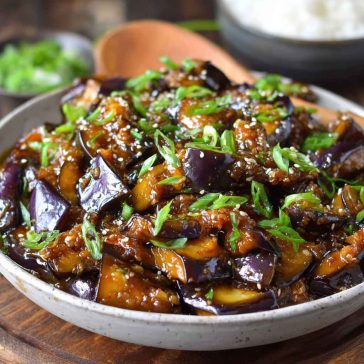
Sautéed Chinese Eggplant in Garlic Sauce Recipe | Easy Asian Side Dish
Equipment
- Wok or large skillet
- Sharp knife
- Cutting board
- Wooden spatula
- Small bowl (for sauce mixture)
Ingredients
- 2–3 Chinese eggplants (long, slender variety)
- 3 tbsp vegetable oil
- 4 garlic cloves, minced
- 1 tsp ginger, grated
- 2 scallions, chopped (reserve green tops for garnish)
- 2 tbsp soy sauce
- 1 tbsp rice vinegar
- 1 tbsp sugar
- ½ cup water
- 1 tsp cornstarch mixed with 2 tsp water (slurry)
- 1 tsp sesame oil (optional)
Instructions
- Prep Eggplant: Slice into strips, salt lightly, let sit 15 minutes, then pat dry.
- Sauté Aromatics: Heat wok, add oil, sauté garlic, ginger, and scallion whites until fragrant.
- Cook Eggplant: Add eggplant, stir-fry over high heat until tender.
- Add Sauce: Mix soy, vinegar, sugar, and water. Pour into wok. Stir in cornstarch slurry to thicken.
- Finish: Toss eggplant until coated. Drizzle sesame oil, garnish with scallion greens. Serve hot.
Notes
- Salt eggplant first: reduces bitterness and prevents sogginess.
- Cook quickly over high heat: keeps eggplant silky, not mushy.
- Cornstarch slurry: ensures sauce clings beautifully.
- Variations: add chili paste for Sichuan-style heat or ground pork for extra protein.