
 Laura Mariano
Why French-Style Beef Stew with Red Wine is Iconic
Few dishes embody the essence of cozy comfort food quite like French-style beef stew simmered with red wine. It’s the kind of meal that warms the soul, filling the kitchen with aromas of slow-cooked beef, herbs, and rich sauce. French stews have long been celebrated for their ability to transform humble ingredients into something extraordinary. Classics such as daube, a Provençal stew often cooked in a clay pot, and boeuf bourguignon, the Burgundy specialty immortalized by Julia Child, showcase the French mastery of slow braising.
What sets these stews apart is the use of wine as a central ingredient. Red wine doesn’t just add liquid for braising — it infuses the beef with depth, acidity, and complexity, creating layers of flavor that water or broth alone cannot achieve. The tannins soften during cooking, melding with savory notes from beef and vegetables to produce a sauce that is velvety and luxurious. Served with crusty bread or creamy potatoes, French beef stew with red wine is more than a dish; it’s a tradition, a celebration of patience, and a reminder that the simplest ingredients, when treated with care, can yield timeless comfort.
The Origins of French Beef Stew
French beef stews trace their roots to rustic kitchens where resourceful cooks relied on slow cooking to tenderize tough cuts of meat. One of the earliest methods was the daubière, a heavy clay or cast-iron vessel designed for braising. Meat, vegetables, herbs, and wine were layered inside, then sealed and cooked gently over embers. This technique allowed flavors to meld while ensuring the beef became meltingly tender.
Regional variations highlight the diversity of French culinary tradition. In Provence, daube Provençale often features local red wine, olives, and sometimes orange zest, reflecting Mediterranean influences. In Burgundy, boeuf bourguignon reigns supreme, showcasing the region’s famed Pinot Noir and often enriched with pearl onions and mushrooms. Each version reflects its terroir, marrying local ingredients with the universal French love of slow braising.
These stews embody the French philosophy of elevating everyday fare. By combining modest cuts of beef with wine, herbs, and patience, cooks created dishes that were both practical and celebratory. Over time, they became staples of French gastronomy, appearing in both farmhouse kitchens and fine dining establishments. Today, French beef stew remains a culinary icon, bridging rustic tradition with refined technique, and reminding us of the enduring power of slow, thoughtful cooking.
Key Ingredients That Make the Dish Shine
The beauty of French beef stew lies in its carefully chosen ingredients. The beef itself is central: cuts like chuck, brisket, or short ribs are ideal because their connective tissue breaks down during long cooking, yielding tender, flavorful meat.
Vegetables provide sweetness and balance. Carrots add natural sugar, pearl onions bring delicate bite, and mushrooms contribute earthy depth. Together, they create a harmonious base that complements the richness of the beef.
Herbs are essential for fragrance. Thyme, rosemary, and bay leaf infuse the stew with subtle layers of aroma, transforming the sauce into something complex yet comforting.
Wine is the defining element. Burgundy wines, with their Pinot Noir character, lend elegance and acidity, while Côtes du Rhône offers robust, peppery notes. The choice of wine shapes the personality of the dish, making it either refined or rustic.
Broth or stock rounds out the liquid, ensuring body and savoriness. Many traditional recipes also include bacon or pancetta, which adds smoky depth and enhances the sauce’s richness.
Together, these ingredients create a stew that is hearty yet nuanced, rustic yet sophisticated. Each component plays a role, but it is their interplay — beef, vegetables, herbs, wine, and broth — that makes French beef stew unforgettable.
Choosing the Right Wine
One of the most common questions about French beef stew is whether the wine needs to be expensive. The answer is no — while quality matters, you don’t need a prized bottle. A mid-range wine you’d enjoy drinking is perfect, since cooking concentrates its flavors. Avoid very cheap wines, which can taste harsh once reduced.
Varietals matter more than price. Burgundy wines, made from Pinot Noir, are traditional for boeuf bourguignon, offering bright acidity and subtle fruit. Côtes du Rhône, often blends of Grenache and Syrah, bring bolder, spicier notes that pair beautifully with beef. Other French reds, like Bordeaux or Languedoc blends, can also work, depending on the flavor profile you prefer.
Wine transforms the stew by adding acidity to balance richness, tannins that soften during cooking, and fruit notes that meld with savory elements. As the stew simmers, the wine reduces into a glossy sauce that clings to the beef and vegetables. It’s this alchemy — the marriage of wine and slow cooking — that makes French beef stew iconic. Choosing wisely ensures your dish captures the depth and elegance that define French culinary tradition.
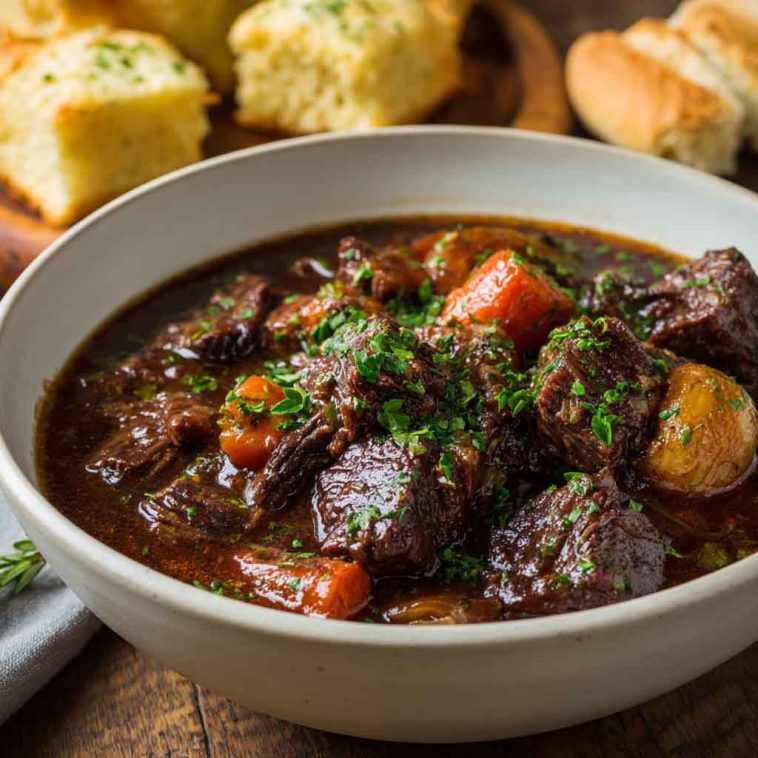
French-Style Beef Stew with Red Wine | Classic Boeuf Bourguignon Recipe
Equipment
- Dutch oven or heavy casserole dish
- Wooden spoon/spatula
- Chef’s knife + cutting board
- Measuring cups & spoons
- Ladle
- Serving platter or bowls
Ingredients
- 3 lbs (1.3 kg) beef chuck, brisket, or short ribs, cut into 2-inch cubes
- 4 oz (115 g) bacon or pancetta, diced
- 2 tbsp olive oil
- 2 carrots, sliced
- 1 large onion, diced
- 2 cloves garlic, minced
- 3 cups (720 ml) dry red wine (Burgundy or Côtes du Rhône)
- 2 tbsp flour
- 2 cups (480 ml) beef stock
- 1 tbsp tomato paste
- 1 bay leaf
- 2 sprigs thyme
- 1 sprig rosemary
- ½ lb (225 g) pearl onions, peeled
- ½ lb (225 g) mushrooms, quartered
- Salt & pepper to taste
Instructions
- Brown beef: Pat dry, season, and brown in batches in olive oil. Remove and set aside.
- Cook bacon: Render diced bacon until crisp; remove, leaving fat in pot.
- Sauté vegetables: Add carrots and onion; cook until softened. Stir in garlic.
- Deglaze: Sprinkle flour, stir, then pour in wine. Scrape fond from bottom.
- Build stew: Return beef and bacon, add stock, tomato paste, herbs. Bring to simmer.
- Braise: Cover Dutch oven and cook at 325°F (160°C) for 2½–3 hours until beef is fork-tender.
- Finish: Add mushrooms and pearl onions in final hour. Adjust seasoning.
- Serve: Remove herbs, ladle stew into bowls, garnish with parsley if desired.
Notes
- Wine choice: Use a dry red you’d enjoy drinking; mid-range bottles are perfect.
- Texture tip: Beef should be tender but not falling apart.
- Make-ahead: Improves overnight; refrigerate and reheat gently.
- Variations: Add olives and orange zest for Provençal flair, or adapt to Instant Pot/slow cooker.
- Serving ideas: Pair with mashed potatoes, buttered noodles, or crusty bread.