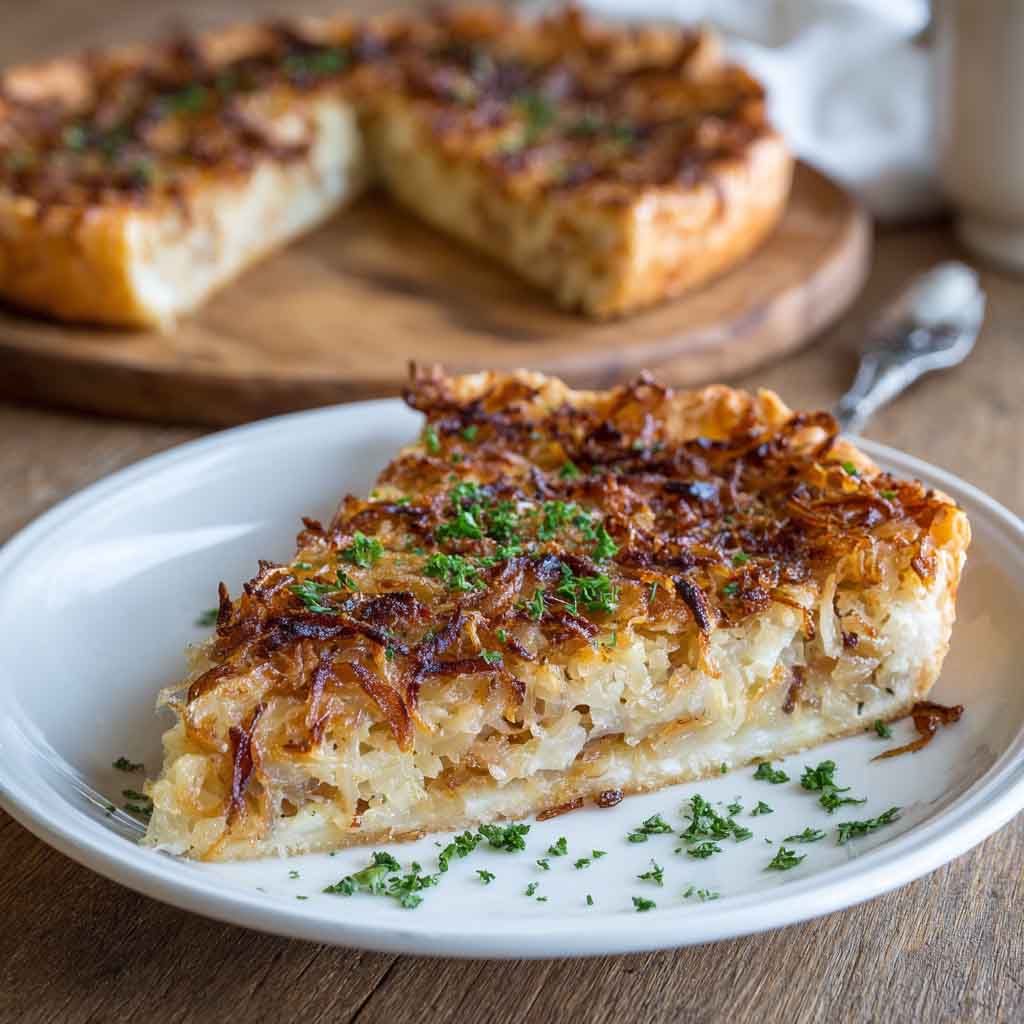
Meet Zwiebelkuchen, Germany’s Cozy Fall Classic
Zwiebelkuchen, literally “onion cake,” is one of southern Germany’s most beloved autumn traditions. This rustic savory pie layers sweet onions—often paired with smoky bacon—into a silky custard, all baked on a yeasted or shortcrust base. The result is hearty, comforting, and deeply satisfying. Each fall, Zwiebelkuchen appears in wine taverns and markets, served alongside Federweißer (new wine) during grape harvest season. Its appeal lies in its balance: tender onions that melt into sweetness, custard that sets just enough to hold, and a crust that provides sturdy crispness. It’s a dish meant for sharing, whether at a festive gathering or a cozy family table. This fail-safe approach ensures success every time, with clear steps and tips for achieving silky custard, tender onions, and crisp crust.
Tip: Use low, steady heat to soften onions slowly—this builds sweetness and depth without browning too quickly.
What Is German Onion Pie (Zwiebelkuchen)? Origins & Regional Styles
Zwiebelkuchen translates as “onion cake,” but it’s distinctly a savory pie. Found across Swabia, the Palatinate, and Franconia, it varies by region: some versions use yeasted dough for a bread-like base, while others prefer buttery shortcrust for tenderness. Bacon (Speck) is a common addition, lending smoky depth, though vegetarian versions are equally traditional. The texture is the hallmark: onions softened until sweet, custard just set with a gentle jiggle, and crust sturdy yet flaky. Zwiebelkuchen is most often served in wine taverns and fall markets, marking the arrival of chilly weather and grape harvests. Paired with Federweißer, it’s a seasonal ritual that embodies German hospitality and rustic comfort.
Ingredient Overview: Build the Balance
The beauty of Zwiebelkuchen lies in its balance of crust, filling, and custard:
- Crust options: Yeasted dough offers authentic, bread-like chew, while shortcrust provides buttery tenderness and ease.
- Onions: Yellow or sweet onions are best, used in generous amounts to create the signature filling.
- Bacon (optional): Traditional smoky Speck adds savory depth, though it can be omitted for vegetarian versions.
- Custard base: Eggs whisked with sour cream or crème fraîche, milk or cream, salt, pepper, and nutmeg form the silky binder.
- Aromatics: Caraway seeds (regional), butter or oil for sweating onions, garlic (optional), and fresh parsley or chives to finish.
Tip: Slice onions evenly and give them time—properly softened onions are the heart of this pie’s flavor.
Step-by-Step Instructions: Fail-Safe Method
Crust prep:
- Yeasted dough: Mix flour, yeast, warm liquid, and fat. Let rest, then press into pan.
- Shortcrust: Pulse flour, cold butter, and salt. Add water, chill, and roll.
Onion filling: Sweat onions in butter or oil with a pinch of salt until soft and translucent. Add bacon if using. Cool slightly.
Custard mixing: Whisk eggs, dairy, nutmeg, salt, and pepper until smooth. Fold in onions (and bacon) evenly.
Assembly: Line pan with crust, dock lightly, and pour in onion-custard mixture. Sprinkle caraway if desired.
Bake: Bake at 180°C/350°F until edges are set and center jiggles slightly. Rest before slicing for clean cuts.
Tip: Par-bake shortcrust for 8–10 minutes to prevent soggy bottoms.
Flavor Variations & Add-Ons
- Speck-forward: Smoky bacon with caraway for tavern style.
- Cheese-kissed: Add Emmental or Gruyère for nutty warmth.
- Herb garden: Stir in chives and parsley after baking.
- Vegetarian: Omit bacon; add miso or sautéed mushrooms for umami.
Tip: Keep add-ins modest—too much moisture or fat prevents custard from setting cleanly.
Serving Suggestions & Pairings
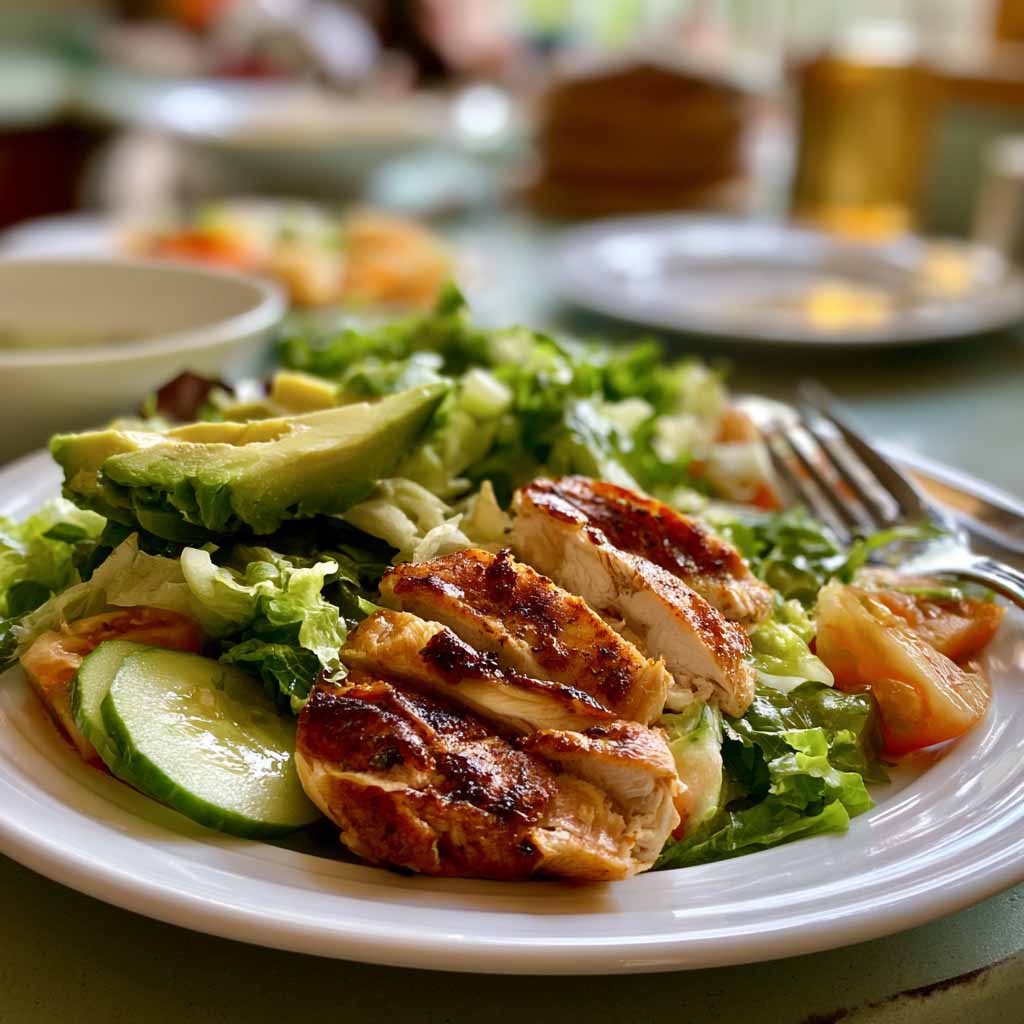
Serve Zwiebelkuchen warm with a crisp green salad and mustardy vinaigrette. Traditionally, it’s paired with Federweißer (new wine) or a dry Riesling, though beer complements it beautifully too. For acidity to balance richness, finish with cornichons or pickled onions.
Easy German Onion Pie Recipe (Zwiebelkuchen) | Savory Oktoberfest Dish

Savory, creamy, and full of rustic flavor — this German Onion Pie (Zwiebelkuchen) is a traditional dish made with caramelized onions, smoky bacon, and a rich custard filling baked in a buttery crust. Perfect for autumn gatherings, Oktoberfest celebrations, or cozy family dinners.
- Large skillet
- Mixing bowls
- Whisk
- Tart pan or springform pan
- Rolling pin (for shortcrust)
- Wooden spoon or spatula
Crust:
- Yeasted dough: 2 cups flour, 1 packet yeast, ½ cup warm milk, 2 tbsp butter, pinch of salt
- OR shortcrust: 2 cups flour, ½ cup cold butter, pinch of salt, 2–3 tbsp cold water
Filling:
- 4–5 large yellow or sweet onions, thinly sliced
- 2 tbsp butter or oil
- 150 g (5 oz) bacon or Speck, diced (optional)
- 3 large eggs
- 1 cup sour cream or crème fraîche
- ½ cup milk or cream
- ½ tsp salt, ½ tsp pepper, pinch of nutmeg
- 1 tsp caraway seeds (optional)
- Fresh parsley or chives to garnish
Prepare crust:
Yeasted dough: Mix flour, yeast, warm milk, butter, and salt. Knead, rest 1 hour, then press into pan.
Shortcrust: Pulse flour, butter, and salt. Add water, chill 30 minutes, then roll and fit into pan. Par-bake 8–10 minutes.
Cook onions: Sweat onions in butter/oil with salt over low heat until soft and translucent (20–25 minutes). Add bacon if using. Cool slightly.
Make custard: Whisk eggs, sour cream, milk/cream, nutmeg, salt, and pepper until smooth. Fold in onions and bacon.
Assemble: Pour mixture into crust. Sprinkle caraway seeds if desired.
Bake: Bake at 180°C/350°F for 45–50 minutes until edges are set and center jiggles slightly.
Rest & serve: Let rest 15–20 minutes before slicing. Garnish with parsley or chives.
Make-ahead: Blind-bake crust and cook onions a day ahead; assemble and bake fresh.
Storage: Refrigerate slices up to 3 days.
Reheating: Warm gently at 160–170°C/325°F; avoid microwaving to preserve crust texture.
Freezing: Freeze baked slices tightly wrapped; thaw and reheat in oven.
Common mistakes: Rushing onions, skipping par-bake, overloading custard, baking too hot, slicing without resting.
Variations: Add cheese (Emmental or Gruyère), herbs, or mushrooms for vegetarian depth.
Pairings: Serve with salad, pickles, or braised red cabbage. Traditional drinks include Federweißer or Riesling




Be First to Comment