
Introduction to Apple Cider Braised Pork Shoulder
When the air turns crisp and leaves begin to fall, few dishes capture the essence of autumn like apple cider braised pork shoulder. This hearty, soul-warming meal is the ultimate comfort food—perfect for cozy evenings and festive gatherings. The magic lies in its slow-cooked tenderness, where pork shoulder becomes melt-in-your-mouth soft, infused with the sweet tang of apple cider.
The flavor profile is a symphony of savory and slightly sweet notes, layered with herbaceous undertones and deep aromatics. Garlic, rosemary, and thyme mingle with the cider’s fruity brightness, creating a dish that’s both rustic and refined. Whether served over creamy mashed potatoes or alongside roasted root vegetables, this braise brings warmth and nostalgia to the table. It’s not just a meal—it’s a seasonal ritual that celebrates fall’s bounty and the joy of slow cooking.
The Story Behind the Dish
Braising is one of the oldest and most beloved cooking techniques, prized for its ability to transform tough cuts into tender masterpieces. It’s a method rooted in patience and simplicity—searing meat, then simmering it gently in a flavorful liquid until it yields effortlessly to a fork.
This dish draws inspiration from fall’s iconic ingredients: apples, cider, and earthy herbs like sage and thyme. Apple cider, with its natural sweetness and acidity, acts as both a tenderizer and a flavor enhancer, making it the perfect base for a seasonal braise.
Pork shoulder is ideal for this method. Its generous marbling and connective tissue break down beautifully during slow cooking, resulting in rich, succulent meat. The combination of cider and pork is timeless, evoking harvest traditions and farmhouse kitchens. It’s a dish that feels both nostalgic and fresh—rooted in history, yet endlessly adaptable to modern tastes.
What Makes This Recipe So Irresistible
The allure of apple cider braised pork shoulder lies in its texture and depth of flavor. Cooked low and slow, the pork becomes fall-apart tender, practically shredding itself with a gentle touch. This transformation is the hallmark of a well-executed braise—where time and temperature work together to coax out richness and complexity.
Flavor layering is key. The base begins with unfiltered apple cider, which offers a robust, natural sweetness and a hint of tartness. A splash of apple cider vinegar adds brightness, while garlic, onions, and fresh herbs like rosemary and thyme build aromatic depth. Sliced apples, added midway through cooking, soften and meld into the sauce, enhancing the dish’s fruity undertones.
A pro tip: always opt for unfiltered cider. Its cloudiness signals the presence of apple solids, which deepen the flavor and lend a rustic character to the braise. The result is a dish that’s savory, slightly sweet, and deeply satisfying—perfect for chilly evenings and festive fall dinners.
Choosing the Right Cut of Pork
Selecting the right cut of pork is essential for a successful braise. Pork shoulder, pork butt, and picnic roast are all viable options, but each brings subtle differences to the table.
Pork shoulder and pork butt are often used interchangeably, though technically, the butt comes from the upper shoulder and tends to be slightly fattier. This extra marbling makes it especially flavorful and ideal for slow cooking. The picnic roast, from the lower shoulder, has more connective tissue and a slightly firmer texture, which also benefits from long braising times.
Bone-in cuts offer deeper flavor and help retain moisture, but they require a bit more carving. Boneless cuts are easier to handle and serve, though they may cook slightly faster.
Fat content is crucial—too lean, and the meat can dry out; too fatty, and it can become greasy. Expert tip: trim excess surface fat, but leave enough marbling to enrich the braise. This balance ensures a luscious, well-rounded dish that’s both hearty and refined.
Braising Basics & Cooking Tips
Mastering the art of braising begins with a good sear. Before the pork enters the liquid, it should be browned on all sides to develop a rich, caramelized crust. This step adds depth and complexity, creating the foundation for a flavorful sauce.
Next, build your braising liquid. Start with unfiltered apple cider for sweetness and body, then add apple cider vinegar for acidity and balance. A splash of chicken or vegetable broth rounds out the base. Aromatics—onions, garlic, rosemary, thyme, and bay leaves—infuse the liquid with savory notes. Optional additions like mustard or a touch of maple syrup can enhance the flavor profile.
Cooking methods vary. The oven offers even heat and a golden finish, while a slow cooker provides convenience and consistent low temperatures. A pressure cooker speeds up the process but may sacrifice some texture nuance.
Braising time depends on the size of the pork shoulder—typically 2.5 to 4 hours. The goal is fork-tender meat that easily pulls apart.
Smart tip: flip the pork halfway through cooking. This ensures even exposure to the braising liquid and helps retain moisture throughout. Once done, let the meat rest before shredding, and reduce the braising liquid into a sauce for drizzling. The result? A dish that’s rich, aromatic, and undeniably comforting.
Apple Cider Braised Pork Shoulder – Cozy Fall Recipe for Tender, Flavorful Pork
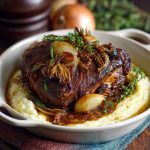
This Apple Cider Braised Pork Shoulder is slow-cooked to perfection in a rich blend of apple cider, herbs, and aromatics. A comforting, flavorful dish ideal for autumn gatherings, holiday dinners, or cozy weekends.
- Dutch oven or heavy braising pot
- Tongs
- Chef’s knife
- Cutting board
- Measuring Cups and Spoons
- Optional: slow cooker or pressure cooker
- 4–5 lb pork shoulder (bone-in or boneless)
- 2 tbsp olive oil
- Salt and pepper, to taste
- 2 cups unfiltered apple cider
- ½ cup apple cider vinegar
- 1 cup chicken or vegetable broth
- 1 onion, sliced
- 4 garlic cloves, smashed
- 2 sprigs rosemary
- 2 sprigs thyme
- 2 bay leaves
- 2 apples (Granny Smith or Honeycrisp), sliced
- Optional: 1 tbsp Dijon mustard, ½ tsp smoked paprika, pinch of cayenne
Preheat oven to 325°F (163°C).
Season pork generously with salt and pepper.
Sear pork in olive oil over medium-high heat until browned on all sides. Remove and set aside.
Sauté onion and garlic in the same pot until softened.
Deglaze with apple cider and vinegar, scraping up browned bits.
Add broth, herbs, and optional mustard/spices. Return pork to pot.
Cover and braise in oven for 2.5–4 hours, flipping halfway through.
Add sliced apples during the last hour of cooking.
Check for doneness—pork should be fall-apart tender.
Remove pork, reduce liquid on stovetop to make a sauce.
Serve shredded or sliced, drizzled with reduced sauce.
Use unfiltered cider for richer flavor.
Bone-in pork adds depth but takes slightly longer to cook.
Store leftovers with sauce for best reheating results.
Apples added late retain texture and sweetness.
Great for sandwiches, sliders, or served over mashed potatoes.



Be First to Comment