Make Authentic French Baguettes from Scratch – Easy Homemade Recipe

The Magic of a Homemade French Baguette

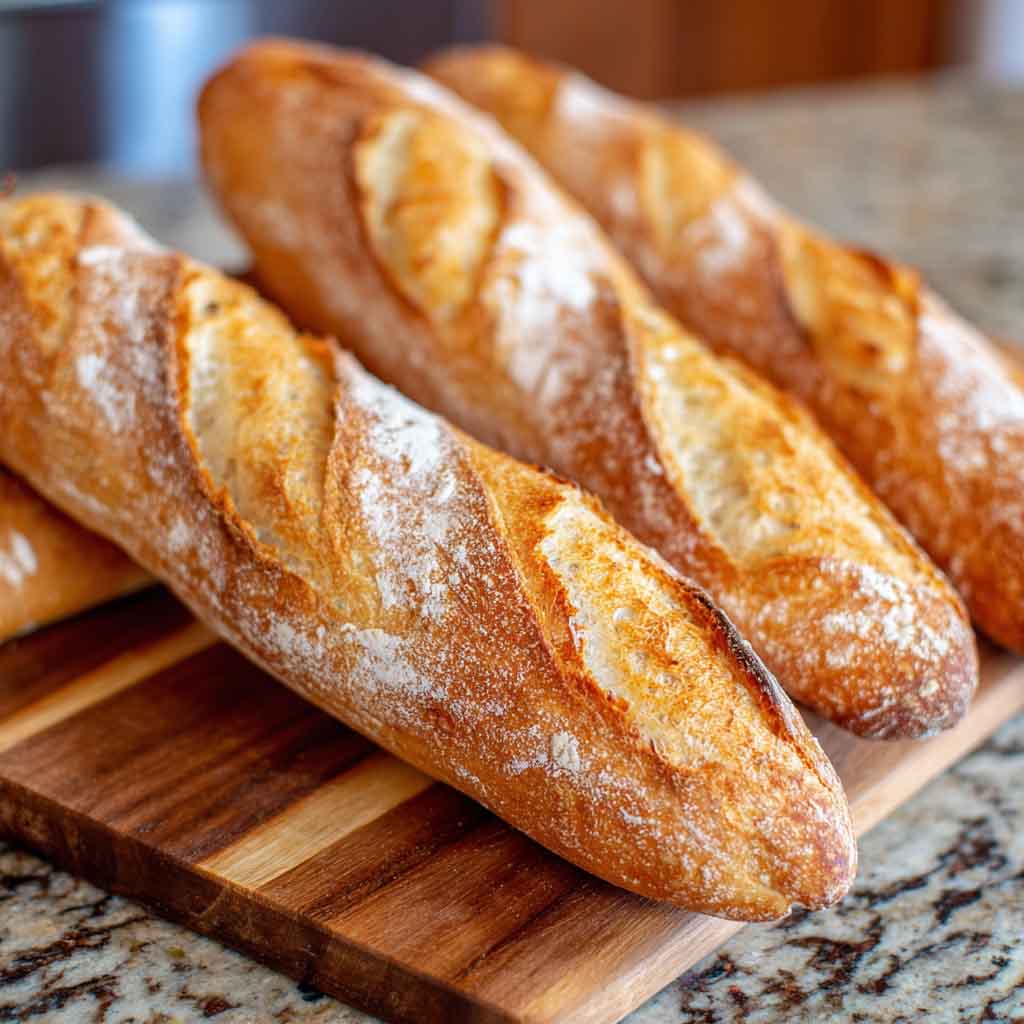
Few things in baking compare to the moment you pull a golden-brown French baguette from the oven. The aroma is irresistible—nutty, warm, and faintly sweet. When you slice into it, the crust shatters delicately, giving way to a light, airy interior that’s soft yet chewy.

Baking baguettes at home is more than just a culinary project—it’s a deeply satisfying experience. Unlike cookies or cakes, bread requires patience, practice, and a connection to the dough. Every rise, fold, and slash tells a story of craftsmanship.

While many assume that baguettes can only be mastered in Parisian boulangeries, the truth is that with the right ingredients, techniques, and a little patience, anyone can achieve bakery-quality results in their own kitchen.

This guide will walk you through the traditions, science, and techniques behind an authentic French baguette. By the end, you’ll understand what makes this iconic bread so special and feel confident enough to bake your own, creating a crusty, golden loaf that looks and tastes like it came straight from France.

What Makes a Baguette “Authentic”?

Authenticity in baguettes lies in their simplicity. Traditional French baguettes are made from just four ingredients: flour, water, yeast, and salt. No sugar, no oil, no additives—just a pure expression of wheat and fermentation.

This is where French baguettes differ from their American “French bread” counterparts. While American loaves often include sugar, butter, or milk to extend freshness, true baguettes embrace their short shelf life as part of their charm. The beauty lies in their ephemeral nature: bought fresh in the morning, enjoyed by evening, and replaced by a new loaf the next day.

In fact, French law defines the “baguette de tradition française” as containing only those four ingredients, with no preservatives or artificial improvers. This legal protection highlights how seriously the French take their bread. Baking an authentic baguette is about honoring this tradition of simplicity and purity.

History & Cultural Significance

The baguette’s roots trace back to 18th- and 19th-century Paris, where bakers experimented with elongated loaves for easier slicing and faster baking. But it wasn’t until the early 20th century that the baguette became the iconic bread we know today.

Its rise in popularity was partly practical: labor laws restricted bakers from starting work before 4 a.m., and the slender baguette baked faster than round country loaves, making it possible to have fresh bread ready by breakfast. Soon, the baguette became a fixture in French daily life.

Beyond convenience, the baguette became a cultural symbol. Carrying a fresh loaf under one’s arm is as quintessentially French as sipping café au lait at a sidewalk bistro. Boulangeries became community hubs, where locals greeted neighbors while picking up their daily bread.

Even today, over 10 billion baguettes are baked annually in France, each one representing tradition, craft, and cultural pride. Whether tucked into a picnic basket with cheese and wine or served alongside dinner, the baguette embodies both everyday comfort and national identity.

Understanding the Flavor & Texture Profile

The magic of a baguette lies in its contrasts. The crust is thin yet firm, shattering with each bite into delicate shards that give way to a light, airy crumb. Inside, the texture is chewy and tender, with irregular holes that signal proper fermentation.

Flavor-wise, the baguette is subtle but complex. Its nutty wheat notes come from slow fermentation, where yeast and enzymes unlock layers of flavor from the flour. A slight sweetness lingers, balanced by the savoriness of salt.

Achieving this balance requires two crucial elements: fermentation and steam. Long fermentation develops flavor and texture, while steam in the oven keeps the crust supple long enough for the loaf to expand before crisping into its signature crackle. The result is bread that feels both rustic and refined—perfect with butter, cheese, or simply enjoyed on its own.

Key Ingredients Breakdown

  • Flour: French baguettes traditionally use T55 flour, which has a moderate protein content and creates the ideal balance of chewiness and airiness. Bread flour works well as a substitute, while all-purpose flour can be used for a lighter crumb.

  • Yeast: Both active dry and instant yeast work, though fresh yeast (if available) brings a more traditional flavor. What matters most is controlling fermentation time for complexity.

  • Water: Hydration is key to achieving the baguette’s open crumb. The dough should feel sticky and elastic—slightly challenging to work with, but rewarding in the final result.

  • Salt: Essential for both flavor and structure. Salt strengthens gluten bonds, ensuring the dough holds its shape during baking.

  • Pro Tip: Always measure ingredients with a kitchen scale for accuracy. Bread baking is a science, and even small deviations can affect the final loaf.

Together, these simple ingredients—when treated with care and patience—create one of the most celebrated breads in the world.

Essential Equipment for Authentic Baguettes

While baguettes don’t require fancy tools, the right equipment makes the process smoother:

  • Mixing bowl & dough scraper – for handling sticky dough.

  • Kitchen scale – ensures precise measurements.

  • Baguette pan or baking stone – supports shape and enhances crust formation.

  • Lame (bread scoring tool) or sharp knife – for clean slashes that guide oven spring.

  • Oven with steam setup – create steam by placing a pan of hot water at the bottom or spraying the oven walls before baking. Steam is critical for the glossy crust and airy crumb.

Step-by-Step Guide to Making Authentic French Baguettes

Make Authentic French Baguettes from Scratch – Easy Homemade Recipe

Learn how to make crispy, golden French baguettes from scratch with this easy step-by-step recipe! Perfectly crusty on the outside and soft on the inside, these homemade baguettes are ideal for sandwiches, soups, or enjoying fresh with butter. A simple recipe that brings bakery-style bread right to your kitchen!
Prep Time 20 minutes
Total Time 3 hours
Course Bread, Side Dish
Cuisine French
Servings 4 baguettes (about 12–16 slices each)
Calories 180 kcal

Equipment

  • Mixing bowl
  • Kitchen scale (recommended)
  • Dough scraper
  • Clean kitchen towel or couche (linen)
  • Baking stone or heavy baking sheet
  • Lame (or sharp serrated knife) for scoring
  • Oven-safe pan for steam

Ingredients
  

  • 500 g (4 cups) bread flour (or French T55 flour if available)
  • 350 g (1 ½ cups) water (room temperature)
  • 10 g (2 tsp) salt
  • 5 g (1 ½ tsp) instant yeast (or 7 g active dry yeast)

Instructions
 

  • Mix Dough – Combine flour, yeast, water, and salt in a large mixing bowl. Stir until a rough, sticky dough forms.
  • Autolyse (Optional) – Let the flour and water rest for 20–30 minutes before adding yeast and salt to improve gluten structure.
  • Bulk Fermentation – Cover the bowl and let the dough rise at room temperature for 1–2 hours, folding the dough every 30 minutes until doubled in size.
  • Divide & Pre-shape – Place dough on a lightly floured surface. Divide into 3–4 equal pieces, shape into rough logs, and rest 15 minutes.
  • Final Shaping – Flatten each log slightly, fold lengthwise in thirds, then roll into long baguette shapes, tapering the ends.
  • Proof – Transfer to a floured couche or parchment-lined tray. Cover and proof 30–45 minutes until puffy.
  • Score – Using a lame or sharp knife, make 3–5 diagonal cuts across each loaf.
  • Bake with Steam – Preheat oven to 475°F (245°C) with a baking stone and a pan for steam. Place baguettes on the stone, add 1 cup hot water to the steam pan, and bake 20–25 minutes until golden brown and crisp.
  • Cool – Transfer to a wire rack and let cool at least 20 minutes before slicing.

Notes

  • For deeper flavor, prepare a poolish (preferment) the night before: mix 150 g flour, 150 g water, and a pinch of yeast, then let rest 12 hours before making the dough.
  • Steam is essential for the shiny, crackly crust—don’t skip it!
  • Baguettes are best eaten fresh but can be frozen for up to 2 months. To reheat, bake at 350°F (175°C) for 10 minutes.
  • Avoid refrigerating, as it dries out the bread quickly.
Keyword artisan bread, authentic baguette, crusty bread, French baguette recipe, homemade French bread

Avatar photo

Written by Laura Mariano

Laura Mariano is a food blogger who founded Recipes By Gymonset.com to make cooking easier. Growing up on a farm in Spain, Laura was inspired by exquisite dishes prepared using simple ingredients. Laura Mariano is particularly known for making anyone can cook.

Leave a Reply

Your email address will not be published. Required fields are marked *

Recipe Rating


Creamy Garlic Sauce Baby Potatoes – Tender, Velvety & Bursting with Flavor

Easy Garlic Rosemary Focaccia Muffins – Fluffy, Savory & Homemade