
Introduction & Hook
I still remember the first time I stumbled upon Chinese eggplant at a bustling farmers’ market tucked into a Chinatown alley. Long, slender, and a deep violet hue—so different from the bulky globe eggplants I grew up with. I asked the vendor how to cook it, and she smiled, “Garlic sauce. Always garlic sauce.”
Since then, this dish has become a staple in my kitchen. It’s beloved in Chinese home cooking and restaurants alike for good reason: it’s comforting, flavorful, and surprisingly simple. The eggplant turns silky and tender, soaking up a savory-sweet garlic sauce that’s rich with umami and just a hint of tang. Whether served over rice or tucked into a noodle bowl, it’s the kind of dish that disappears fast—and leaves you craving more.
What Is Chinese Eggplant with Garlic Sauce?
Chinese Eggplant with Garlic Sauce is a classic stir-fry dish found across many regions of China, with subtle variations. In Cantonese kitchens, it’s often mild and sweet, while Sichuan-style versions lean spicy and bold—sometimes called “fish fragrant eggplant,” though there’s no fish involved. The name refers to the seasoning profile traditionally used in fish dishes: garlic, ginger, scallions, and chili.
Unlike Western eggplant recipes that rely on baking or grilling, this dish celebrates the eggplant’s ability to absorb flavor and transform into a velvety texture when stir-fried. It’s typically served as a side dish or vegetarian main, and is especially popular during family dinners, casual restaurant meals, and even Chinese New Year spreads.
The sauce is the star—garlicky, slightly sweet, and deeply savory. It clings to the eggplant like a glaze, making every bite rich and satisfying.
Choosing the Right Eggplant
Not all eggplants are created equal, especially when it comes to stir-frying. Chinese eggplants are long and slender with thin skin and fewer seeds, which means they cook faster and absorb flavors beautifully. Their flesh is creamy and mild, without the bitterness often found in larger varieties.
Japanese eggplants are similar in shape and texture, making them a good substitute. Globe eggplants—the kind most common in Western supermarkets—are rounder, thicker-skinned, and more seedy. They can work in a pinch, but they require more prep to soften and mellow.
You’ll find Chinese eggplants at Asian grocery stores, farmers’ markets, or specialty produce shops. Look for firm, glossy skin and a vibrant purple color.
Pro Tip: To keep that gorgeous purple hue from turning brown during cooking, soak sliced eggplant in a mix of water and a splash of vinegar for 10 minutes. Pat dry before cooking. This helps preserve color and reduces oxidation.
Key Flavor Profile & Sauce Components
The magic of this dish lies in its sauce—a perfect balance of sweet, savory, tangy, and umami. Garlic is the backbone, delivering bold aroma and depth. Soy sauce adds saltiness and umami, while rice vinegar brings a gentle tang. A touch of sugar rounds everything out with subtle sweetness.
Optional chili paste or fresh chilies can add heat, especially in Sichuan-style versions. For extra depth, many recipes include oyster sauce, which adds a rich, slightly briny note. If you’re keeping it vegetarian, vegetarian oyster sauce (made from mushrooms) is a fantastic alternative.
Some cooks add cornstarch to the sauce to help it thicken and cling to the eggplant. Others finish with sesame oil for a nutty aroma.
Bold Tip: Always taste your sauce before adding it to the pan. Adjust the sugar, vinegar, or soy to suit your palate. The goal is balance—no one flavor should overpower the others.
Cooking Methods & Techniques
Chinese eggplant is incredibly versatile, but the cooking method makes all the difference. Stir-frying is the most traditional and quickest approach, producing tender eggplant with caramelized edges. However, it requires high heat and generous oil to prevent sticking and achieve the right texture.
Steaming is a healthier option, yielding soft eggplant without added fat—but it lacks the depth of flavor that comes from browning. Roasting is great for batch cooking and adds a smoky note, though it’s less common in traditional Chinese kitchens.
For restaurant-style texture, many chefs use oil-blanching: briefly frying the eggplant in hot oil before stir-frying. This locks in moisture and gives the eggplant a silky finish. It’s indulgent, but worth it for special occasions.
To avoid soggy or greasy eggplant, control your oil and heat. Eggplant acts like a sponge, so it’s easy to overdo it.
Bold Tip: Use the salt and drain method before cooking. Sprinkle sliced eggplant with salt and let it sit for 20–30 minutes. This draws out excess moisture and bitterness, reducing oil absorption. Rinse and pat dry before cooking. It’s a small step that makes a big difference in texture and flavor.
Chinese Eggplant with Garlic Sauce – Bold, Saucy & Irresistibly Tender
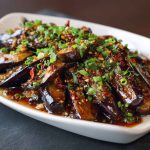
This Chinese Eggplant with Garlic Sauce is a flavor-packed dish featuring silky eggplant stir-fried to perfection and coated in a rich, garlicky, umami-loaded sauce. With soy sauce, rice vinegar, and a touch of sweetness, it’s the perfect balance of savory and tangy. Serve it over steamed rice or noodles for a satisfying vegetarian meal that’s quick, easy, and restaurant-worthy. Ideal for weeknight dinners, meal prep, or impressing guests with bold Asian flavors.
- Large skillet or wok
- Mixing bowls
- Cutting board and knife
- Measuring spoons and cups
- Steamer or microwave (for reheating leftovers)
- 3 Chinese eggplants (or Japanese eggplants)
- 1 tsp salt (for draining)
- 3 tbsp vegetable oil
- 4 cloves garlic, minced
- 3 tbsp soy sauce (or tamari for gluten-free)
- 1 tbsp rice vinegar
- 1 tbsp sugar
- 1 tbsp oyster sauce (or mushroom sauce for vegan)
- 1 tsp chili paste or doubanjiang (optional)
- 2 tsp cornstarch
- ¼ cup water
- Garnish: chopped scallions, sesame seeds
Prep Eggplant: Trim ends and cut into batons or half-moons. Sprinkle with salt and let sit for 20 minutes. Rinse and pat dry.
Make Sauce: In a bowl, mix soy sauce, vinegar, sugar, oyster sauce, cornstarch, water, garlic, and chili paste (if using).
Cook Eggplant: Heat oil in a wok or skillet. Stir-fry eggplant in batches until golden and tender. Remove and drain excess oil.
Combine: Return eggplant to pan. Pour in sauce. Stir gently and simmer 2–3 minutes until sauce thickens.
Serve: Plate over rice or noodles. Garnish with scallions and sesame seeds.
For vibrant purple color, soak eggplant in water with a splash of vinegar before cooking.
Salt-and-drain method helps reduce bitterness and oil absorption.
Use a nonstick or cast iron pan if you don’t have a wok.
Add tofu, chicken, or shrimp for extra protein.
Store leftovers in an airtight container for up to 3 days. Reheat by steaming or microwaving with a damp paper towel.



Be First to Comment