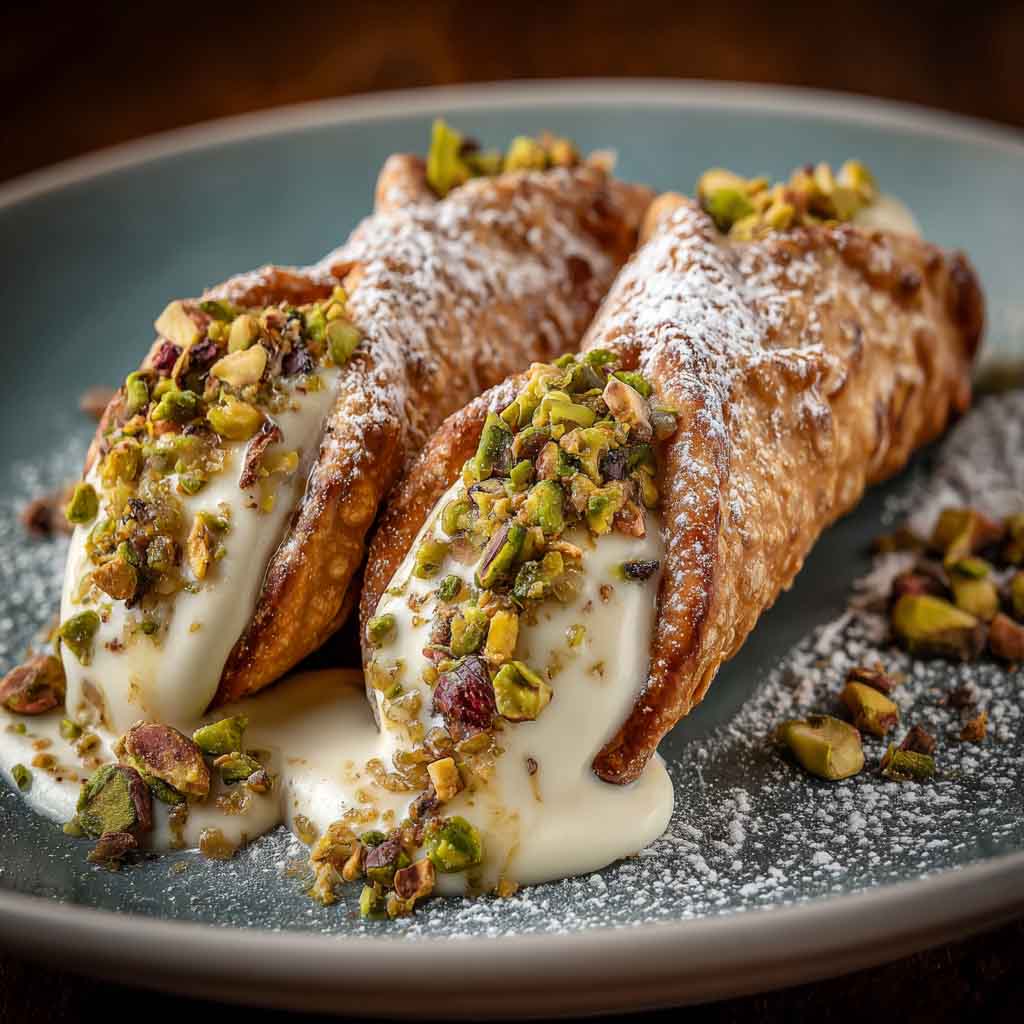
Why Pistachio Cannoli?
Few desserts capture the heart and spirit of Sicily quite like cannoli. Golden, blistered pastry shells filled with luscious, sweetened ricotta are more than just a dessert—they’re a cultural symbol of celebration, family gatherings, and culinary artistry. Now imagine taking that already irresistible treat and giving it a nutty, green-hued twist: pistachio cannoli.
Pistachios bring more than flavor—they add an earthy richness, delicate crunch, and vibrant color that elevate the traditional cannolo into something extraordinary. The contrast of crisp shell and creamy pistachio-kissed filling makes every bite feel indulgent yet balanced.
In this guide, you’ll discover not just how to make pistachio cannoli from scratch, but also the fascinating history behind them, expert tips for achieving bakery-level results at home, and creative ways to personalize the recipe. By the end, you’ll be ready to wow friends, family, or even yourself with this Sicilian gem.
A Peek at Tradition: Origins of Cannoli & Pistachio Twist
Cannoli trace their roots back to Sicily, where they were traditionally prepared during Carnevale—an indulgent celebration before the Lenten fast. The word cannolo means “little tube,” referring to the cylindrical pastry shell that is fried until crisp and then generously filled with sweetened ricotta cream. According to Wikipedia, the dessert has been a beloved symbol of Sicilian confectionery for centuries, representing abundance and festivity.
The pistachio twist comes from Sicily’s deep connection with nuts, particularly in the eastern region near Bronte, Catania, where pistachios grow in volcanic soil that enriches their flavor. Often referred to as “Sicily’s green gold,” Bronte pistachios are prized for their vibrant color and naturally sweet, aromatic taste.
Incorporating pistachios into cannoli is not only a regional flair but also a way to add texture and nuance. While the classic filling is plain ricotta sweetened with sugar, the pistachio version introduces a nutty undertone and a striking visual appeal. Whether folded into the cream, blended as a paste, or used to coat the ends of the shells, pistachios create a modern yet authentically Sicilian variation that has become a favorite in bakeries worldwide.
Anatomy of Pistachio Cannoli: Shells & Filling
At the heart of pistachio cannoli lies the perfect harmony between crisp pastry shell and creamy pistachio filling.
The shell is traditionally made from a dough of flour, sugar, fat, and Marsala wine (or sometimes white wine), which adds both flavor and structure. After being rolled paper-thin, the dough is wrapped around metal tubes and deep-fried until bubbly, golden, and crisp. Some modern cooks experiment with air-frying for a lighter version, but the essence remains the same: a delicate shell that shatters on the first bite. La Cucina Italiana and Epicurious both stress that the shell must be light yet sturdy enough to hold the filling without becoming soggy.
The filling is where pistachio cannoli shine. Instead of plain ricotta, many bakers blend ricotta or mascarpone with sugar, vanilla, and pistachio paste—or fold in finely chopped nuts for extra crunch. According to Bonni Bakery and Tasting Table, straining ricotta overnight is crucial for a firm, silky texture that won’t weep into the shell.
To preserve crispness, cannoli should always be filled at the last minute. Garnishing with chopped pistachios on each end and a dusting of powdered sugar completes the irresistible balance of textures.
Equipment & Core Ingredients
Making pistachio cannoli at home requires just a few specialized tools and high-quality ingredients.
Essential Equipment
Cannoli tubes (molds): Metal cylinders around which you wrap the dough for frying.
Deep-frying thermometer: Ensures oil stays between 350–375°F for even cooking.
Slotted spoon or spider strainer: For safely lifting shells from hot oil.
Piping bag with tip: For neatly filling shells with pistachio cream.
Key Ingredients
For the shells: All-purpose flour, sugar, a pinch of salt, butter or shortening, egg yolk, and Marsala wine (or dry white wine).
For the filling: Fresh whole-milk ricotta (or mascarpone for extra creaminess), powdered sugar, vanilla extract, and pistachio paste or finely chopped pistachios.
For garnish: Chopped pistachios, powdered sugar, and optionally melted chocolate for dipping shell edges.
By combining authentic tools and carefully selected ingredients, you set yourself up for cannoli success at home—worthy of a Sicilian pasticceria.
Step-by-Step Guide
A. Making the Shells
Start by mixing flour, sugar, and a pinch of salt in a bowl. Cut in cold butter until the mixture resembles coarse crumbs, then add an egg yolk and Marsala wine to bring the dough together. Knead until smooth, wrap in plastic, and let it rest for at least 30 minutes—this relaxes the gluten and makes rolling easier (Bonni Bakery; La Cucina Italiana).
Roll the dough as thin as possible—about 1/16-inch—then cut into circles or ovals. Wrap each piece around a lightly greased cannoli tube, overlapping the edges and sealing them with a bit of egg white. Heat oil to 350–375°F and fry shells until golden and blistered, turning as needed. Drain on paper towels, carefully remove tubes, and let cool. For a lighter alternative, air-fry at 375°F for 8–10 minutes, checking for crispness.
B. Preparing the Filling
Strain ricotta overnight in cheesecloth to remove excess moisture (Pies and Tacos). In a mixing bowl, whip ricotta (or mascarpone) with powdered sugar, vanilla extract, and pistachio paste until smooth and fluffy. Taste and adjust sweetness or pistachio intensity as desired (Chef Michael Salmon). Chill filling until ready to use—it should be firm but pipeable.
C. Assembly
When ready to serve, pipe the pistachio cream into cooled shells from both ends, filling the center evenly. Dip each end into finely chopped pistachios for crunch and color. Dust lightly with powdered sugar and serve immediately for the ultimate crisp-and-creamy indulgence.
Variations & Creative Twists
One of the joys of pistachio cannoli is how adaptable they are. While the classic version uses ricotta and finely chopped pistachios, there are countless ways to personalize them:
Chocolate-Dipped Shells: Dip shell edges in melted dark or white chocolate before adding pistachios. The contrast of bitter chocolate and sweet pistachio filling is heavenly.
Mascarpone Blend: Mix ricotta with mascarpone for a richer, creamier filling. Mascarpone adds a slightly tangy, buttery note.
Pistachio Cream Filling: Instead of blending nuts into ricotta, use pistachio cream (crema di pistacchio), a Sicilian specialty. This creates an even more intense nutty flavor.
Citrus Zest Addition: Fold in orange or lemon zest to brighten the filling—a nod to Sicily’s love for citrus.
Mini Cannoli: Use smaller molds for bite-sized versions, perfect for parties and dessert platters.
Fusion Cannoli: Incorporate flavors like rosewater (Middle Eastern flair), matcha (green tea twist), or even espresso powder for coffee-lovers.
With these variations, pistachio cannoli can shift from traditional to contemporary while still keeping their Sicilian soul.
Expert Tips for Perfect Pistachio Cannoli
Even the most experienced bakers know that cannoli require a little finesse. Here are expert-tested tips to ensure flawless results every time:
Strain Ricotta Properly: Moisture is the enemy of crisp shells. Strain ricotta overnight in a cheesecloth-lined strainer in the fridge.
Work the Dough Thin: Roll the shell dough as thin as possible—if it’s too thick, the shells will be heavy instead of delicate.
Seal Edges Firmly: Use egg white to seal the overlapping dough before frying; otherwise, shells can pop open in the oil.
Maintain Oil Temperature: Keep oil between 350–375°F. Too low and shells absorb grease; too high and they burn quickly.
Fill Just Before Serving: Always pipe filling into shells at the last minute to prevent sogginess.
Flavor Balance: Taste the filling before piping—adjust sweetness, vanilla, or pistachio intensity to suit your preference.
Chill Before Serving: Refrigerate filled cannoli for 10–15 minutes to firm up the cream, but not so long that shells soften.
Following these small but crucial details makes the difference between an average cannolo and one that rivals Sicilian pastry shops.
Serving Suggestions & Pairings
Pistachio cannoli shine on their own, but they’re even more enjoyable when paired thoughtfully.
Coffee Pairings: Serve with strong Italian espresso, cappuccino, or a creamy latte. The bitterness of coffee cuts through the richness of the filling.
Dessert Platters: Mix pistachio cannoli with other Italian classics like tiramisù, panna cotta, or biscotti for a varied dessert spread.
Festive Touch: Arrange cannoli on a platter dusted with powdered sugar and sprinkled with whole pistachios—perfect for holidays, weddings, or birthdays.
Wine Pairings: Sweet dessert wines like Moscato d’Asti, Vin Santo, or Passito di Pantelleria complement the nutty, creamy profile.
Modern Twist: Serve mini cannoli in shot glasses, filled upright with extra pistachio cream for dipping.
Cannoli are more than a dessert; they’re a conversation piece, best enjoyed with good company and a little Italian flair.
Storage & Make-Ahead Tips
The biggest challenge with cannoli is maintaining the crispness of the shell. Here’s how to plan ahead without sacrificing quality:
Shells: Fry shells up to 3 days in advance and store them in an airtight container at room temperature. Place paper towels between layers to absorb excess oil.
Filling: Prepare the ricotta-pistachio mixture up to 2 days in advance and store it covered in the refrigerator. For best texture, stir well before using.
Assembly: Always fill shells just before serving—ideally within 1–2 hours. Filled cannoli stored longer risk sogginess.
Freezing: Shells can be frozen unfilled for up to a month. Re-crisp in a 300°F oven for 5 minutes before using. Avoid freezing filled cannoli; the ricotta loses texture.
With this approach, you can serve perfect cannoli at a dinner party without last-minute stress.
Nutrition Snapshot
While pistachio cannoli are an indulgence, understanding their nutrition can help balance portion sizes.
Calories (per medium cannolo): ≈ 250–300
Fat: 15–18 g (mostly from nuts and frying oil)
Protein: 6–8 g (thanks to ricotta and pistachios)
Carbohydrates: 25–30 g
Sugar: 12–15 g
Pistachios add beneficial nutrients—fiber, protein, and healthy fats—making this dessert more wholesome compared to other pastries. Enjoy in moderation, perhaps paired with fruit or coffee, and savor every bite guilt-free.
FAQs about Pistachio Cannoli
Q1: Can I make cannoli without cannoli tubes?
Yes. You can improvise by wrapping dough around cleaned metal dowels or even thick wooden spoons. But for best results, invest in reusable cannoli molds.
Q2: Can I substitute mascarpone for ricotta?
Absolutely. Mascarpone makes a creamier, slightly denser filling. Many bakers use a blend of both.
Q3: Why did my shells turn soggy?
Cannoli become soggy if filled too early or if ricotta isn’t strained properly. Always fill just before serving.
Q4: What’s the difference between pistachio cream and pistachio paste?
Pistachio cream (crema di pistacchio) is sweetened and spreadable, while pistachio paste is pure nuts ground into a dense butter. Either works, but cream yields a sweeter filling.
Q5: Can I bake instead of fry shells?
Traditional cannoli are fried for crispness, but air-frying is a popular lighter alternative. Baking won’t give the same blistered texture.
Q6: How do I store leftover filling?
Keep filling in an airtight container in the fridge for up to 3 days. It also works as a spread for toast or filling for cakes.
Final Thoughts: Bringing Sicily to Your Kitchen
Pistachio cannoli are more than a dessert—they’re a little slice of Sicily, embodying the island’s passion for bold flavors, artisanal craftsmanship, and celebration of life. From the crispy, wine-kissed shell to the creamy pistachio filling, each step invites you into a centuries-old culinary tradition.
Making them at home may seem ambitious, but with the right tools, patience, and tips, anyone can create bakery-worthy cannoli. Whether you stick to tradition or experiment with variations, the result is always rewarding. So pour yourself an espresso, dust the platter with sugar, and savor Sicily one bite at a time.
Pistachio Cannoli – Crispy, Creamy & Irresistibly Italian

Bring a taste of Italy to your kitchen with these Pistachio Cannoli! Crisp, golden pastry shells are filled with a smooth, creamy ricotta filling and topped with crunchy pistachios for the perfect balance of flavor and texture. A stunning dessert for holidays, parties, or anytime you’re craving a sweet treat, these cannoli are elegant yet easy to make at home. Serve with espresso or a glass of dessert wine for the ultimate Italian indulgence.
- Mixing bowls
- Rolling Pin
- Cannoli tubes (molds)
- Deep-frying thermometer
- Slotted spoon or spider strainer
- Piping bag with tip
- Cheesecloth (for straining ricotta)
For the Shells:
- 2 cups all-purpose flour
- 2 tbsp sugar
- ¼ tsp salt
- 2 tbsp cold butter (cubed)
- 1 large egg yolk
- ½ cup Marsala wine (or dry white wine, as needed)
- Oil for frying (vegetable or canola)
- 1 egg white (for sealing edges)
For the Filling:
- 2 cups whole-milk ricotta (strained overnight)
- ½ cup powdered sugar (plus more for dusting)
- 1 tsp vanilla extract
- 3 tbsp pistachio paste (or finely ground pistachios)
- ¼ cup finely chopped pistachios (for garnish)
Prepare the Ricotta
Place ricotta in a cheesecloth-lined strainer over a bowl. Refrigerate overnight to remove excess moisture.
Make the Dough
In a bowl, mix flour, sugar, and salt.
Cut in cold butter until crumbly. Add egg yolk and Marsala wine, mixing until dough comes together.
Knead briefly until smooth. Wrap in plastic wrap and let rest for 30 minutes.
Fry the Shells
Heat oil to 350–375°F. Fry shells until golden and blistered, turning as needed (1–2 minutes).
Drain on paper towels, then carefully remove from molds. Cool completely.
Prepare the Filling
In a bowl, whip strained ricotta with powdered sugar, vanilla, and pistachio paste until smooth and creamy. Adjust sweetness to taste.
Assemble the Cannoli
Fill a piping bag with pistachio cream. Pipe filling into both ends of each cooled shell.
Dip ends in chopped pistachios. Dust with powdered sugar before serving.
Make-Ahead: Shells can be fried 2–3 days in advance and stored in an airtight container. Fill just before serving.
Alternative Fillings: Blend ricotta with mascarpone for a richer cream. Add orange or lemon zest for a citrusy lift.
Lighter Option: Air-fry shells at 375°F for 8–10 minutes instead of deep-frying.
Storage: Filled cannoli should be eaten the same day. Leftover filling can be refrigerated for 3 days.


Be First to Comment