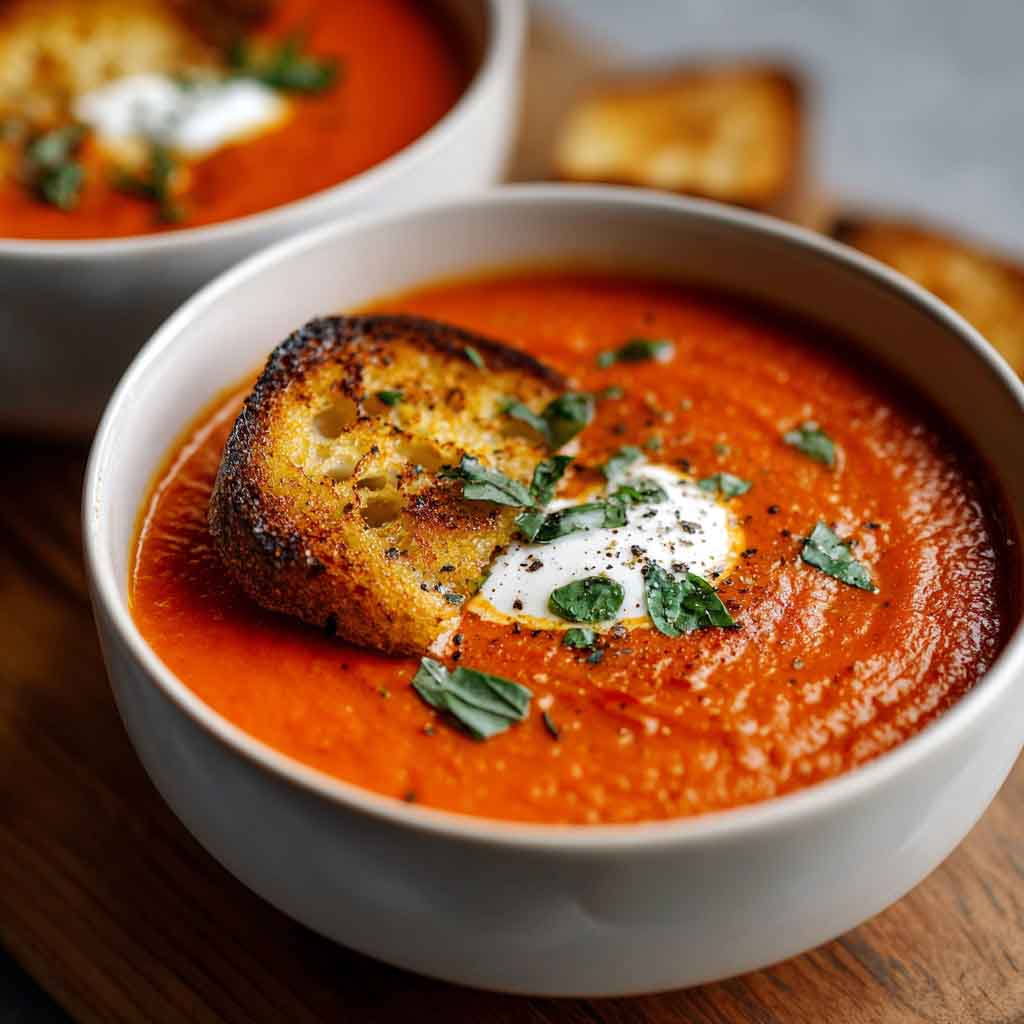
Gordon Ramsay’s Roasted Tomato Soup
Step into the cozy, comforting world of roasted tomato soup — a timeless classic elevated to gourmet heights by none other than Gordon Ramsay. This beloved recipe showcases how simple, humble ingredients can transform into a rich, flavorful dish that warms both body and soul. Ramsay’s signature version stands apart thanks to its deeply roasted tomato flavor, perfectly balanced acidity, and luxuriously silky texture. Whether served as a light lunch or an elegant starter, this soup is a testament to the power of technique and quality ingredients. In this article, we’ll explore the key components of the recipe, dive into Ramsay’s expert roasting and blending methods, and share insider tips to help you achieve restaurant-worthy results right in your own kitchen. Plus, stay tuned for answers to common questions so you can master this delicious soup with confidence.
The Appeal of Roasted Tomato Soup
What makes roasted tomato soup so irresistible? Roasting tomatoes before blending unlocks a deep, complex sweetness and adds layers of flavor that canned or fresh tomato soups simply can’t match. The heat caramelizes the natural sugars, creating subtle smoky and slightly charred notes that give the soup its signature richness. This process mellows out any sharp acidity, resulting in a smooth, balanced taste that is both comforting and sophisticated.
Tomato soup itself is a universally loved dish — a classic comfort food that’s both nourishing and versatile. Roasting elevates it to a gourmet level, making it perfect for everything from casual family dinners to impressive dinner parties. Gordon Ramsay’s recipe perfectly captures this balance, turning a humble staple into a refined culinary experience. The soup’s velvety texture and bold yet comforting flavors invite you to savor every spoonful, embodying the warmth and simplicity of home cooking with a chef’s touch.
Key Ingredients in Gordon Ramsay’s Roasted Tomato Soup
The magic of this soup begins with choosing the right tomatoes. Ramsay prefers ripe, in-season tomatoes such as vine-ripened or heirloom varieties, which offer the best sweetness and depth. The ripeness is crucial because underripe tomatoes tend to be acidic and lack the natural sugars needed for caramelization during roasting.
Garlic and onions play a supporting role in building flavor. By roasting these aromatics alongside the tomatoes, their sharpness softens and transforms into mellow, sweet undertones that enrich the soup’s complexity. Using whole garlic cloves and quartered onions helps achieve this gentle sweetness without overpowering the tomato base.
Quality olive oil is essential—not only for roasting but also for adding richness and a fruity note to the soup. A good extra virgin olive oil elevates the dish’s flavor while ensuring the vegetables roast evenly without drying out.
Fresh herbs like thyme and basil are layered thoughtfully: thyme goes into the roasting pan to infuse the soup with herbal warmth, while fresh basil is added at the end to brighten the final dish. This contrast of roasted and fresh herbs creates a dynamic flavor profile.
Ramsay recommends using either a rich vegetable or chicken stock to add depth and body. The choice affects the soup’s richness, with chicken stock lending a fuller mouthfeel, while vegetable stock keeps it lighter and suitable for vegetarians.
Optional ingredients like chili flakes introduce a subtle heat, while a finishing swirl of cream or a dollop of yogurt adds luscious creaminess and balances acidity for a truly luxurious bowl.
Step-by-Step Preparation & Cooking Method
Roasting is the heart of this recipe. Start by preheating your oven to around 425°F (220°C) to ensure a hot environment that caramelizes the tomatoes and aromatics quickly without drying them out. Arrange halved tomatoes, peeled garlic cloves, and quartered onions on a roasting pan. Drizzle generously with olive oil, sprinkle with salt, pepper, and fresh thyme sprigs.
Patience is key—roast for about 30-40 minutes, turning halfway, until the tomatoes are soft, slightly shriveled, and edges caramelized to a deep golden brown. The roasting pan juices, rich with concentrated flavors, are a goldmine—don’t discard them! Scrape them into the blender to capture every bit of that umami depth.
Next, transfer the roasted veggies to a blender or food processor. Blend until smooth for a silky soup or pulse a few times if you prefer a bit more texture. Add stock gradually to reach your desired consistency.
Pour the blended soup back into a pot and bring to a gentle simmer. Taste and adjust seasoning: a pinch of sugar can balance excess acidity, while salt and pepper enhance overall flavor. At this stage, a splash of cream or a swirl of yogurt can be added for creaminess.
For reheating, warm gently over low heat to preserve flavor and texture. Avoid boiling, which can break down the delicate balance you’ve created.
Gordon Ramsay’s Unique Touches & Techniques
Gordon Ramsay’s approach to roasted tomato soup reflects his culinary expertise and attention to detail. One signature technique is his careful caramelization of onions. Instead of just roasting, he slowly sweats onions first to develop a deep, sweet flavor before combining with the roasted tomatoes. This step adds a luscious depth that sets his soup apart.
His use of herbs is also strategic—fresh herbs like basil are stirred in at the very end to preserve their bright, aromatic qualities, providing a fresh counterpoint to the rich roasted base.
For an elegant finishing touch, Ramsay often recommends drizzling cream or pesto on top before serving. This contrast of creamy or herbal elements adds complexity and visual appeal.
Importantly, Ramsay’s tips are designed to be accessible to home cooks, empowering them to replicate professional techniques without special equipment or advanced skills. His recipe is a perfect blend of rustic simplicity and refined technique, making it approachable yet impressive every time.
Variations to Try for Gordon Ramsay’s Roasted Tomato Soup
While Ramsay’s classic recipe is a showstopper on its own, there are plenty of delicious ways to customize and elevate it based on your taste preferences or dietary needs:
Spicy Roasted Tomato Soup: Add a pinch of chili flakes or a fresh jalapeño during roasting for a gentle kick that complements the sweetness of the tomatoes. For an extra smoky note, a dash of smoked paprika blends beautifully.
Creamy Vegan Version: Swap chicken stock for rich vegetable broth and finish with a swirl of coconut cream or cashew cream instead of dairy. Nutritional yeast can add a subtle cheesy depth if desired.
Herb Variations: Experiment with rosemary or oregano instead of thyme to shift the herbal flavor profile. Garnish with fresh parsley or chives for a fresh finish.
Roasted Red Pepper Addition: Roast some red bell peppers alongside the tomatoes for a sweeter, smokier soup with vibrant color.
Cheesy Crouton Topping: Serve with crunchy croutons topped with melted Parmesan or Gruyère for textural contrast and indulgence.
These variations allow you to tailor the soup to suit different moods and occasions while maintaining the core roasting technique that makes it so flavorful.
Expert Tips for Perfect Roasted Tomato Soup
To get the best results, here are some pro tips inspired by Gordon Ramsay’s techniques and kitchen wisdom:
Use the freshest, ripest tomatoes you can find. They will caramelize best and give the richest flavor.
Don’t skimp on olive oil. It helps with roasting and carries flavor beautifully.
Roast at a high temperature but watch carefully. You want caramelization, not burning.
Layer flavors by roasting garlic and onions together with tomatoes. This builds a more complex base.
Use a blender that can handle hot liquids safely or cool the roasted mixture slightly before blending.
Adjust seasoning at the end. Roasting concentrates flavors and salt levels, so taste after blending and simmering.
Add fresh herbs last. Stirring basil or parsley in just before serving preserves their bright aroma.
For a silky finish, strain the soup through a fine mesh sieve if you prefer a very smooth texture.
Following these tips will help you replicate the luxurious, well-balanced flavors of Ramsay’s recipe in your home kitchen.
Serving Suggestions & Pairings
Gordon Ramsay’s roasted tomato soup shines as a comforting starter or light meal, and pairing it well can elevate the entire dining experience:
Classic Grilled Cheese: The crispy, buttery crunch of grilled cheese sandwiches perfectly complements the soup’s velvety texture.
Garlic Bread or Herb Focaccia: Warm, fragrant breads are perfect for dipping and soaking up every delicious drop.
Fresh Green Salad: A simple salad with peppery arugula or baby spinach, dressed lightly with lemon and olive oil, balances the richness of the soup.
Roasted Vegetables: Serve alongside oven-roasted zucchini, bell peppers, or carrots for a colorful, nutritious plate.
Wine Pairings: A light-bodied red like Pinot Noir or a crisp Sauvignon Blanc pairs beautifully with the soup’s acidity and herbaceous notes.
Garnish with a drizzle of olive oil, a swirl of cream, or fresh basil leaves to add a beautiful finishing touch.
Storage and Reheating Tips
Roasted tomato soup stores wonderfully, making it a great make-ahead meal:
Refrigerate: Store in an airtight container for up to 3-4 days. The flavors often deepen overnight.
Freeze: For longer storage, freeze in portioned containers for up to 2 months. Thaw overnight in the fridge.
Reheat Gently: Warm over low heat on the stovetop, stirring occasionally. Avoid boiling to preserve the soup’s delicate flavors and smooth texture.
Adjust Before Serving: Taste after reheating and add a splash of stock or cream if the soup has thickened too much or lost brightness.
Frequently Asked Questions (FAQs)
Q: Can I use canned tomatoes instead of fresh?
A: Yes! High-quality canned whole peeled tomatoes work well if fresh tomatoes aren’t in season. Roast them similarly to concentrate flavor, though fresh tomatoes tend to yield the best texture and sweetness.
Q: How can I make the soup vegan?
A: Use vegetable stock instead of chicken stock and finish with coconut cream or plant-based yogurt instead of dairy cream. Skip any cheese garnishes.
Q: Can I prepare the soup ahead of time?
A: Absolutely! The soup tastes even better the next day as the flavors meld. Store in the fridge and reheat gently before serving.
Q: How do I thicken the soup if it’s too watery?
A: Simmer it uncovered for a bit longer to reduce, or add a small potato when roasting to naturally thicken the soup.
Q: What’s the best way to store leftovers?
A: Use airtight containers and refrigerate for up to 4 days or freeze up to 2 months. Warm gently when ready to eat.
Final Thoughts
Gordon Ramsay’s roasted tomato soup is a perfect example of how elevating simple ingredients with thoughtful technique can turn an everyday dish into something truly special. Its rich, caramelized flavor, silky texture, and balanced acidity make it a standout recipe for any season. Whether you follow the classic method or experiment with variations, the key lies in roasting and layering flavors patiently. This soup is not only delicious but also comforting and versatile, easily paired with breads, salads, or enjoyed on its own. With these detailed instructions, tips, and variations, you’re fully equipped to create a restaurant-quality roasted tomato soup in your own kitchen. So grab some ripe tomatoes, fire up your oven, and get ready to savor every spoonful of this cozy culinary delight.
Gordon Ramsay’s Roasted Tomato Soup

This roasted tomato soup recipe brings together ripe tomatoes, caramelized onions, and garlic roasted to perfection, resulting in a rich, smoky, and silky soup bursting with deep flavor. Inspired by Gordon Ramsay’s signature technique, it’s a comforting classic with a gourmet twist — perfect as a starter or light meal. Easy to make and adaptable, this soup is sure to impress.
- Roasting pan or baking sheet
- Blender or food processor (heat-safe)
- Large saucepan or pot
- Knife and cutting board
- Spoon or spatula
- 2.5 lbs (about 6 medium) ripe tomatoes, halved
- 1 large onion, peeled and quartered
- 6-8 garlic cloves, peeled
- 3 tbsp extra virgin olive oil
- 2-3 sprigs fresh thyme
- 3 cups vegetable or chicken stock
- Salt and freshly ground black pepper, to taste
- Optional: pinch of chili flakes
- Optional: 2 tbsp cream or yogurt (for finishing)
- Fresh basil leaves (for garnish)
Preheat oven to 425°F (220°C).
Prepare vegetables: Halve the tomatoes, peel and quarter the onion, and peel garlic cloves.
Arrange on roasting pan: Place tomatoes cut side up, onions, and garlic on the pan. Drizzle with olive oil, sprinkle with salt, pepper, and tuck thyme sprigs among them.
Roast: Roast in the oven for 35-40 minutes, turning once halfway, until tomatoes are caramelized and soft.
Blend: Transfer roasted veggies and all pan juices into a blender or food processor. Blend until smooth or leave slightly chunky, depending on preference.
Simmer: Pour the blended mixture into a saucepan. Add stock gradually to reach your desired consistency. Heat gently and adjust seasoning with salt, pepper, and chili flakes if using.
Finish: Optional — stir in cream or yogurt for creaminess.
Serve: Ladle into bowls, garnish with fresh basil leaves and a drizzle of olive oil or cream if desired. Serve hot.
For a vegan version, use vegetable stock and omit cream or replace with coconut or cashew cream.
If soup is too thick, add more stock or water to adjust consistency.
Roasting at a high temperature is key for caramelization but keep an eye to prevent burning.
Soup can be made ahead and tastes even better after resting overnight.
Leftovers can be refrigerated for up to 4 days or frozen for up to 2 months.
To make it spicier, add chili flakes during roasting or a dash of smoked paprika.
For extra smooth texture, strain soup through a fine sieve before serving.




Be First to Comment