
 Laura Mariano
Why Pesto Pasta and Grilled Shrimp Stack Is a Showstopper
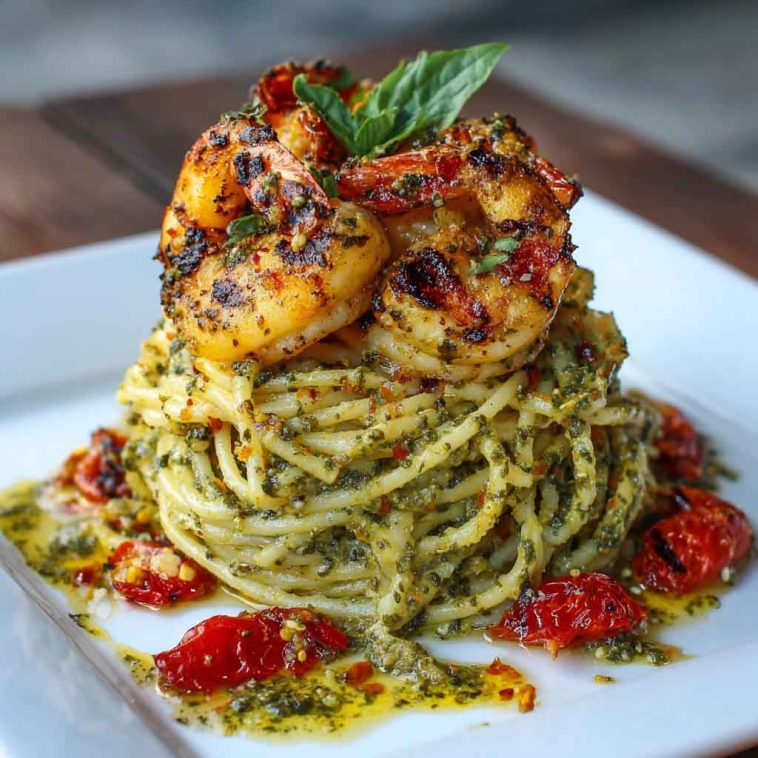
Imagine layers of tender pasta tossed in vibrant, aromatic basil pesto, crowned with juicy, smoky grilled shrimp—an irresistible dish that looks as stunning as it tastes. This Pesto Pasta and Grilled Shrimp Stack is a perfect blend of fresh, bright flavors and elegant presentation, making it ideal for quick weeknight dinners, summer gatherings, or even elegant entertaining. The fresh herbaceousness of the pesto complements the smoky char of the shrimp, creating a delightful flavor contrast with every bite.
What makes this dish truly special is its simplicity combined with sophistication. It’s easy to prepare yet impressive on the plate, turning humble ingredients into a gourmet experience. Whether you’re a busy cook or a seasoned foodie, this recipe promises a fresh, flavorful meal that will wow your guests and satisfy your cravings.
Why Pesto Pasta and Grilled Shrimp Stack Is a Showstopper
There’s something undeniably captivating about vibrant layers of fresh pesto-coated pasta topped with perfectly grilled, juicy shrimp, presented in an elegant stack. This dish strikes the perfect balance between rustic Italian flavors and modern plating sophistication. Whether you’re looking for a quick weeknight dinner that feels special, planning a lively summer gathering, or aiming to impress guests at an elegant dinner party, this pesto pasta and grilled shrimp stack delivers in flavor, texture, and visual appeal.
The bright herbaceous notes of fresh basil pesto paired with smoky grilled shrimp create a fresh, vibrant flavor profile that’s both satisfying and light. Best of all, this recipe is straightforward to prepare, proving that stunning presentation and gourmet taste don’t have to be complicated. Get ready to elevate your pasta night with a dish that’s as delightful to look at as it is to eat!
What Is a Pesto Pasta and Grilled Shrimp Stack?
At its core, a pesto pasta and grilled shrimp stack is a layered dish where tender, pesto-coated pasta is carefully piled and topped with flavorful grilled shrimp, creating an eye-catching tower of deliciousness. This technique draws inspiration from contemporary plating trends where height and structure add drama and refinement to simple dishes.
Stacking food isn’t new—it’s a nod to classic layered dishes like lasagna or mille-feuille, but here it’s taken to a modern, minimalist level. This presentation transforms everyday ingredients into a restaurant-quality experience, impressing both visually and gastronomically.
By stacking the pasta and shrimp, you highlight the individual components while letting their textures and flavors play off each other. Each bite offers a harmonious combination of silky pasta, fresh pesto, smoky shrimp, and crunchy pine nuts, making this dish memorable and satisfying.
Flavor Profile Breakdown
This dish bursts with fresh, vibrant flavors. The star is the herbaceous, nutty fresh basil pesto, rich with garlic, toasted pine nuts, and Parmesan cheese, all brought together by fruity extra virgin olive oil. The pesto adds a fragrant and slightly creamy coating to the pasta, infusing every bite with Italian sunshine.
The grilled shrimp deliver a smoky, juicy punch, enhanced by subtle char marks from the grill that bring a delicate bitterness and depth. Marinated simply with lemon, garlic, and olive oil, the shrimp remain tender with a slight tang.
Bright accents of lemon zest and a touch of garlic awaken the palate, balancing the richness of the pesto. Toasted pine nuts scattered on top introduce a satisfying crunch, contrasting beautifully with the tender pasta and shrimp. The final sprinkle of freshly grated Parmesan adds a salty, savory finish that rounds out the dish perfectly.
Ingredient Spotlight — Key Components and Quality Tips
Pasta:
Choose pasta shapes that lend themselves well to stacking and coating with pesto. Linguine, fettuccine, or spaghetti are excellent options due to their long, flexible strands that can be twirled into neat nests. Cook pasta just shy of al dente to avoid mushiness after tossing with pesto and stacking. Remember to salt your pasta water generously for optimal flavor.
Shrimp:
Fresh shrimp is ideal for grilling, but good-quality frozen shrimp works well if thawed thoroughly and patted dry. Opt for medium to large shrimp (16-20 count per pound) for perfect bite-sized pieces that won’t dry out on the grill. Deveining and peeling beforehand ensure a clean presentation and enjoyable eating experience. Marinate the shrimp briefly in garlic, lemon juice, olive oil, and a pinch of red pepper flakes for a subtle kick and enhanced flavor.
Pesto:
Homemade pesto always tastes best—blend fresh basil leaves, toasted pine nuts (or walnuts for variation), garlic, Parmesan cheese, and quality olive oil until smooth and vibrant green. Store-bought pesto is a great shortcut, but choose one with fresh ingredients and no preservatives for the best taste. Feel free to customize your pesto by swapping nuts (pine nuts, walnuts, almonds) or cheeses (Parmesan, Pecorino Romano) to suit your palate.
Additional Flavor Enhancers:
Garlic and lemon juice brighten and deepen flavors, while red pepper flakes add subtle heat if desired. Fresh herbs like basil or parsley sprinkled on top amplify freshness.
Toppings:
Toast pine nuts until golden to add a nutty crunch and texture contrast. Finish with freshly grated Parmesan and delicate microgreens or basil leaves for visual appeal and extra flavor layers.
Equipment You’ll Need
To execute this dish perfectly, gather the following:
A grill or grill pan for those smoky, charred shrimp.
A large pot to boil pasta to al dente perfection.
Mixing bowls for tossing pasta with pesto and marinating shrimp.
Tongs and skewers (wooden or metal) to handle and flip shrimp easily on the grill.
A food processor or blender if making pesto from scratch to achieve that silky, emulsified texture.
A stacking ring or mold (optional but highly recommended) to shape the pasta and shrimp into neat, restaurant-quality towers for presentation.
Preparing the Pesto Pasta — Step-by-Step
Bring a large pot of salted water to a boil and cook your chosen pasta according to package instructions, but stop just before al dente to keep a firm bite after mixing and stacking. Drain the pasta, reserving a cup of pasta water.
In a large mixing bowl, toss the warm pasta with your prepared pesto, ensuring each strand is evenly coated. If the pesto feels too thick, gradually add reserved pasta water a tablespoon at a time to loosen the sauce and achieve a silky consistency without watering down the flavors.
Avoid reheating pasta too aggressively, as it can become mushy or lose its vibrant green color. Keep it warm and toss gently until ready to assemble the stack.
Grilling the Shrimp — Techniques for Juicy Perfection
Marinate shrimp for about 15 minutes in olive oil, minced garlic, lemon juice, salt, pepper, and optional red pepper flakes. Preheat your grill or grill pan to medium-high heat.
Thread shrimp onto skewers to ensure even cooking and easy flipping. Grill shrimp for 2–3 minutes per side until opaque and just firm, with attractive grill marks. Avoid overcooking, as shrimp can become tough quickly.
Remove from heat immediately and let rest briefly to lock in juices. Proper grilling enhances shrimp’s natural sweetness and imparts a subtle smoky flavor, perfectly complementing the fresh pesto pasta.
Assembling the Pesto Pasta and Grilled Shrimp Stack
Assembling your pesto pasta and grilled shrimp stack is where the dish truly transforms from simple ingredients into a visually stunning, restaurant-quality presentation. If you have a stacking ring or mold, place it on your serving plate first — this helps keep the layers neat and stable. Begin by carefully twirling a small nest of pesto-coated pasta and gently press it into the bottom of the mold to form a solid base.
Next, layer a few grilled shrimp evenly on top of the pasta. Repeat with another layer of pasta followed by shrimp, building your stack to about two or three layers high. If you don’t have a mold, freeform stacking works well too — use a fork or tongs to twirl pasta into compact nests and stack shrimp in between, pressing gently to secure.
For a polished look, drizzle extra pesto over the top of the stack, sprinkle with toasted pine nuts for crunch, and garnish with fresh basil leaves or microgreens. A light sprinkle of freshly grated Parmesan cheese adds a final touch of flavor and elegance.
When plating, keep your presentation simple to let the vibrant green pesto and perfectly grilled shrimp shine. A clean white plate works best to highlight the colors and textures of the dish.
Serving Suggestions & Pairings
This dish shines best when paired with simple, fresh sides that won’t compete with the bold flavors of pesto and shrimp. A light green salad tossed in a lemon vinaigrette or a crisp arugula salad with shaved Parmesan provides a refreshing contrast. Roasted or grilled seasonal vegetables such as asparagus or zucchini also complement the smoky shrimp beautifully.
For bread lovers, a slice of crusty garlic bread or a warm baguette is perfect for sopping up any leftover pesto sauce.
When it comes to drinks, a crisp white wine like Sauvignon Blanc or Pinot Grigio pairs wonderfully, as does a chilled glass of dry rosé. For non-alcoholic options, sparkling water with a twist of lemon or lime keeps things light and refreshing.
Seasonal tweaks—like adding cherry tomatoes in summer or roasted squash in fall—can keep the dish feeling fresh and aligned with local produce.
Variations and Customizations
One of the best things about this recipe is its flexibility. If shrimp isn’t your favorite or you want a twist:
Protein swaps: Try grilled scallops for a similar texture and flavor, or chicken strips for a heartier meal. For a vegetarian version, pan-seared tofu or grilled portobello mushrooms make excellent stand-ins.
Pesto alternatives: If you want a different flavor profile, consider sun-dried tomato pesto for a tangy punch, arugula pesto for peppery notes, or walnut pesto for a richer, earthier taste.
Dietary modifications: Use gluten-free pasta to accommodate dietary needs and swap Parmesan for nutritional yeast or vegan cheese to keep it dairy-free.
Spice it up: Add crushed red pepper flakes to the shrimp marinade or drizzle infused chili oil on the finished stack for a gentle kick.
Storage, Leftovers & Meal Prep Tips
If you have leftovers (which is rare!), store the pesto pasta and grilled shrimp separately in airtight containers to maintain their best texture and flavor. Pasta tends to absorb sauce and can get mushy if left sitting with the shrimp overnight.
To reheat, gently warm the pasta in a skillet with a splash of water or olive oil to loosen the sauce. For shrimp, use a quick sauté or microwave on low power just until warmed through—overcooking will make them tough.
You can also prepare components in advance: make your pesto a day or two ahead, grill shrimp a few hours before serving, and cook pasta just before assembling. For busy weeknights, consider assembling the stack without grilling the shrimp and adding fresh grilled shrimp at serving time.
Avoid freezing once assembled as the texture of both shrimp and pasta will degrade.
Frequently Asked Questions
Q: Can I make pesto ahead of time and store it?
Absolutely! Pesto keeps well in the fridge for up to a week if stored in an airtight container with a thin layer of olive oil on top to prevent browning. You can also freeze pesto in ice cube trays for easy portioning.
Q: What type of shrimp works best for grilling?
Large, peeled, and deveined shrimp (16-20 count per pound) are ideal. They cook quickly and have a nice texture and flavor.
Q: How do I prevent shrimp from drying out?
Don’t overcook! Shrimp only need 2-3 minutes per side on a hot grill. Marinating them beforehand helps keep them juicy.
Q: Can I use frozen shrimp, and how should I thaw it?
Yes! Thaw frozen shrimp overnight in the fridge or for a quicker method, place them in a sealed bag and submerge in cold water for 20-30 minutes. Avoid thawing at room temperature.
Q: What’s the best pasta shape for stacking?
Long, flat pasta like linguine or fettuccine works best as it can be twirled neatly into layers without falling apart.
Q: How do I keep the pesto pasta from drying out when plating?
Toss the pasta with plenty of pesto and reserve some pasta water to loosen the sauce if needed. Also, assemble the stack shortly before serving and consider a light drizzle of olive oil to lock in moisture.
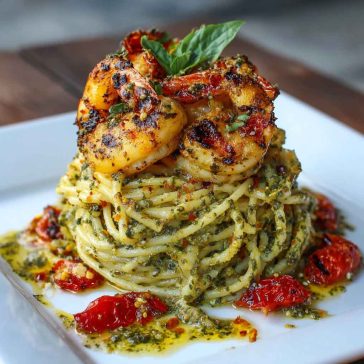
Pesto Pasta and Grilled Shrimp Stack
Equipment
- Grill or grill pan
- Large pot for boiling pasta
- Mixing bowls
- Tongs and skewers
- Food processor or blender (for homemade pesto)
- Stacking ring or mold (optional for plating)
Ingredients
- Shrimp, peeled and deveined
- Pasta (linguine, fettuccine, or spaghetti)
- Fresh basil leaves
- Pine nuts
- Parmesan cheese
- Garlic cloves
- Olive oil
- Lemon juice and zest
- Salt and pepper
- Optional: red pepper flakes, fresh herbs for garnish
Instructions
- Prepare the pesto: Blend basil, pine nuts, garlic, Parmesan, lemon juice, salt, and olive oil until smooth.
- Cook the pasta: Boil pasta until al dente, drain, and toss with pesto. Reserve some pasta water.
- Grill the shrimp: Marinate shrimp briefly with olive oil, garlic, lemon zest, salt, and pepper. Grill 2-3 minutes per side until opaque and slightly charred.
- Assemble the stack: Using a mold or freeform, layer pesto pasta and grilled shrimp, finishing with shrimp on top. Garnish with pine nuts, extra pesto, and fresh herbs.
- Serve immediately with lemon wedges and optional side dishes.
Notes
- For best results, use fresh basil and high-quality Parmesan in your pesto.
- Avoid overcooking shrimp to maintain juiciness and tenderness.
- Reserve pasta water to adjust pesto consistency if needed.
- The stacking ring is optional but helps create a neat presentation.
- Leftovers are best stored separately and reheated gently.