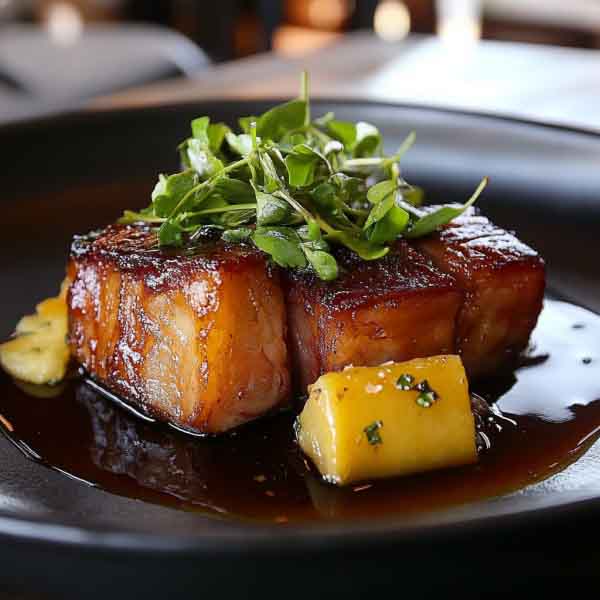
The Ultimate Indulgence
The first time I made glazed pork belly was on a chilly weekend when comfort food was non-negotiable. I wanted something bold, something that felt like a reward—and pork belly delivered. With its crispy edges, sticky glaze, and melt-in-your-mouth texture, it’s the kind of dish that turns dinner into an event.
Glazed pork belly is a showstopper—whether served as a main course, appetizer, or part of a tapas spread. It’s rich, flavorful, and surprisingly versatile. The fat renders slowly, the meat absorbs every drop of glaze, and the result is pure indulgence.
In this guide, you’ll learn how to prep pork belly for maximum crisp, build glazes that balance sweet and tangy, and explore cooking methods from roasting to braising. Whether you’re hosting guests or treating yourself, this dish is your ticket to culinary applause.
What Is Pork Belly and Why It Works
Pork belly is a boneless cut from the underside of the pig, prized for its layers of fat and meat. It’s the same cut used to make bacon, but unlike bacon, pork belly is uncured and unsmoked, giving you full control over flavor.
Its high fat content makes it ideal for slow cooking and glazing. As it cooks, the fat renders out, basting the meat and creating a tender, juicy texture. Meanwhile, the surface crisps up beautifully, especially when roasted or pan-fried.
Glazes cling to pork belly like a dream—the fat absorbs flavor, and the meat caramelizes under heat. It’s a cut that rewards patience and creativity.
Bold Tip: Score the skin and fat in a crosshatch pattern before cooking. This helps the fat render evenly and allows the glaze to penetrate deeper, resulting in crispier skin and richer flavor.
Cooking Methods: Roasting, Braising, Pan-Frying
Pork belly is incredibly versatile, and each cooking method brings out a different side of its personality.
Roasting is ideal for achieving crispy skin and slow-rendered fat. Cook low and slow to tenderize, then finish at high heat or under the broiler to crisp the surface. Elevate the meat on a wire rack to ensure even heat circulation and prevent sogginess.
Braising is perfect for infusing flavor. Simmer pork belly in a mixture of broth, soy sauce, aromatics, and spices until fork-tender. The fat melts into the liquid, and the meat becomes rich and succulent. Finish with a glaze or sear for texture.
Pan-frying delivers quick caramelization and crispy edges. Slice the belly into thick pieces and sear until golden. It’s fast, flavorful, and great for small portions.
Two-stage cooking, like Lord Byron’s method, involves boiling the pork belly first with aromatics to tenderize and reduce greasiness, then glazing and frying for a sticky, crisp finish.
Bold Tip: Use a wire rack when roasting to elevate the pork belly. This promotes airflow, prevents soggy bottoms, and ensures even crisping.
Glaze Building Blocks: Sweet, Tangy, and Sticky
The glaze is where pork belly goes from delicious to unforgettable. A great glaze balances sweetness, acidity, and umami, creating a sticky coating that caramelizes under heat.
Start with a base like honey, brown sugar, maple syrup, or citrus juice. Add depth with soy sauce, rice wine, or dry sherry. These ingredients create a syrupy glaze that clings to the meat and intensifies flavor.
Boost complexity with garlic, ginger, vinegar, or chili flakes. These aromatics cut through the richness and add layers of flavor. Simmer the glaze until it thickens and coats the back of a spoon.
Apply the glaze during the final minutes of cooking or broil briefly to caramelize. This prevents burning and ensures a glossy, sticky finish.
Bold Tip: Always add glaze at the end or use a quick broil to caramelize. This locks in flavor and gives the pork belly that irresistible lacquered look.
Aromatics & Seasonings
Aromatics are the secret to depth and complexity. Whether you’re boiling, roasting, or braising, ingredients like garlic, ginger, green onions, star anise, and thyme infuse the pork belly with warmth and fragrance.
During boiling, these aromatics penetrate the meat, mellow the fat, and lay the foundation for the glaze. In roasting, they perfume the kitchen and add subtle layers to the final flavor.
Spice rubs are another way to build character. Kevin’s Spanish-style rubuses cumin, smoked paprika, cayenne, and garlic powder for a bold, earthy kick. Rub it in generously and let it marinate for maximum impact.
Bold Tip: Toast your spices in a dry pan before adding them to the rub or glaze. This releases their oils and intensifies flavor, giving your pork belly a deeper, more aromatic profile.
Prep Tips & Meat Handling
Proper prep makes all the difference. Start by scoring the skin and fat—this helps the fat render and allows seasoning to penetrate. Use a sharp knife and make shallow crosshatch cuts.
Decide between a marinade or dry rub. Marinades tenderize and infuse flavor over time, while dry rubs create a crust and concentrate seasoning. Either way, let the pork belly rest for at least 30 minutes—or overnight for deeper flavor.
Before cooking, bring the meat to room temperature. This ensures even cooking and better texture.
Bold Tip: After roasting, chill the pork belly overnight. This firms it up, making it easier to slice cleanly. Reheat slices in a hot pan or under the broiler for crispy edges and a fresh-from-the-oven finish.
Glazed Pork Belly Recipe – Crispy, Sticky & Packed with Flavor
This Glazed Pork Belly Recipe is a showstopper—crispy on the outside, melt-in-your-mouth tender on the inside, and coated in a sticky-sweet glaze that’s bursting with umami. Whether you're hosting a dinner party or craving something bold and satisfying, this dish delivers restaurant-quality flavor with simple ingredients. Serve it over rice, in bao buns, or as a stunning centerpiece for your next feast. It’s comfort food with a gourmet twist!
- Sharp knife (for scoring)
- Roasting pan with wire rack
- Saucepan (for glaze)
- Saucepan (for glaze)
- Foil or parchment paper
- Broiler or air fryer (optional for crisping)
For the Pork Belly:
- 2 lbs pork belly, skin-on
- 1 tbsp salt
- 1 tsp black pepper
- 1 tbsp oil (for roasting or pan-frying)
- Optional: 2 cups broth (for braising)
For the Glaze (Base):
- 3 tbsp honey or brown sugar
- 2 tbsp soy sauce
- 1 tbsp rice vinegar or citrus juice
- 1 tsp grated ginger
- 1 clove garlic, minced
- Optional: chili flakes, sesame oil, orange zest
Aromatics (for boiling or braising):
- 2 slices ginger
- 2 garlic cloves
- 2 green onions
- 1 star anise
- 1 sprig thyme
Prep the Pork Belly:
Score the skin and fat in a crosshatch pattern.
Season with salt and pepper. Let sit at room temp for 30 minutes.
Optional Boil/Braise:
Simmer pork belly in broth with aromatics for 45 minutes.
Remove and pat dry.
Roast or Pan-Fry:
Place pork belly on a wire rack over a roasting pan.
Roast at 325°F (160°C) for 90 minutes.
Increase heat to 425°F (220°C) for 15 minutes to crisp skin.
Alternatively, pan-fry slices until golden and crisp.
Make the Glaze:
Combine glaze ingredients in a saucepan.
Simmer until thick and syrupy (about 5–7 minutes).
Glaze & Finish:
Brush glaze over pork belly in final 10 minutes of roasting.
Broil briefly for caramelization, if desired.
Slice & Serve:
Let rest 10 minutes. Slice and serve with sides.
Spoon pan juices over rice or veggies.
Overnight Chill: Chill roasted pork belly overnight for easier slicing and reheating.
Fusion Glaze Idea: Mix honey + soy + chili flakes for a sweet-heat twist.
Storage: Refrigerate up to 4 days or freeze for 2 months.
Reheat Tip: Use oven or air fryer with a fresh glaze layer for best texture.
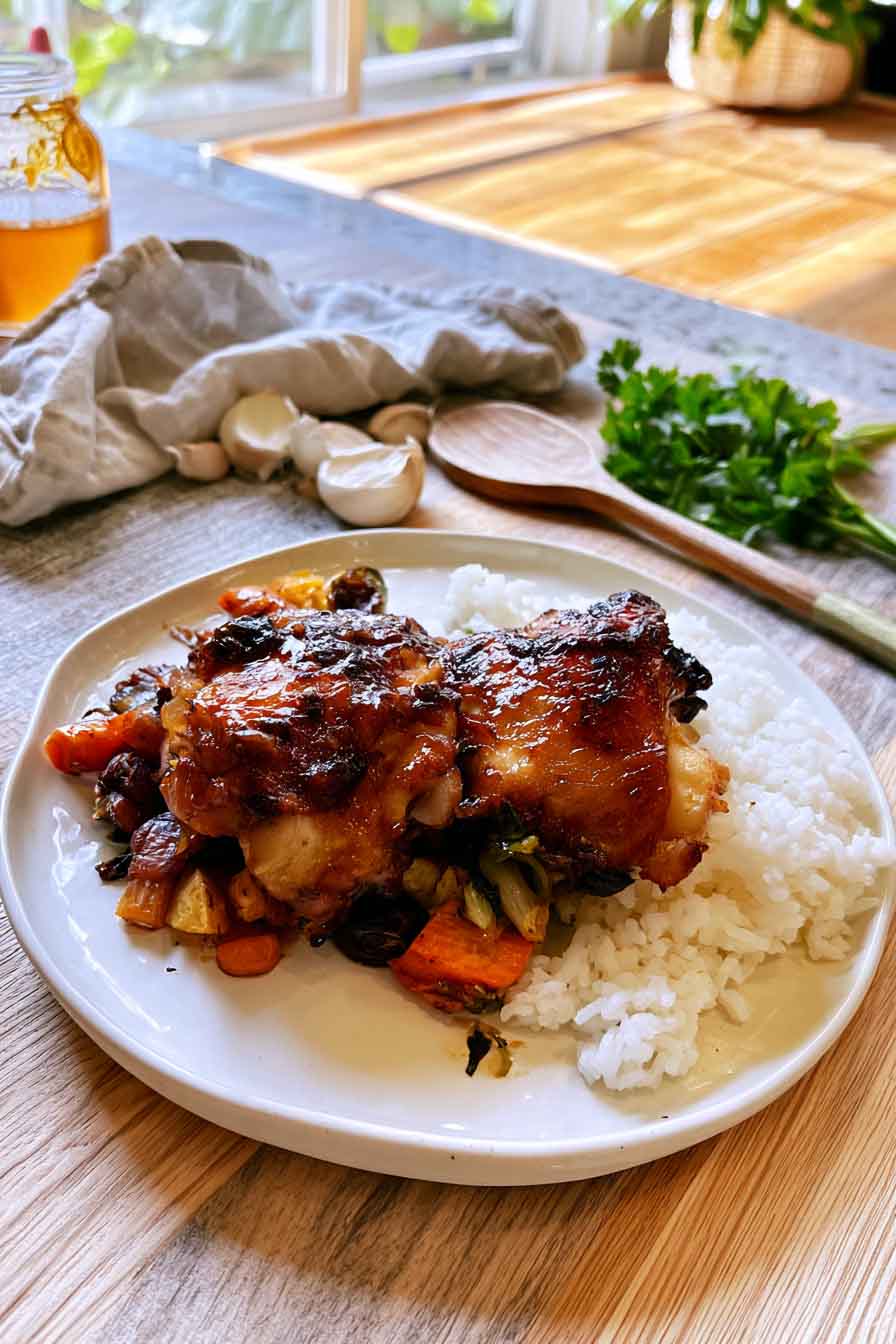
Serving Suggestion: Pair with jasmine rice, mashed potatoes, or roasted veggies. Garnish with sesame seeds and green onions.


Be First to Comment